


«Now that your husband is dead, grieve, pack your bags, and never come back!» – my daughter-in-law said at dinner. My son just smiled and nodded. – «The house was never really yours anyway!» I moved out without a word. The next day, I went to the bank and…
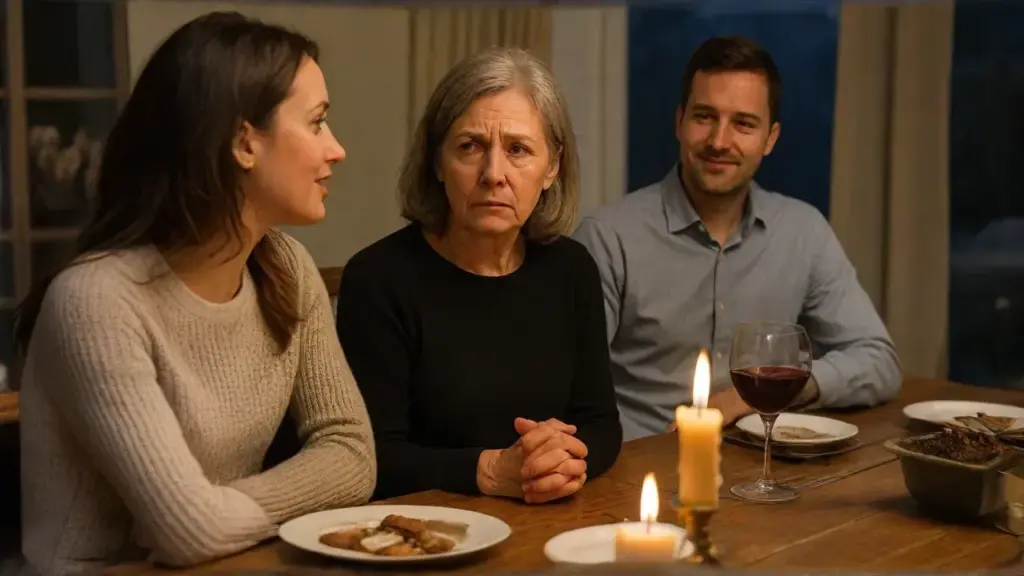
The dining room felt different without Noel’s presence. The mahogany table that had hosted countless family dinners now seemed too large, too empty, despite the three of us sitting around it. I kept glancing at his empty chair, expecting to see him there with his gentle smile and calming presence.
It had been exactly one week since we buried my husband of 32 years. One week since I’d stood at his graveside, feeling like half of my soul had been ripped away. The grief still sat heavy in my chest, making every breath feel labored.
Pass the potatoes, Myrtle, Romy said, her voice sharp enough to cut glass. My daughter-in-law had never used a warm tone with me, but tonight there was something different, something colder. I reached for the serving bowl, my hands still trembling slightly.
The funeral had drained me more than I’d expected. At 71, I thought I’d prepared myself for this day, but nothing could have prepared me for the hollow ache that followed me everywhere now. Wade, my 43-year-old son, sat between us like a referee who’d already chosen sides.
He’d barely looked at me all evening. His attention focused entirely on his wife of 15 years. The son who used to crawl into my lap when he had nightmares now couldn’t even meet my eyes.
The service was beautiful, wasn’t it? I offered, trying to fill the uncomfortable silence. Your father would have loved seeing so many people there. Romy set down her fork with deliberate precision.
Yes? Well, that’s actually what we need to discuss with you, Myrtle. Something in her tone made my stomach clench. I looked between her and Wade, searching for any sign of the warmth that should exist between family members who’d just shared a loss.
Instead, I found cold calculation in Romy’s eyes, and uncomfortable avoidance in my son’s. What do you mean? I asked, though part of me already dreaded the answer. Romy straightened in her chair, assuming the posture she used when delivering ultimatums.
I’d seen it before, usually when she was explaining why Wade couldn’t visit me as often, or why family traditions needed to change to accommodate her preferences. Wade and I have been talking, she began, her voice taking on that false sweetness she used when she wanted something. Now that Noel is gone, this house is going to be too much for you to handle alone.
I blinked, confused. Too much? I’ve been managing this house for over 30 years, I know every creaky floorboard and temperamental faucet. Yee, that’s exactly the problem, Romy continued, her mask of pleasantness slipping slightly.
You’re not getting any younger, and maintaining a house this size is expensive. Wade and I think it would be best if you, moved somewhere more suitable. The words hit me like a physical blow.
Moved? This is my home. Noel and I built our life here. Wade grew up here.
Wade finally spoke, his voice barely above a mumble. Mom, Romy’s right, the upkeep alone is going to be overwhelming for you. I’m not helpless, Wade, I said, hearing my voice crack slightly.
And this house. Your father and I saved for years to buy this place. Every room holds memories of our life together, Romy’s expression hardened.
Memories don’t pay utility bills or property taxes. Be practical, Myrtle. I stared at her, this woman who’d systematically pushed me out of my son’s life for 15 years.
The woman who’d convinced Wade that Sunday dinners with his mother were too much pressure, and that holiday visits needed to be balanced between families, which somehow always meant more time with her relatives. What exactly are you suggesting? I asked, though I could feel the answer forming like ice in my stomach. We think you should look into one of those nice senior communities, Romy said, her tone suggesting she was doing me a tremendous favor.
Somewhere with activities and people your own age. It would be so much better for you than rattling around in this big empty house. I turned to Wade, desperately hoping to see some sign that he disagreed with this plan.
Wade, you really think I should sell the house where you grew up? Where your father and I? It makes sense, Mom, he interrupted, still not meeting my eyes. And honestly, Romy and I could use the space. We’ve been talking about expanding our family, and this house has so much potential.
The meaning behind his words crashed over me like a cold wave. They didn’t just want me gone, they wanted my house. The home Noel and I had lovingly restored, room by room, over three decades.
Now that the Sogro died, live your grief, pack your bags and never come back. Romy’s voice suddenly lost all pretense of civility. The house was never really yours anyway.
The Spanish word for father-in-law rolled off her tongue with casual cruelty, as if she was discussing disposing of old furniture instead of throwing out her husband’s mother. Wade looked up then, and for a moment I saw something flicker in his eyes. Uncertainty, maybe even guilt.
But then he smiled and nodded. She’s right, Mom. This house was Dad’s, and now it’s mine.
You were just living here. I felt my world tilt on its axis, just living here. As if 32 years of marriage, of building a life and raising a family, amounted to nothing more than extended house-sitting.
I see, I said quietly, my voice steadier than I felt. Inside, something was breaking apart. Not just my heart, but my understanding of who my son was, who my family was.
I stood up slowly, my legs unsteady. I’ll need some time to… Two weeks, Romy cut me off. That should be plenty of time to find somewhere suitable and arrange for movers.
Two weeks, not two months, not even a reasonable timeline to grieve and plan. Two weeks to dismantle a lifetime. Wade finally looked directly at me, and what I saw there was worse than anger or hatred.
It was indifference, complete casual indifference to my pain. It’s for the best, Mom, he said, as if he was convincing himself as much as me. You’ll see.
I walked upstairs to the bedroom I’d shared with Noel, each step feeling like I was climbing a mountain. The room still smelled like his cologne, and his reading glasses were still on the nightstand where he’d left them the night before his heart attack. I sat on the edge of our bed and stared at my reflection in the dresser mirror.
The woman looking back at me seemed older than 71, her silver hair limp and her blue eyes dulled by shock and grief. In two weeks, I would have to leave this room where I’d said goodbye to Noel just seven days ago. I would have to pack up 32 years of marriage into boxes and surrender it all to a son who’d just told me I’d never really belonged here anyway.
But as I sat there in the gathering darkness, something else began to stir beneath the grief and shock. A small, hard kernel of determination. Noel had always been the one who handled our finances, but he’d taught me to be thorough, to pay attention to details.
Tomorrow I would start making arrangements. I would call the bank and begin the process of figuring out exactly what I was entitled to. Because if Wade and Romy thought they could just erase me from this family without consequence, they might be in for a surprise.
The first thing I needed to do was understand exactly what Noel had left behind, and to whom. The morning sun felt different streaming through the kitchen windows as I sat alone at the breakfast table, nursing my second cup of coffee. Ten days had passed since that awful dinner, and the house felt like it was holding its breath, waiting for me to leave.