


The funeral flowers had barely wilted when the phone calls began. I stood in my kitchen on a Tuesday morning, three weeks after we buried Russell, watching steam rise from my untouched coffee. The ceramic mug, inscribed with «World’s Best Grandma,» a gift from my granddaughter Kathleen years ago, felt foreign in my hands now.
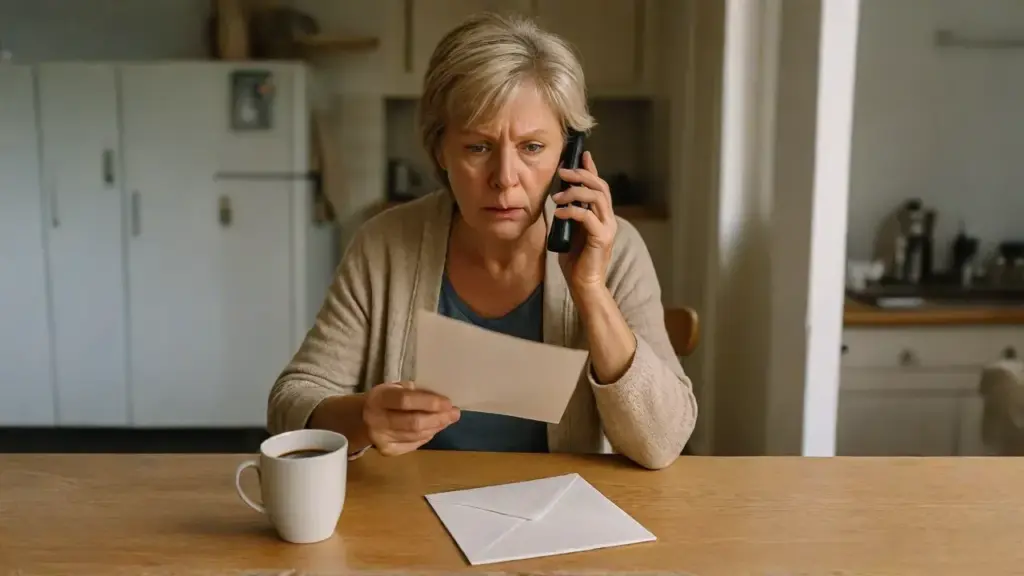
Everything felt foreign. The house, my reflection in the hallway mirror, even my own voice when I answered the relentless phone calls from my children.
“Mom, we need to talk about the house,” Donald’s voice carried that familiar tone of barely contained impatience, the same one he’d used as a teenager when asking for money. Only now, at 32, he wasn’t asking.
I set the mug down without taking a sip.
“Good morning to you too, Donald. Don’t start with me.”
“Lisa and I have been discussing your situation, and frankly, it’s not sustainable. This house is too big for you alone, the mortgage payments—”
“There is no mortgage.”
The words came out flat, factual. Russell had paid it off five years ago, but I’d never mentioned that detail to the children. They’d assumed, and I’d let them.
A pause. Then that laugh, sharp, dismissive. The same laugh he’d inherited from his father, though Russell had used it with affection. Donald wielded it like a weapon.
“Mom, please. Dad’s pension barely covers your medications.”
I walked to the window above the sink, looking out at the garden Russell and I had tended for 23 years. The roses needed pruning. The herb garden was overgrown. Tasks that once brought us joy now stood as monuments to everything I’d lost.
“Your concern is touching,” I said, my reflection catching in the glass. Gray hair that needed coloring. Lines that had deepened in the past month. Sixty-three years of living etched into features that still surprised me in mirrors.
“Don’t be dramatic. Darlene agrees with me. We think you should consider moving in with one of us.”
“Darlene agrees.” I turned from the window. My daughter hadn’t called since the funeral. Hadn’t answered when I’d called her. “When exactly did Darlene share this opinion?”
Another pause. I could almost see Donald running his hand through his thinning hair, a gesture he’d picked up from Russell.
“We had dinner last night. As a family. To discuss your options.”
Your options. Not our mother’s future or how we can help Mom through this difficult time. My options. As if I were a problem to be solved rather than a person to be supported.
“I see.” I opened the refrigerator, staring at the casserole dishes still stacked inside, offerings from well-meaning neighbors that I hadn’t touched. “And these options include selling my home?”
“It makes financial sense. You could help Lisa and me with our down payment. We’ve been looking at that colonial on Maple Street. And Darlene could use some assistance with Kathleen’s college fund. It’s a win-win situation.”
I closed the refrigerator door with more force than necessary.
“A win-win situation.”
“Mom, you know I didn’t mean it like that.”
But he had meant it exactly like that. Donald had always been transparent in his selfishness, even as a child. It was almost refreshing compared to Darlene’s subtle manipulations, the way she’d learned to ask for things sideways, making me feel guilty for not offering what she’d never directly requested.
“What did you tell your sister about my finances?” I asked.
“Just the truth. That Dad’s pension isn’t enough, that the house is too much for you to handle alone, that you’re probably struggling more than you’re letting on.”
The truth. As if he knew anything about my actual circumstances. As if any of them had bothered to ask detailed questions about Russell’s affairs, about the investments he’d made, about the modest inheritance from his mother that we’d quietly saved and invested over the years.
I thought about the folder in Russell’s desk drawer, the one I’d found while sorting through his papers. Bank statements, investment portfolios, the deed to a small villa in Marbella that he’d purchased as a surprise for our retirement. A place where we can watch sunsets and drink wine without anyone asking us for anything, he’d said, showing me the photographs just six months before his heart attack.
“I’ll think about it,” I said finally.
“Mom, we’re not asking you to think about it. We’re telling you what needs to happen. Lisa found a buyer already. Her cousin Gregory is in real estate, and he’s got a client who’s very interested. Cash offer, quick closing. Start packing your bags.”
My hand tightened on the phone.
“You found a buyer for my house?”
“We’re trying to help you, Mom. The sooner you accept that this is the best solution for everyone, the easier this transition will be.”
Transition. As if grief were a business merger. As if the dismantling of 30 years of marriage could be reduced to paperwork and profit margins.
“And where exactly am I supposed to live during this transition?”
“Well, that’s what we wanted to discuss. Darlene’s got that finished basement, and with Kathleen away at college most of the year, there’s plenty of space. You’d have your own entrance, your own bathroom. It could work out perfectly.”
Darlene’s basement. The same basement that flooded every spring, where she stored Christmas decorations and exercise equipment she never used. The same basement where I’d been relegated during last year’s Thanksgiving dinner while the “real” adults ate upstairs.
“How generous of Darlene to offer.”
“She’s excited about it, actually. Thinks it could be good for both of you. You could help with Kathleen when she’s home from school, maybe do some cooking. You know how Darlene struggles with meal planning.”
Of course, Darlene struggled with meal planning the same way she struggled with laundry, cleaning, and remembering to call her mother. But she excelled at delegating these struggles to others, particularly to the woman who’d raised her to be self-sufficient.
“And you, Donald, what role do you play in this arrangement?”
“Lisa and I will handle the house sale, obviously. The paperwork, the negotiations. We’ll make sure you get a fair price.”
Fair. I almost laughed. Donald’s definition of fairness had always been tilted in his favor, like a carnival game designed to separate fools from their money.
“I need to think about this,” I repeated.
“Mom, there’s nothing to think about. Gregory’s client is serious. They want to close within the month.”
A month. They were giving me a month to dismantle the life Russell and I had built together, to surrender the home where we’d hosted their birthday parties and graduation celebrations, where we’d nursed them through chickenpox and heartbreak and the various crises of young adulthood.
“I said I need to think about it.”
“Fine. But don’t take too long. Good opportunities don’t wait around forever.”
The line went dead.
I stood in my kitchen, holding the phone, listening to the sudden silence that seemed to echo through the empty house. Outside, a neighbor’s dog barked. A car door slammed. Life continuing its normal rhythm while mine spun out of control.
I walked to Russell’s study, to the desk where he’d paid bills and planned our future for over two decades. The folder was still there, hidden beneath old tax returns. I pulled it out and spread the contents across the wooden surface we’d bought at an estate sale when Donald was still in high school. Bank statements showing balances that would make my children’s eyes widen. Investment portfolios that had weathered market storms and emerged stronger. The deed to the villa in Spain, complete with photographs of whitewashed walls and a terrace overlooking the Mediterranean.
Russell had been a quiet man, methodical in his planning. He’d never boasted about money, never flaunted our security.
“Let them think we’re struggling,” he’d said once, when Donald had asked for yet another loan. “It builds character.”
I thought he was being cruel then. Now I understood it as wisdom.
My phone buzzed. A text from Darlene:
Mom, Donald told me about the house. I know this is hard, but it’s really for the best. Kathleen’s so excited about having Grandma closer. Can’t wait to discuss the details.
Kathleen. My granddaughter, who’d spent summers with Russell and me. Who’d learned to bake cookies in this kitchen and plant tomatoes in this garden. Who’d called me every week during her first semester at college, homesick and overwhelmed, seeking comfort from the grandmother who’d always had time for her stories.
When was the last time Kathleen had called? Two months ago? Three? I scrolled through my phone, looking for recent messages from my granddaughter. Nothing since Christmas, when she’d sent a group text thanking everyone for gifts. No personal messages, no requests for advice, no updates about her classes or her boyfriend or her plans for summer break.
The silence stretched around me, heavy with realization. They’d already moved on. All of them. Russell’s death had been an inconvenience to be managed, not a loss to be mourned together. And I was simply another inconvenience, another problem requiring their efficient solution.
I closed the folder and returned it to the drawer. Then I walked upstairs to my bedroom, to the closet where Russell’s clothes still hung, still carrying the faint scent of his aftershave. I pulled out a suitcase from the top shelf. It was time to start packing, but not the kind of packing Donald expected.