


The Boeing 737 touched down at Jacksonville International Airport with a gentle thud that resonated through Staff Sergeant Marcus Rivera’s chest. After 18 months in Afghanistan, the familiar humidity of North Florida felt like a warm embrace. He adjusted his digital camouflage uniform and checked his watch: 3:47 PM. Sarah should be here any minute, probably running late from her shift at the veterinary clinic, her scrubs still smelling faintly of antiseptic and dog shampoo.
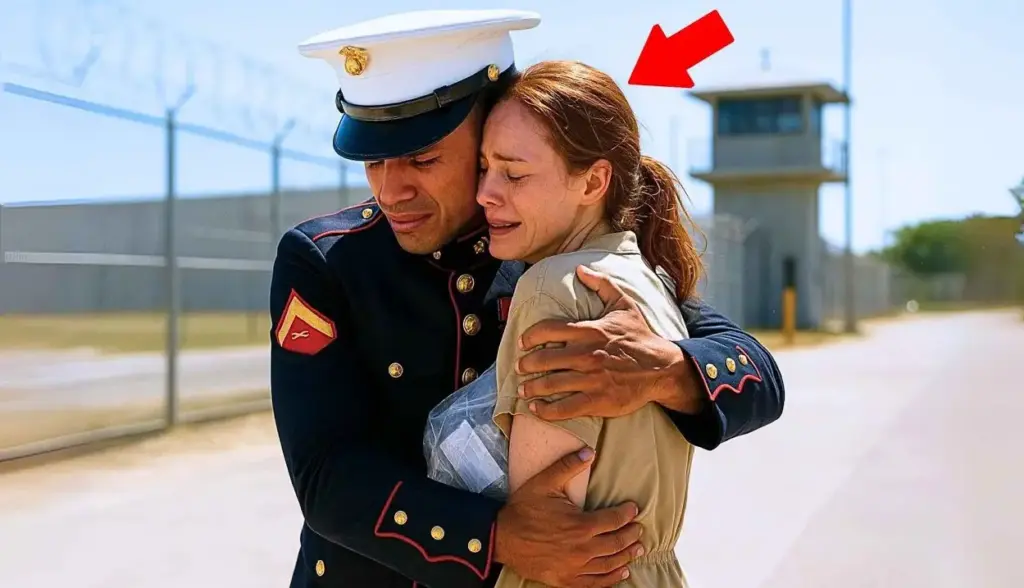
Marcus shouldered his duffel bag and walked through the terminal, scanning the crowd of families reuniting with their loved ones. Children squealed with delight, wives dabbed tears from their eyes, and the air buzzed with the electricity of homecomings. But as minutes ticked by, Sarah’s familiar laugh didn’t emerge from the crowd. Her auburn hair didn’t catch the afternoon sunlight streaming through the terminal windows.
He pulled out his phone, noticing it had been off during the flight. Seventeen missed calls from his mother-in-law, Patricia. His stomach dropped. Sarah never let her mother call him directly; they’d established that boundary early in their marriage. Patricia was well-meaning but had a tendency to catastrophize everything, from a flat tire to a late period.
The first voicemail made his hands shake. “Marcus, honey, you need to call me the moment you get this. It’s about Sarah. There’s been a… situation. She’s not able to come get you. I’m so sorry, sweetheart. Just call me.” The terminal suddenly felt too bright, too loud. The joyful reunions around him became background noise as he dialed Patricia’s number with trembling fingers.
She answered before the first ring finished. “Marcus, oh, thank God. Where are you?”
“I just landed, Patricia. Where’s Sarah? What situation?”
A long pause filled with static and muffled crying. “She’s… Marcus, she’s been convicted. She’s at Lowell Correctional Institution. They said she embezzled money from the clinic. Forty-three thousand dollars.”
The words hit him like an IED explosion—sudden, devastating, leaving his ears ringing. “That’s impossible. Sarah would never…”
“I know, honey, I know. But they found evidence. Bank records. Forged checks. Her signature was on everything. The trial was two months ago. She… she didn’t want you to know while you were deployed. She said it would distract you, put you in danger.”
Marcus leaned against a concrete pillar, the cool surface grounding him as his world tilted sideways. Two months ago, he’d been leading patrols through the mountains of Kunar Province, writing letters to his wife about coming home to their small house on Riverside Drive, about starting a family, about the fishing boat they’d been saving for. Sarah had written back about normal things—grocery shopping, her book club, the neighbor’s new puppy. Not once had she mentioned lawyers, courtrooms, or prison cells.
“How long?” His voice came out as a whisper.
“Three to five years. She’s at Lowell Correctional Institution, about two hours southwest of here, near Ocala.” The irony wasn’t lost on him. He’d spent eighteen months fighting for freedom in a foreign country, only to come home and find his wife imprisoned in his own.
Marcus watched a young airman embrace his pregnant wife, their joy so pure it made his chest ache. “Patricia, I need you to pick me up. We need to talk, and I need to see the case files, all of them.”
“Of course, honey. I’m already in the parking garage, Bay 3B.”
As Marcus walked through the terminal, his military training kicked in: assess the situation, gather intelligence, formulate a plan. But this wasn’t a tactical operation. This was his life, his marriage, his future unraveling like a poorly maintained rope under tension.
Patricia’s red Honda Civic looked smaller than he remembered, weathered by two years of Florida sun and salt air. She emerged from the driver’s side, her usually perfect silver hair disheveled, her eyes red-rimmed and puffy. She’d aged a decade in the eighteen months he’d been gone.
“Marcus.” She hugged him tightly, and he caught the scent of her familiar perfume mixed with cigarettes, a habit she’d supposedly quit years ago.
“Tell me everything,” he said as they drove through familiar streets that now felt foreign. The strip malls, the palm trees lining Beach Boulevard, the afternoon thunderclouds building on the horizon—everything looked the same, but nothing felt right.
Patricia’s hands gripped the steering wheel tightly. “She maintained her innocence throughout the entire trial, never wavered, not once. But the evidence, Marcus, it was overwhelming. Her fingerprints, her signature, money deposited into an account with her social security number. The prosecution painted her as a military wife struggling with debt, taking advantage of Dr. Morrison’s trust.”
“What debt? We don’t have any debt.”
Patricia glanced at him, her expression pained. “That’s what she kept saying. But they found credit cards, loans, things she apparently hid from you, or so they claimed.”
Marcus stared out the window at the passing landscape of his hometown, realizing that somewhere between his deployment and this moment, his entire life had become unrecognizable. Dr. Morrison’s veterinary clinic sat on the corner of Atlantic Boulevard and Third Street, a modest single-story building with cheerful yellow siding and a hand-painted sign featuring a cartoon dog and cat. Marcus had dropped Sarah off here countless times before his deployment, watching her walk through those glass doors in her purple scrubs, her hair pulled back in a practical ponytail, always carrying a travel mug of coffee that had gone cold hours ago.
Now, police tape hung in tatters from the doorframe, and a “For Lease” sign dominated the front window. The flower beds Sarah had maintained were overgrown with weeds, and the parking lot had the abandoned quality that comes when hope dies slowly. Patricia had driven him here after spending the previous evening going through a banker’s box full of legal documents in her cramped apartment.
The case against Sarah was methodical, thorough, and, Marcus had to admit, convincing on paper. Bank deposits, forged checks, altered records—all bearing his wife’s signature and fingerprints. The prosecution’s timeline showed a pattern of escalating theft over eight months, coinciding perfectly with his deployment.
“I need to see the security footage,” Marcus had told Patricia’s neighbor, Jim Hendricks, who’d served as Sarah’s court-appointed attorney. Hendricks was a public defender in his 60s, overwhelmed and underfunded, who’d handled the case like a man trying to bail out the Titanic with a coffee cup.
“There wasn’t any,” Hendricks had replied, adjusting his thick glasses. “The clinic’s security system malfunctioned three days before the first alleged theft. Convenient timing, the prosecutor said.”
Now, standing in the empty parking lot, Marcus studied the building with the analytical eye he’d developed in the Marines. Every structure told a story—where the weak points were, how someone might enter unseen, what angles provided cover. The clinic’s rear entrance faced a drainage canal lined with thick vegetation, no streetlights, no neighboring businesses with clear sightlines.
His phone buzzed. It was Patricia. “Dr. Morrison agreed to meet with you. He’s at the Starbucks on University Boulevard in 30 minutes. Marcus, he was Sarah’s character witness at the trial. He fought for her.”
The drive to Starbucks took Marcus through neighborhoods where he and Sarah had talked about buying their first house—modest ranch homes with oak trees draped in Spanish moss, the kind of middle-class American dream that seemed increasingly elusive for young military families. They’d driven these streets on Sunday afternoons, windows down, Sarah pointing out houses with good bones and mature landscaping, discussing mortgage rates and school districts for children they’d planned but not yet conceived.