


My name is Clara Bennett. I am 58 years old, and for the past 20 years, I’ve worked as a senior executive at a multinational company in Seattle. To most people, I’m just another quiet woman who keeps to herself.
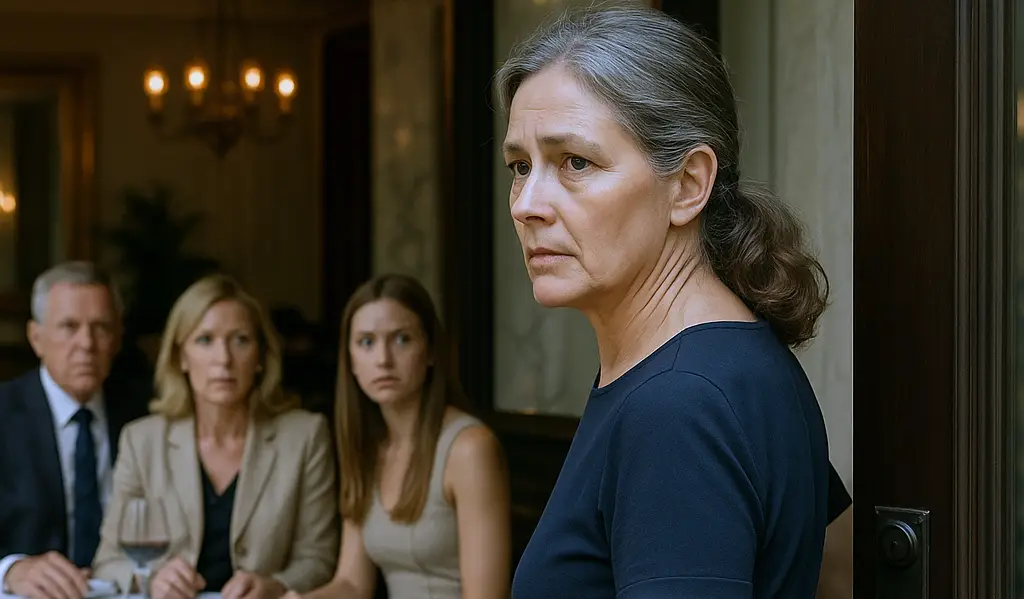
They see the small apartment, the old car, the modest clothes, and assume I live an ordinary life. What they don’t see are the contracts I sign, the departments I run, or the lives I’ve built through sheer determination. I’ve never needed to show what I have; I just needed to live peacefully.
My son Lucas doesn’t know everything about me. He knows I work in an office, that I’m comfortable, but he’s never seen the numbers or the scale of what I do. I wanted him to grow up without depending on money, to understand that success means nothing if it costs your character.
When he got married to Samantha Reynolds three years ago, I saw how much he wanted to fit into a world—a world of luxury, noise, and people who talk too loudly about their wealth. One Tuesday evening, while I was finishing up a report, Lucas called. His voice sounded tight, polite, almost formal.
«Mom, Samantha’s parents are visiting from New York. They’d love to meet you. We’re having dinner at La Maison in downtown this Saturday.»
Something in his tone made me pause. It wasn’t excitement; it was nervousness.
I asked, «Do they know anything about me?»
There was a short silence before he said, «I told them you work in an office and that you like simple things.»
Simple. That word lingered in my mind long after we hung up. My son.
The boy I raised to see value beyond appearances now feared I might not look impressive enough. That night, as rain drummed softly against my window, I made a decision. I would meet them exactly as they expected me to be: plain, unremarkable, and visible.
I didn’t want revenge. I wanted truth. I wanted to see how they treated someone they believed had nothing to offer. And maybe, just maybe, I wanted my son to remember who taught him what real worth means.
Saturday arrived wrapped in gray clouds and drizzle, the kind of quiet rain that seems to wash everything clean. I woke early, brewed coffee, and stood before my closet. Rows of tailored suits hung beside plain sweaters and faded dresses. My hand reached for a simple navy one, soft from years of wear. It wasn’t elegant, but it was honest.
I tied my hair back, slipped on old flats, and looked in the mirror. The reflection staring back wasn’t the executive who managed millions. She was just a woman: ordinary, unnoticed, and perfect for tonight.
The taxi ride downtown was slow, the city shimmering through the rain. I watched as couples hurried under umbrellas, people ducked into warm cafes, and the lights of Seattle began to glow against the wet streets. When the driver asked if I was meeting someone special, I smiled faintly. «Something like that.»
La Maison was already buzzing when I arrived. Waiters moved gracefully between tables, laughter floated over clinking glasses, and the air smelled of rosemary and expensive wine. Lucas stood near the entrance, checking his watch. His face softened when he saw me, though his eyes carried a flicker of concern.
«Mom, you look nice,» he said, his voice tight with politeness.
Samantha greeted me with a brief hug, careful not to wrinkle her dress. «So glad you could make it, Mrs. Bennett.» Her tone was kind but distant.
Then came her parents, Veronica and Charles Reynolds. They were exactly as I imagined: elegant, confident, and used to being admired. Veronica’s diamonds sparkled as she offered her hand, her smile smooth and practiced.
«It’s such a pleasure to meet you,» she said. «Samantha tells us you live quite simply.»
I nodded, matching her smile. «Simplicity suits me.»
As we sat down, the conversation flowed easily on their side. They spoke of vacations, art galleries, and renovations on their third home. When they turned to me, the questions were sharp and polite, like needles wrapped in silk.
«Do you manage to cover your bills alone? It must be hard living by yourself.»
I answered each one with calm politeness. Then Veronica leaned in slightly, her voice syrupy sweet.
«Lucas has such a generous heart. If you ever need help financially, dear, we’d be happy to assist. Maybe a small allowance each month?»
I looked at her, smiling gently. «How thoughtful,» I said.
Inside, I could feel the first stirrings of something deeper: quiet, steady, and waiting. For a moment, no one spoke. The air between us felt heavy, almost fragile. Lucas lowered his eyes, shame flickering across his face. Samantha shifted uncomfortably, her fingers tracing the edge of her napkin.
Veronica’s smile remained, but her tone softened as if she were speaking to a child. «We just want to make things easier for you, Clara. Perhaps $700 a month, just enough to help with expenses. Lucas and Samantha shouldn’t have to worry.»
I set my fork down quietly and looked at her. «$700,» I repeated, as if tasting the number. «To make things easier?»
She nodded, clearly pleased that I hadn’t taken offense. «Yes, dear. We know how difficult it must be to manage on your own.»
Across the table, Charles added, «We’re fortunate, and we believe in helping those who have less.»
«Those who have less.» The words landed softly, but they cut deep. I looked at my son—my boy who once beamed with pride every time I achieved something, who now sat silently, letting others decide my worth.
I smiled. «That’s very kind,» I said. Then I leaned back slightly. «Out of curiosity, how much did you contribute to their home?»
Veronica blinked, surprised by the question. «Oh, $40,000 for the down payment.»
«And $15,000 for the honeymoon. Paris, of course.»
I nodded slowly. «$55,000. That’s about what I make in a single month.»
The table froze. Charles frowned. «I’m sorry?»
I continued evenly, «That’s about my monthly income. I’m a regional director at Titan Technologies. I manage operations across five states. The people I work with don’t measure character in dollars.»
The color drained from Veronica’s face. Samantha’s eyes widened. Lucas whispered, «Mom.»
I looked at him gently. «You didn’t lie, son. You just forgot that simplicity isn’t the same as lack.»
I reached into my bag and took out my corporate card, placing it on the table. «Dinner’s on me,» I said softly. «Consider it a courtesy from the woman you thought needed your charity.»
The waiter appeared, unsure, as the entire table sat in stunned silence. For the first time all evening, I didn’t feel small; I felt seen. Outside, the rain had softened into a fine mist.