


Only I came to my husband’s funeral. Not our son. Not our daughter. Not a single grandchild. Just me, standing by his coffin while the cold wind whipped through the chapel courtyard, as if even the weather couldn’t bear to stay. The funeral director looked uncomfortable, eyes flicking between the empty seats and my face.
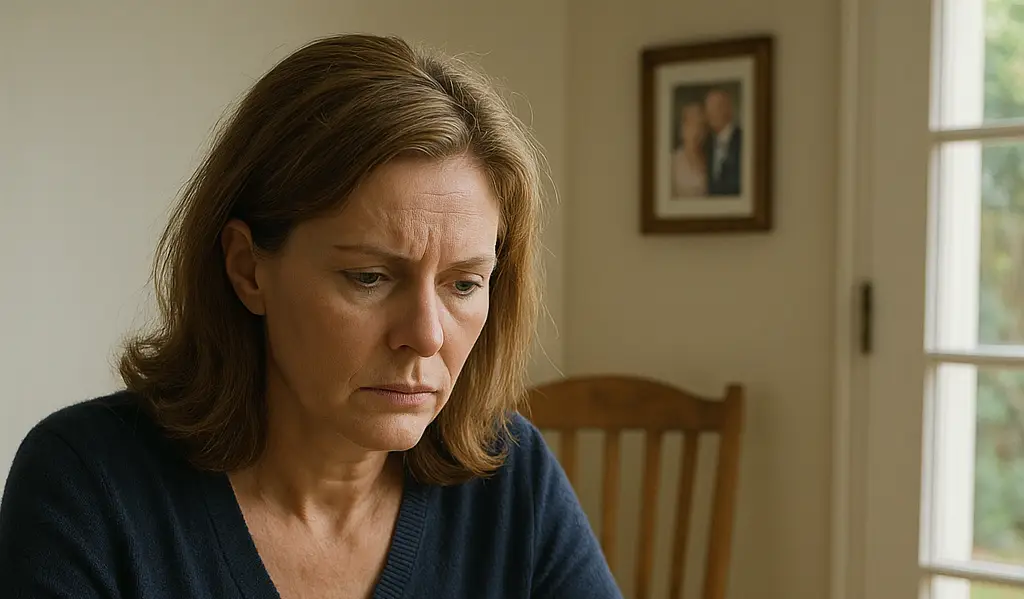
He cleared his throat once, then again. «Would you like us to wait a few more minutes, Mrs. Holloway?»
«No,» I said. «Start.»
George would have hated a delay. He was punctual even in his last days, taking pills by the clock, watching the evening news at six sharp, folding his slippers side by side before bed. A man of habit. A man of dignity. And now, a man laid to rest alone.
I sat in the front row, all five chairs around me, empty. The pastor recited scripture without conviction. The flowers were too bright. The casket too polished.
I couldn’t stop thinking how George would have laughed at the fuss. And then glanced around, frowning, asking where the hell the kids were. Where were they?
A message had come that morning. Our son, Peter, sent a one-liner: «Sorry, Mom. Something came up. Can’t make it.» No explanation. No call.
I imagined him at his office, or more likely, on a golf course with clients, pretending not to feel the weight of the day. Pretending his father’s death was just a small event in a busy calendar. Our daughter, Celia, hadn’t messaged at all.
She’d left a voicemail two days earlier, breezy as a spring wind. «Mom, I really can’t cancel my nail appointment, and you know how anxious I get with reschedules. Tell Dad I’ll visit him next week.»
Next week. As if dead men wait.
After the service, I walked alone behind the pallbearers. I didn’t cry. Not because I wasn’t grieving; I had been grieving for months.
But because there’s a kind of sorrow so deep it sits motionless inside you, like an anchor. And that day, I was already buried under it.
The cemetery was nearly deserted. One old groundskeeper watched from a distance, hand resting on a spade. The coffin was lowered. The prayers whispered. Dust met wood. Wood met silence.
I stood a while after the others left. My heels sunk slightly into the earth, and I felt the wind catch my coat. The headstone would be placed later. For now, a simple plaque with George’s name: George Holloway. Beloved husband. Father.
Forgotten. The words stuck in my mind like a stone in the shoe. Forgotten.
Back at home, the quiet roared. His recliner sat untouched. His slippers side by side. The TV remote where he last left it. I stared at it for a long time.
Then I walked to the kitchen, opened a bottle of wine—a good one from the cabinet I always saved for guests—and poured a glass.
I took out my phone and opened Instagram. I don’t often scroll, but something told me to look. Celia’s profile was public, of course.
She had posted two hours ago. A picture of her and three girlfriends. Drinks in hand. Mid-laugh. Caption: «Girls brunch. Bottomless mimosas. Living our best lives.»
Peter had posted too. A snapshot of the ninth hole. His new driver glinting in the sun. «Killer swing. Perfect weather. Deals made.» I stared at the screen until it blurred.
Then I turned off the phone, took another sip of wine, and stared at the photo on the wall. George and me on our 40th anniversary, standing beside the rose bushes he planted with his own hands. They used to bloom in red. Now they were bare.
Tomorrow, I thought, I’ll call the lawyer. I’ll make changes. Quietly. With the same dignity George lived with.Because if I was the only one to show up for his last goodbye, I would be the only one to carry out his final will. And theirs.
That evening, I sat alone in our kitchen. The same room where George used to peel apples with the precision of a surgeon, slicing them into neat little crescents and lining them on a plate. He’d always offer me the best piece. «The one with the most sunshine,» he called it.
Now the fruit bowl sat untouched. A couple of overripe pears sagging under their own skin. The silence wasn’t unfamiliar.
George had been gone for nearly two weeks before the funeral, and those days had already started teaching me the shape of solitude. But tonight, it pressed harder. Louder. Crueler.
I couldn’t stop thinking about the empty chairs. About Celia’s message, or rather the absence of it. I had raised a daughter who could watch her father be lowered into the ground from the comfort of a brunch table.
Had I failed her? Or had she failed something inside herself that could no longer be recovered?
Peter’s text was still there. No punctuation. No warmth. Just a flat rejection in black and white: «Something came up.»
Was it shame? Indifference? Or the kind of casual cruelty you don’t even recognize until it’s too late?
I poured another glass of wine. Not out of sorrow. Out of clarity. I walked down the hallway to our bedroom, opened the top drawer of George’s desk.
His things were still organized the same way. Envelopes. Spare keys. An old stamp book. I reached behind the files and pulled out the folder I kept hidden behind everything else. Thin. Neat. Sealed with a rubber band. It was labeled: Estate.
Inside were copies of our will. A list of beneficiaries. Our instructions for what should happen to the house, the car, the accounts. Even the antique clock George’s grandfather had brought from Dublin.
Everything had been prepared, reviewed by our lawyer two years ago, with love and foresight.
I sat on the edge of the bed and opened the file. Peter was listed as co-beneficiary of the main investment account, the one that held nearly $300,000, accumulated over a lifetime of work and frugal choices. He and Celia were both included in the house transfer clause. Even the lake cabin, the one they never visited anymore but always asked about when taxes came due, was earmarked for them.
I held the pages in my hand, my fingers trembling. Not from age. From something deeper. Betrayal has a pulse, and mine was thudding in my ears.
I rose and walked to the closet, pulling out a canvas storage bin. Inside were all the old photos. Family reunions, birthdays, holidays.
George holding the kids when they were small. Me on the porch, laughing, Celia tugging at my sleeve. Peter asleep in George’s lap, a book fallen open across his chest.
We were once a family. And maybe I had been too naïve to see how far that family had drifted. Maybe love doesn’t erode in a storm. Maybe it fades like wallpaper in the sun, quietly, until one day you no longer recognize the pattern.
I picked up a photo of George and Peter fishing. Peter must have been twelve. George had his arm around him, pointing at something in the water, his smile full and soft. That man had deserved more than an empty chapel.
I put the photo down. Then I picked up the phone. It was nearly midnight, but I didn’t care.
I called Thomas Fields, our lawyer. It went to voicemail, as expected.
I left a message anyway. «Thomas, it’s May Holloway. I need to revise my will. Urgently. Call me in the morning.»
I ended the call and stood for a long moment by the window. The moonlight touched the top of the rose bushes outside. They had withered since George passed, not from neglect, but as if in sympathy.
I knew I should prune them. Give them room to bloom again. But not tonight. Tonight, I let the old petals fall. Tomorrow, I would begin cutting out what no longer belonged.
The lawyer’s office smelled like old books and eucalyptus polish, the kind of place where time felt dense and silence had a particular weight. Thomas Fields had known George and me for over thirty years.
He handled our first mortgage, George’s business license, the deed to the lake house, and eventually our estate plan. Trustworthy. Precise. And, like me, a little tired of people who smiled when they wanted something.
He looked up from his desk as I entered, rising from his chair with an expression of mild surprise. «May,» he said, buttoning his jacket. «You’re here early.»
«It couldn’t wait,» I answered, settling into the leather chair opposite him.
My coat still smelled faintly of the garden. I’d clipped the dead roses that morning, early, before breakfast. Pruning always steadied me. There was something honest about cutting back what no longer served.