


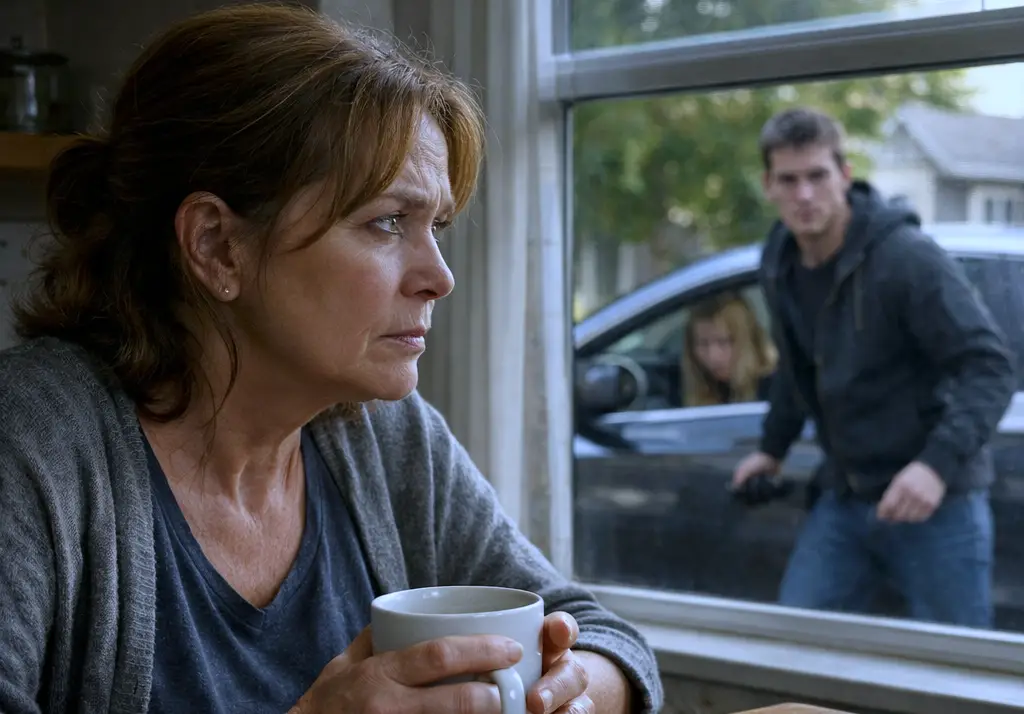
My son wrote: «Don’t call me anymore. I’m tired of you and your requests.»
I said nothing.
Two months later, he called. «Mom, my wife and I urgently need money for rent.»
I replied, «I’m sorry, I don’t know who you are. I don’t have a son.» I hung up.
I’m glad you’re here with me. I had always believed that motherhood was forever. That no matter what storms came, the bond between mother and child would weather them all. For 63 years, I’d lived by that philosophy, raising my son Daniel in our modest home in Ohio.
I worked double shifts as a nurse to give him everything he needed after his father left us when he was just seven. Daniel grew up, went to college, got married to a woman named Amber, and started his own life. I was proud. Wasn’t that what every mother wanted?
But somewhere along the way, the phone calls became requests. The visits became transactions.
«Mom, can you help us with the down payment?»
«Mom, we need money for Amber’s medical bills.»
«Mom, just this once for the car repair.»
I said yes, every single time. What else would a mother do? The pattern became clearer over the years, though I refused to see it. Daniel would disappear for weeks, sometimes months. No calls, no texts, no visits.
Then suddenly, he’d reappear with that familiar tone in his voice, the one that said he needed something. And I’d open my wallet, my heart still hoping that this time he’d stay longer. That this time we’d actually talk about something other than money.
Last spring, I called him on his birthday. Amber answered.
«He’s busy,» she said curtly. I could hear Daniel in the background laughing at something on TV.
«Tell him I love him,» I said softly. She hung up without responding.
Two weeks later, I called again. I’d been feeling unwell, and my doctor had scheduled some tests. I just wanted to hear my son’s voice. Daniel answered this time, and I could hear the irritation immediately.
«Mom, what is it now?» he asked.
«I just wanted to talk, sweetheart. I haven’t heard from you in…»
«I’m in the middle of something. It’ll just take a minute. I wanted to tell you that I…»
«Mom, seriously, I don’t have time for this.»
My chest tightened. «Daniel, I’m your mother. I just need…»
That’s when he said it. The words that would replay in my mind for the next two months, like a broken record.
«Don’t call me anymore. I’m tired of you and your requests.»
My requests? What requests had I ever made of him? The line went dead. I sat there in my kitchen, the phone still pressed to my ear, listening to the dial tone.
The afternoon sun streamed through the window, illuminating the photographs on my refrigerator. Daniel as a baby. Daniel’s graduation. Daniel’s wedding. In every photo, I was smiling, proud, loving. Had I been blind this entire time?
I didn’t call again. Not the next day, not the next week. I went to my doctor’s appointments alone. I had my tests done alone. When the results came back negative—just stress, the doctor said—I celebrated alone with a cup of tea in my empty kitchen.
Eight weeks passed. Eight weeks of silence. Eight weeks of learning what it meant to be truly alone.
I started attending a book club at the library. I volunteered at the local animal shelter. I discovered that life could exist without waiting for the phone to ring.
Then, on a Tuesday evening in July, my phone buzzed. Daniel’s name flashed across the screen. My hand hovered over it. Something inside me had shifted during those eight weeks. Something had crystallized into a cold, hard truth that I could no longer ignore.
I answered. «Mom?»
His voice was different now. Urgent. Almost panicked.
«Mom, Amber and I really need your help. We’re behind on rent and we need $2,000 by Friday or we’re getting evicted. Can you transfer it today?»
No apology. No «how are you?» No acknowledgement of what he’d said two months ago. Just another request. Another demand.
The words came out of my mouth before I’d even fully formed the thought. They were calm, cold, final.
«I’m sorry, I don’t know who you are. I don’t have a son.»
I hung up. My hands weren’t shaking. My heart wasn’t racing. Instead, I felt something I hadn’t felt in years: clarity. Sharp, crystal-clear clarity about what I had to do next.
The phone rang again within minutes. Then again. Then again. Fifteen calls in the first hour.
I turned it off and sat at my kitchen table, surrounded by a silence that felt both terrifying and liberating. What had I just done? I made myself a cup of chamomile tea and opened my laptop. If I was going to do this, if I was really going to stand my ground, I needed to understand exactly what I was standing against.
I needed to see the truth in black and white. I started with my bank statements. The numbers told a story I’d been too blind or too desperate to see.
Over the past five years, I’d given Daniel and Amber sixty-three thousand dollars. Sixty-three thousand.
I scrolled through the transactions, my tea growing cold beside me. Down payment for their house: fifteen thousand. Amber’s medical emergency? Eight thousand. Car repairs? Four thousand. Furniture for the nursery when Amber was pregnant—a pregnancy that ended in a miscarriage, she’d said—six thousand.
Credit card debt? Twelve thousand. Legal fees for a case Daniel never explained? Nine thousand. Rent, utilities, groceries. An endless stream of emergencies that always seemed to happen right when I’d received my pension payment or a little extra from picking up overtime shifts at the hospital.
I’d continued working as a nurse until I was sixty-one, two years past my planned retirement, because I kept telling myself they needed me. Just one more year. Just until they got on their feet.
But here was the pattern, stark and undeniable. They’d never gotten on their feet. Because they’d never had to. I’d always been there. The safety net that never said no.
I pulled out a notepad and began writing. Not just the money, but everything else. The missed Thanksgivings when they’d promised to come but cancelled last minute. The Christmas when I’d spent the entire day alone because Amber’s family needed them more.
The time I’d fallen and broken my wrist, and Daniel hadn’t visited once during my six-week recovery. The birthday cards I’d sent that were never acknowledged. The messages left unread.
How many times had I made excuses for them? They’re busy, they’re young, they’re under stress. Marriage is hard. When had I stopped being a mother and become just an ATM machine?
My phone was still off, but I could imagine the messages piling up. Probably not apologies. Probably anger. How dare I hang up on him? How dare I refuse to help?
The fear crept in then. Not fear of Daniel’s anger—I’d weathered that before. But fear of the unknown. What did a mother do when she decided to stop being a mother? Or rather, when she decided to stop letting herself be used under the guise of motherhood?
I thought about my own mother, who had passed away 15 years ago. She’d been tough, pragmatic, a woman who’d survived the Depression and raised six children with an iron will and a tender heart. What would she tell me now?
Betty, I could almost hear her say, you taught that boy to walk. You can teach him to stand on his own two feet too, even if it breaks your heart to do it.
My hands steadied. I opened a new document on my laptop and titled it «Plan of Action.»
First, I needed to protect my finances. Tomorrow, I would go to the bank and make sure Daniel had no access to any of my accounts. I’d added him as an authorized contact years ago, just in case of emergencies. That needed to end.
Second, I needed documentation. I would print out every bank statement, every text message, every piece of evidence that showed the pattern. Not because I wanted to hurt Daniel, but because I needed to see the truth myself. And if he came at me with accusations or demands, I needed to be able to show him—show myself—what had really been happening.