


The harsh, unrelenting glare of the pediatric intensive care unit’s fluorescent lights cast long, hollow shadows across Tessa Whittaker’s exhausted face. For three agonizing months, this sterile room had been her entire universe. She sat slumped in a vinyl chair that offered no comfort, her fingertips pressed gently against the clear, rigid plastic of the hospital crib. Inside that small enclosure lay Eamon. He was only six months old, but the sheer volume of medical tubing and wiring swallowing his fragile body made him look impossibly smaller.
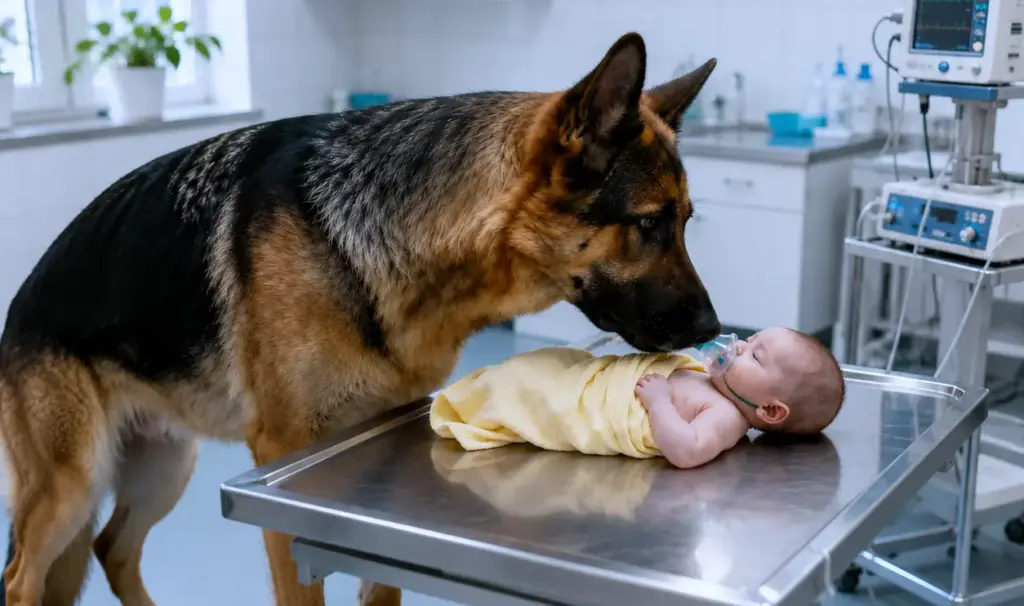
The rhythmic, mechanical sigh of the ventilator and the steady, high-pitched beep of the heart monitor had long since replaced the soft, melodic lullabies Tessa used to sing to him in the quiet of his nursery at home. Eamon lay frighteningly still. His tiny chest rose and fell with a labored, shuddering effort. A single wisp of soft brown hair, the exact shade of the father who was no longer in the picture, curled damply against his pale forehead.
Tessa slipped her hand through the round access portal of the crib, her touch as light as a falling leaf as she stroked his head. “Hey, sweetie,” she whispered. She forced a desperate, artificial warmth into her voice, fighting the heavy, suffocating ache lodged in her throat. “Mama is right here. I’m not going anywhere.”
The heavy door swung open with a soft swoosh, and Linda, the morning shift nurse, stepped into the room. Linda moved with a quiet, practiced efficiency, checking Eamon’s vital signs on the glowing monitors and making microscopic adjustments to the slow drip of his intravenous fluids. Before she left, Linda paused, resting a warm, heavy hand on Tessa’s shoulder. It was a simple, fleeting gesture, but in the sterile isolation of the PICU, it carried the weight of a lifeline. “The doctor will be in to see you soon,” Linda murmured, her voice laced with a gentle, foreboding pity.
Tessa offered a tight nod, a cold knot of dread pulling tight in her stomach. After weeks of living in this ward, she had learned to fluently translate the subtle shifts in the hospital staff’s body language and the careful, practiced way they filtered their words. Something fundamental had shifted in Eamon’s chart, and she knew in her bones that it wasn’t a turn toward the light.
When Dr. Marshall finally entered the room, his customary brisk, confident stride was entirely absent. His shoulders slumped beneath his white coat. He pulled up a chair directly facing Tessa, and the ground seemed to drop out from beneath her feet before he even opened his mouth.
“Mrs. Whittaker,” Dr. Marshall began, the sheer gravity of his tone stealing the air from the room. “We have completely exhausted our standard protocols, and I’m so sorry to tell you that Eamon’s condition is continuing to decline. This infection has proven highly resistant to our strongest available antibiotics, and his major organs are beginning to show profound signs of stress.”
Tessa’s hands dropped to her lap, her fingernails biting fiercely into the worn denim of her jeans. “There has to be something else,” she pleaded, the words breathless and desperate. “There has to be another trial, another medication we can try.”
Dr. Marshall’s eyes reflected genuine, deep-seated sorrow. “We have consulted with top pediatric specialists across the entire country. At this stage, our only remaining option is to transition to making him comfortable, and…”
“No.” The word tore out of Tessa, sharp and jagged. “He is a fighter. He has made it this far, Dr. Marshall. He’s fighting.”
“I cannot imagine how agonizing this is to hear,” Dr. Marshall said softly. “But we are at the point where we need to discuss end-of-life comfort care options.”
Tessa slowly turned her head to look at her son. A tidal wave of fragmented memories crashed over her: the very first time his eyes had focused on hers, the way his impossibly tiny fingers used to lock fiercely around her thumb, and the brilliant, unclouded joy that would light up his entire face whenever Kaiser walked into the room. Kaiser was a massive, incredibly gentle German shepherd who had been the crown jewel of the hospital’s animal therapy program. The dog and the baby had formed an instantaneous, unspoken bond. Eamon’s erratic heart rate would physically steady the moment the dog rested his heavy chin on the edge of the crib.
“Kaiser,” Tessa blurted out, turning back to the doctor. “Could we please bring Kaiser in to see him? Eamon always responded so beautifully to him. It always helped.”
Dr. Marshall’s expression shifted, softening with profound sympathy, yet clouded with administrative hesitation. “That would require direct approval from upper administration, especially given his critical circumstances. As you know, the therapy dog program was entirely discontinued last month due to budget cuts.”
“Please,” Tessa begged, abandoning all pride. “Just one single visit. It might help him rally. It might just give him a few moments of actual peace.”
“I will speak directly with Dr. Keene,” he promised, though his resigned sigh suggested he held out absolutely no hope for a favorable answer.
The subsequent hours dragged by in an agonizing crawl. Tessa spent the afternoon alternating between whispering desperate prayers into the sterile air and softly singing to her unresponsive son. Finally, the sharp, authoritative click of expensive heels echoed down the hallway, signaling the arrival of the hospital administrator.
Dr. Mallory Keene stopped at the foot of Eamon’s crib. Her immaculate, tailored designer suit and flawlessly sprayed hair stood in jarring, almost offensive contrast to Tessa’s rumpled t-shirt and the dark, bruised exhaustion circling her eyes.
“Mrs. Whittaker, Dr. Marshall has brought your unusual request to my attention,” Dr. Keene stated, her voice as smooth and cold as polished marble.
“Please, Dr. Keene, I just want—”
Dr. Keene raised a single, perfectly manicured hand, cutting Tessa off instantly. “We are currently in the final stages of preparing for a massive donor event scheduled for next week. The entire intensive care ward is under strict orders to maintain absolute, flawless protocols. Introducing an animal into this sterile environment, even a former therapy dog, introduces entirely unacceptable risks and complications.”
“Kaiser came to this exact room for months without a single issue,” Tessa argued, her voice trembling with restrained outrage. “He is fully trained. He’s a certified support animal.”
“The program was permanently terminated for very valid logistical reasons,” Dr. Keene countered smoothly. “I cannot and will not make arbitrary exceptions. We are expecting a personal visit from Beatrice Langley. Her pending financial donation will fund critical, multi-million-dollar improvements to this entire wing.”
A hot, fierce wave of absolute fury erupted in Tessa’s chest. “My son is actively dying in this bed, and you are telling me you only care about a fundraising photo op?”
“I completely understand that you are in a highly emotional state,” Dr. Keene replied, her tone dripping with professional condescension. “However, hospital policy is rigid for the protection of all our patients. I am genuinely sorry, but the answer is a definitive no.”
As the administrator’s heels clicked sharply away down the linoleum corridor, Tessa turned back to Eamon. He looked so devastatingly peaceful, entirely unaware of the bureaucratic cruelty dictating the terms of his final days. Tessa thought of Kaiser’s amber, deeply intelligent eyes, and how the dog would carefully rest his large head near the plastic rails. She remembered the soft, happy coos her baby used to make—sounds she hadn’t heard in weeks. The crushing reality of her mounting medical debt hovered like a dark cloud; she knew she would never outrun the bills on her diner waitressing wages, even pulling double shifts until she dropped. But looking at her dying child, money was an entirely abstract concept. Time was the only currency of any value left in the world, and she was utterly bankrupt.
Later that evening, Nurse Linda quietly slipped back into the room holding a tray of pain medications. “I heard what Dr. Keene decided,” Linda whispered, her eyes shining with unshed tears. “I am so incredibly sorry, Tessa. That shepherd was pure magic with these babies.”
Tessa scrubbed the back of her wrist across her wet, stinging eyes. “I just wanted him to feel one final moment of joy. Is that really too much to ask?”
“No, honey. It isn’t.” Linda expertly checked the complicated array of IV monitors, keeping her back to the door. “You know, I actually still have Owen’s contact information saved in my contacts. Owen Rourke, Kaiser’s handler. That man was completely heartbroken when administration axed the program.”
A tiny, dangerous spark of hope ignited in the dark cavern of Tessa’s chest. She stared at Linda, seeing a fierce, quiet rebellion in the older woman’s tired eyes.
“Now, legally, I cannot hand a patient’s mother that private information,” Linda murmured, her voice dropping to a barely audible register. “But, if I were to accidentally leave my personal cell phone unlocked, sitting right on the table in the staff break room while I go do my rounds… well.” Linda shot Tessa a heavily loaded, meaningful look.
Fresh tears blurred Tessa’s vision, but this time, they were born of pure, unadulterated gratitude. “Thank you,” she breathed.
“I am officially taking my scheduled break right now,” Linda announced at a perfectly normal volume. “I will be back in exactly fifteen minutes to check on Eamon’s vitals.”
As Linda’s soft, rubber-soled shoes squeaked down the hallway, Tessa looked down at her son. Every single ragged breath he drew was a war won. She thought of Dr. Keene’s icy dismissal, prioritizing a wealthy donor’s checkbook over a dying infant’s peace. The bone-deep exhaustion, the suffocating grief, and the boiling anger of the past three months suddenly crystallized into a brilliant, diamond-hard determination.
“I swear to you, baby,” Tessa whispered fiercely, leaning over the plastic crib. “You are going to see your dog again. Mama is going to fix this.”
She stood up, her stiff joints popping in protest. The staff break room was only twenty yards down the corridor. She had exactly fifteen minutes to secure the information that could grant her son his dying wish. She had fifteen minutes to decide if she was willing to openly defy a hospital administration that viewed her child as an inconvenience.
Tessa squared her aching shoulders. It wasn’t a choice at all. For Eamon, she would burn the entire hospital down if she had to. She stepped out into the hallway, moving with quiet, lethal purpose toward the break room door that stood ever so slightly ajar.
Through the narrow crack, the glowing screen of Linda’s phone illuminated the dark table like a beacon. Tessa pushed the door open and stepped into the dim room, her heart hammering a frantic rhythm against her ribs. The suffocating weight of her reality was still there, but now it was accompanied by a fierce, wild hope—the incredibly dangerous kind of hope that only surfaces when a mother has absolutely nothing left to lose, and everything in the world to fight for.
Late the following afternoon, the autumn sun threw long, golden shadows across the concrete of the hospital’s secluded outdoor courtyard. Tessa paced erratically near a dry stone fountain, her nervous fingers compulsively twisting a small, torn scrap of paper. Owen Rourke’s phone number was already smudged from her sweating palms. After a brief, hushed phone call, the retired handler had agreed to meet her here, safely hidden from the hospital’s ubiquitous security cameras and Dr. Keene’s watchful staff. A cool breeze rustled through the dying leaves of the surrounding maple trees, carrying that faint, inescapable scent of rubbing alcohol and sterile wipes that seemed to seep from the building’s brick pores.
“Tessa?”
The voice was a deep, gravelly baritone. Tessa spun around to see a tall, broad-shouldered man approaching the fountain. His salt-and-pepper beard was neatly trimmed, and he wore a faded navy blue canvas jacket bearing the embroidered patch of a local search-and-rescue K-9 unit. His eyes were crinkled at the corners, radiating the kind of profound, quiet empathy found only in people who had spent their lives walking others through the darkest days of their lives…
To read the rest of the story – CLICK the NEXT button 👇👇👇