


The wind tore at the siding of our old suburban house, a bitter December gale that rattled the windowpanes like a collection of loose bones. It was the kind of cold that didn’t just chill the air; it seeped through the plaster and settled deep into the marrow. The nursery was bathed in the fragile, amber glow of a single nightlight, casting long, wavering shadows across the floorboards. I sat hunched over the edge of the wooden crib, my fingers curled so tightly around the railing that the joints ached with a dull, throbbing heat. My body felt as though it were made of lead, weighed down by a profound, bone-deep exhaustion, yet my eyelids refused to close. I simply couldn’t look away.
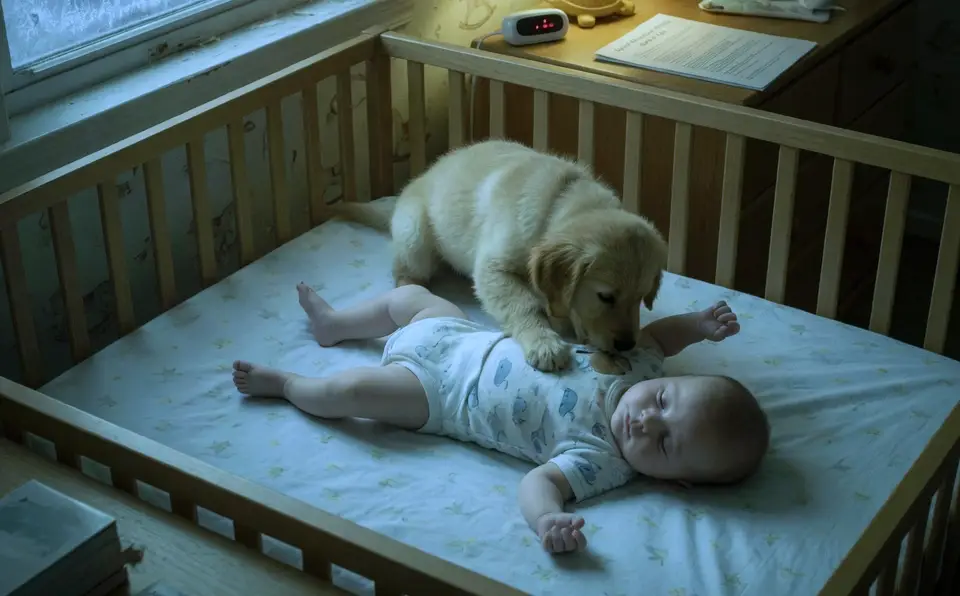
I had kept this silent, agonizing vigil every single night for six agonizing months.
Releasing a slow, shaky breath into the quiet room, I tried to swallow the suffocating knot of helplessness that lived permanently at the base of my throat. In the crib just inches from my chest, Noah let out a soft, fractured whimper. His delicate, translucent eyelids fluttered. His tiny fingers twitched against the cotton blanket, and his head rolled a fraction of an inch to the side. But beneath the waist, there was nothing. His legs remained terribly, unnaturally still.
Spinal muscular atrophy.
The words had become a relentless drumbeat in my mind, a death sentence handed down in a sterile, fluorescent-lit doctor’s office. I could still hear the neurologist’s detached voice explaining that there was no cure. The motor neurons were deteriorating. My beautiful, perfect baby boy would never walk. He would never experience the simple, chaotic joy of crawling across a living room rug, never chase a butterfly through the summer grass, never learn the triumphant feeling of kicking a ball.
Tears surged, hot and sharp, prickling the corners of my eyes. I squeezed them shut, forcing the moisture back. I couldn’t afford to break down. Not in this room. Not where he could feel my fear.
Across the dimly lit nursery, the worn leather of the recliner groaned as Michael shifted. I heard the rasp of his palm rubbing across his unshaven jaw. When I finally glanced at my husband, my heart gave a tired ache. His work shirt was hopelessly wrinkled, his shoulders slumped in defeat, and the deep, darkened lines bracketing his eyes mirrored my own sleep-deprived misery.
“You should sleep,” Michael murmured. His voice was a hoarse, hollow scrape in the quiet room, stripped bare by too many nights spent pacing the floorboards.
A sharp, humorless sound escaped my lips before I could stop it. “And miss the chance to hear Noah cry? No, thanks.”
Michael let out a long, heavy sigh. It was a familiar sound; we had been trapped in this exact, circular conversation for weeks. I didn’t sleep anymore. I couldn’t. I spent every hour of darkness suspended in a state of hyper-vigilance, waiting for the inevitable crying to start, for the terrifying seizures to grip his fragile body, for the silent, creeping agony of his disease to steal whatever meager scraps of hope I had managed to scrape together during the day.
Running a hand through his thinning hair, Michael leaned forward, the muscles in his jaw ticking with suppressed frustration. He was a man who fixed things, a man who solved problems, and the realization that he was entirely powerless to save his own son was destroying him piece by piece.
“We need help, Sarah,” he said, his tone dropping to a pleading softness.
My spine instantly went rigid. The defense mechanism was automatic.
“You can’t do this alone,” he pushed gently. “We need—”
“I am not putting my son in a home,” I snapped, the words tearing from my throat with a sudden, vicious crack.
Michael flinched as if I had struck him. A flash of profound, naked pain passed through his dark eyes. “That is not what I meant.”
The silence that rushed in to fill the space between us was thick and suffocating, heavier than the winter air outside. I hated myself in that moment. I hated the venom in my voice, but the mere, passing thought of handing Noah over to a stranger in scrubs—someone who would care for him out of obligation rather than the fierce, consuming love of a mother—was a physical agony I could not bear.
Turning my back to my husband, I reached into the crib, lightly tracing the soft, golden spun silk of Noah’s hair. His breathing was terribly uneven, his small chest rising and falling in weak, labored stutters. I could feel the weight of Michael’s stare pressing into my shoulder blades. We were two people drowning in the exact same ocean, completely incapable of throwing each other a lifeline.
Then, just as the suffocating tension in the room threatened to crack us both in half, a high-pitched, clumsy bark shattered the quiet.
I jumped, turning toward the doorway just in time to see a tiny ball of golden fur stumble over the threshold. Max. His oversized, floppy paws slipped clumsily on the polished hardwood, sending him skidding into the side of the dresser.
The shelter volunteers had warned me he was the absolute runt of the litter, the smallest, weakest, and most easily overlooked among his robust siblings. Maybe that was precisely why I had felt such an intense, immediate need to bring him home. I looked at that fragile, shaking puppy and saw a kindred spirit. We were just two displaced souls, born into uphill battles we had never asked to fight.
Recovering his balance, Max let out another enthusiastic yip and clumsily launched himself onto the edge of the velvet couch. He looked up at me, his massive, soulful brown eyes reflecting an emotion I hadn’t let myself feel in a very long time. Pure, unadulterated hope.
From the recliner, Michael dragged a hand down his face. “He’s just a dog, Sarah.”
I ignored the exhaustion in his voice. Kneeling onto the floor, I scooped Max’s warm, wriggling body into my arms. He smelled of puppy breath, warm dust, and the undeniable scent of second chances.
“He is family,” I whispered, pressing my cheek against the soft, downy fur at the nape of his neck. Michael didn’t offer a rebuttal. He never did when my voice took on that particular, unbreakable edge.
The nursery settled back into a delicate, fragile stillness. But it was fleeting. Noah whimpered again, the sound weaker this time, lined with a chronic pain that tore at my chest. I pivoted immediately toward the crib. He was always restless, forever locked in a state of quiet physical distress. It was just one of the many cruel, daily realities of his diagnosis.
Before I could reach down to soothe my son, something entirely unexpected happened. Max suddenly wiggled with surprising strength, squirming right out of my embrace. Without a single second of hesitation, the puppy scrambled up the side of the wooden rocking chair and launched his small body over the railing, tumbling directly into the crib.
My breath caught in my throat. “Max, no!”
I lunged forward to pull the dog away, terrified he would hurt the baby. But my hands froze in mid-air.
Noah’s fussing stopped. The entire room seemed to freeze in time. For the very first time in weeks, the tight, distressed lines on my baby’s face smoothed out.
Beside me, Michael had risen from his chair. We both stood suspended in absolute shock, staring wide-eyed as Noah’s frail, motionless fingers brushed instinctively against Max’s golden coat. The puppy let out a long, contented sigh, circled once, and curled his warm, solid little body directly against Noah’s side.
And then, the impossible happened. Noah’s erratic breathing deepened. The tight, defensive fists he always held near his face slowly uncurled, his tense muscles melting into the mattress. Within seconds, he was asleep. Truly, peacefully asleep.
I clapped both hands over my mouth to muffle the sob that tore from my lips, hot tears spilling freely over my knuckles. I turned my gaze to Michael. He looked completely paralyzed, his jaw slack, his hands balled into tight fists at his sides as he stared down at the crib. Noah never slept peacefully. It was an established medical fact.
Michael swallowed hard, the sound loud in the quiet room. “Is he…”
I could only manage a frantic nod, the words lost in my throat. I watched, mesmerized, as Max nuzzled an inch closer, resting his heavy, velvety chin directly across Noah’s motionless arm. They fit together with the seamless perfection of a puzzle, two fragile beings finding a profound, silent sanctuary in each other. Reaching out with a trembling hand, I gently traced the curve of Noah’s cheek. His features were beautifully slack. No pain. No struggle. For the first time since the doctor had handed down his sentence, my boy looked like a perfectly normal infant.
A ragged sob finally broke free. Michael stepped up behind me, wrapping his arms around my waist and gripping my hand with a desperate, crushing strength. We didn’t speak. There was no vocabulary designed to capture the gravity of this moment. And as we stood there, watching our son breathe deeply for the first time in his life, we had no idea that this quiet peace was merely a prologue. We didn’t know that the established laws of medical science were already beginning to bend…
To read the rest of the story – CLICK the NEXT button 👇👇👇