


The radio room at Aero 342 always carried a distinct, metallic scent—a mixture of ionized dust, stale black coffee, and the cold copper tang of overworked electronics. I was hunched over a tactical map overlay, tracking fuel consumption reports, when the speaker on the wall hissed to life, shattering the fragile quiet of the pre-dawn hours. The transmission didn’t begin with a standard call sign; it burst through the static as a raw, breathless exclamation.
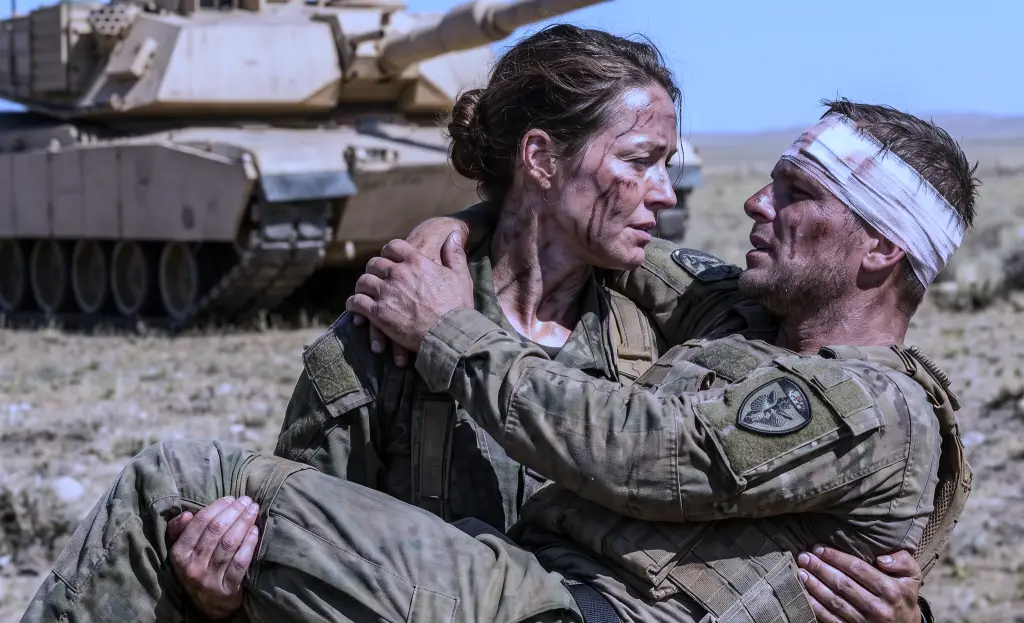
“They’ve got the colonel, repeat. Hostile forces have captured Colonel Robert Keane.”
Before the operator could give a grid coordinate, the audio feed disintegrated into a chaotic symphony of violence. I heard the sharp, concussive cracks of automatic weapons, followed by frantic, guttural shouting in Arabic that echoed through a distant concrete corridor. Then came a heavy, crushing silence as the channel died completely. I stared at the plastic radio housing, my heart hammering against my ribs, while my brain instantly began cataloging the worst-case scenarios. In the Careth Basin, the insurgent factions didn’t seize high-ranking American officers for ransom or political leverage. They took them for propaganda—highly orchestrated, filmed atrocities designed to break a nation’s resolve on the evening news.
The standard operating procedure was tattooed on the back of my eyelids. The textbook answer required me to notify the chain of command, log the incident, form a joint planning cell, and coordinate with regional headquarters for a dedicated rescue force. It was a beautiful, logical process that took hours to execute. By the time the paperwork cleared the first general’s desk, Robert Keane would likely be a body dumped in a nameless desert trench.
My eyes drifted back to the satellite map. My local informant network had already pinned a red digital marker on a fortified compound exactly fifteen kilometers northeast of our position. I thought of the man who had spent the last three years keeping me alive, protecting my career when the rest of the military establishment wanted to bury it. I didn’t ask for permission. I reached for my rifle, slung every loaded magazine I owned across my chest, and walked out into the dark. Sometimes, the only way to survive the darkness is to walk straight into it alone, showing the enemy that taking one of our own is the last mistake they will ever make.
Three years earlier, when I first arrived at the unit as a green lieutenant fresh from Ranger School, my boots still smelled of the Georgia swamps. I was a woman entering a combat arms specialty that was still deeply uncomfortable with my existence. The skepticism from the junior enlisted and the quiet resentment from the senior NCOs felt like a freezing mist that followed me into every briefing room. I was fighting an invisible war just to prove I belonged in the room.
Colonel Robert Keane was the first person who didn’t look at my gender; he looked right through it. He was a thirty-year veteran with a face carved from granite and eyes that had seen the absolute worst of humanity across two continents. Our very first encounter in his office was stripped of any polite military protocol.
“Lieutenant Cross, I don’t care if you’re male, female, or a Martian,” he had said, his voice a low, gravelly rumble that brooked no deception. “Can you lead soldiers in combat?”
“Yes, sir,” I replied, staring straight ahead, my jaw locked.
“Then prove it.”
For thirty-six months, I did exactly that. Across two grueling deployments, I led my platoon through ambushes, night raids, and the tedious horror of counter-insurgency work. I earned the respect of men who had spent their entire lives believing women belonged anywhere but the front lines. I proved that when the bullets start tearing through the drywall, gender is a luxury nobody has time to think about; all that matters is the speed of your transition and the clarity of your judgment.
Keane had been there through every single mile of that journey—mentoring me, challenging my assumptions, and sharpening my tactical mind until it was razor-sharp. Now, he was sitting in a dark room, facing men who would gladly torture him for radio frequencies before executing him for a camera.
Our secure facility in the Careth Basin was officially designated as an observation post—a minor diplomatic footprint to reassure our allies and monitor local cell resurgence. In reality, it was a shadow kingdom, a staging ground for deniable operations that lived in classified files most conventional generals didn’t even know existed. I served as the site’s operations officer, a job that meant I spent fourteen hours a day managing intelligence assets and watching the invisible chess match play out across the province.
Keane had flown in forty-eight hours prior for a routine logistics inspection. He was supposed to review our perimeter defenses, sign off on fuel manifests, and be back at the capital by nightfall. His return convoy, however, never made it past the salt flats. The ambush was professional, perfectly coordinated, and executed with a terrifying precision that suggested his route and departure time had been leaked for a handful of local currency.
His security detail fought like cornered wolves. Monitoring the radio traffic from the operations center, I had listened to their calm, measured voices calling out contacts and directing fire until they were simply overwhelmed by numbers. When the smoke cleared and the support drones finally arrived over the grid, the vehicles were burning hulls, and Keane was gone.
Major Vaughan, our site commander, was a brilliant intelligence analyst who could map insurgent networks on a whiteboard with stunning clarity, but he had never felt the concussive thump of a mortar or looked into the eyes of a soldier bleeding out in the dirt. He immediately defaulted to the standard hostage recovery playbook. He locked down the facility, drafted an urgent message to higher headquarters, and began sketching out theoretical courses of action while requesting special operations support from a base three hundred miles away.
Everything he did was by the book, and every single second he wasted was a second Keane didn’t have. I studied the fresh intelligence reports with the cold, detached clarity my training had beaten into me. My informants had traced the capture vehicle to a mud-brick compound in a crumbling village fifteen kilometers to the northeast. The location was confirmed within an hour of the ambush.
The compound was a fortress, reinforced with concrete barriers and guarded by roughly twenty seasoned fighters. It was surrounded by a civilian population that either actively sympathized with the cell or was far too terrified to speak to us. A conventional rescue operation would require a full platoon, air clearance, and hours of tactical rehearsals. Major Vaughan looked at the same data on the screen and made the only call his bureaucratic mind could handle.
“We wait for special operations assets,” Vaughan said, his pen hovering over a map overlay. “This explicitly exceeds our local organic capability.”
I looked at the same image and saw a different reality. Fifteen kilometers was close enough to strike before the morning sun broke the horizon. Twenty fighters could be systematically dismantled with a bold plan and ruthless execution. To me, “beyond our capability” was just a phrase conventional units used when they were too afraid to risk their careers on an unapproved choice. I hadn’t spent years breaking through glass ceilings and earning a Ranger tab just to sit in a climate-controlled operations center while my mentor was slaughtered on a live feed.
At exactly 0400 hours, I slipped out of the command post without a word. I went to the arms room and prepped my gear with methodical, unhurried precision. I shouldered my customized M4 carbine, checked the optics, and loaded six magazines into my chest rig—two hundred and ten rounds of ammunition. I grabbed a third-generation night-vision visor, a specialized combat medical kit, and stepped out into the freezing desert air toward the motor pool.
The young specialist on gate duty blinked against the low beams of my vehicle, his rifle slung casually over his shoulder. “Ma’am? You aren’t on the morning movement log.”
“Emergency supply run to Outpost Vega,” I said, my voice completely flat, carrying the absolute authority that junior soldiers never dare to question. “They had a generator failure and need medical supplies before first light. I’ll be back before morning formation.”
The guard hesitated for a single heartbeat, his mind weighing the strict regulation against the direct gaze of a captain who looked like she was on a mission from God. He stepped back and punched the button to raise the metal barrier. That single moment of hesitation bought me the ten-minute head start I needed before the operations center realized my workstation was empty.
I drove an unmarked, battered civilian pickup truck northeast, pushing the engine through terrain that varied from treacherous washboard roads to open, rocky desert that seemed actively designed to snap an axle. Through the green phosphorus glow of my night-vision goggles, the Careth Basin looked like a ghostly, emerald maze of dry riverbeds and abandoned stone structures. I drove with my rifle resting across my lap, my thumb resting lightly on the safety selector, the windows rolled all the way down despite the biting cold so I could hear the roar of another engine before I saw it.
I had operated in this specific sector long enough to know which paths were littered with makeshift explosives and which villages to skirt entirely. The drive took forty grueling minutes, a journey that would have taken hours on foot. I finally killed the headlights and the engine two kilometers from the target, parking the truck behind the deep, jagged shadow of a limestone ridge. From this point forward, the intervention would be entirely on foot, moving through an absolute silence that felt heavy with the promise of violence…
To read the rest of the story – CLICK the NEXT button 👇👇👇