


The morning sun crested the horizon at the Amboseli Conservation Center, baking the red earth and throwing long, sharp shadows across the sanctuary. It was Day 12 of Kuzu’s residency. For Dr. Rebecca Walsh, it marked the beginning of the most baffling medical crisis in the facility’s twenty-year history.
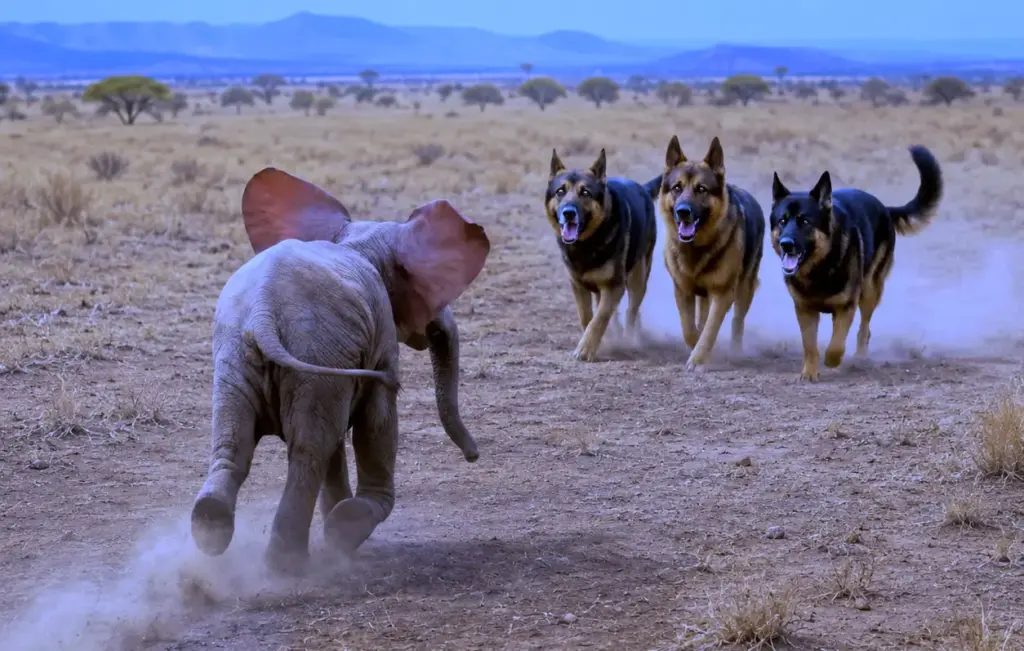
Kuzu, a six-month-old elephant calf, had stopped eating entirely.
She lay motionless in the center of her sprawling enclosure, her slate-gray form curled tightly in on itself. The habitat had been designed to mimic the sweeping Kenyan savannah, complete with scattered acacia and soft dirt mounds, but the calf simply huddled in the dust. Her trunk was tucked defensively beneath her head, her eyes half-closed against the rising heat.
Dr. Walsh stood on the wooden observation deck, gripping the railing. As the center’s lead behavioral specialist, she had spent three decades deciphering the complex social and psychological lives of elephants. She knew what illness looked like. She knew what trauma looked like. But the sight of the deteriorating calf below sent a cold spike of helplessness through her chest.
The sun climbed higher, pushing the temperature past eighty-five degrees. Kuzu remained entirely indifferent to the warmth.
The situation defied every established principle of elephant psychology Walsh knew. She looked down at the aluminum clipboard resting on the railing. The stack of recent lab results showed a perfect comprehensive metabolic panel. Kuzu’s white blood cell count was normal. Her core temperature held steady at ninety-eight degrees. The scattered, superficial scrapes she had sustained during her initial rescue were completely healed.
From a strict veterinary standpoint, the animal was in excellent health. But looking at the dull, flattened posture of the calf, Walsh knew something profound had broken.
It was a stark, jarring contrast to the animal’s arrival. Three weeks prior, a transport truck had backed up to the sanctuary’s intake gates, delivering Kuzu from a temporary field foster placement. When the handlers first lowered the metal ramp, the calf was weak and mildly dehydrated, but she was intensely alive. The veterinary staff had celebrated her stabilization as a textbook triumph.
Within forty-eight hours, Kuzu was eagerly draining massive, two-gallon bottles of fortified milk formula. She had ambled around her quarantine yard with the bright, probing curiosity typical of a toddler. Her trunk had investigated every stone, every water trough, and every reinforced gate hinge she could reach.
She had even shown the expected milestones in her social development. Walsh had personally observed the calf reaching her small trunk through the steel fencing, tentatively seeking physical contact with the older, permanently rescued females in the adjacent paddocks. It was a standard, healthy display of the deep-rooted social dependency that defined her species.
But the progress had stalled, and then violently reversed.
The subtle changes began on day nine. It started with Kuzu spending unusually long stretches of time lingering near the main access gate. She would stand perfectly still, her amber eyes fixated on the distant tree line, scanning the horizon with an intensity that put the seasoned caretakers on edge. Her previously voracious appetite tapered off to a few half-hearted pulls from the bottle.
When Walsh pulled the overnight security footage, the real scope of the problem became clear. In the grainy, night-vision green of the monitors, Walsh watched hours of restless, agitated pacing. The calf walked the perimeter fence line for miles in the dark. Every few yards, Kuzu would stop, lifting her trunk high into the cool night air, testing the wind as if trying to pull a familiar scent from the dark.
By day twelve, the pacing stopped. Kuzu spiraled into a complete physical collapse.
She flatly refused the sweet feed. She ignored the formula. She barely touched her fresh water supply. Instead of pacing, she spent the entirety of the day locked in the exact same corner of her enclosure, practically cemented to the earth. The bright spark of curiosity in her eyes hollowed out, leaving behind a dull, listless stare.
Desperate to find a hidden biological cause, the veterinary team ran Kuzu through every diagnostic available. They drew more blood, ran broad-spectrum parasite panels, and monitored her biometrics around the clock. Every single test came back with the same agonizingly perfect numbers. Physically, there was no pathogen. Kuzu was simply choosing to fade away.
Walsh immediately pivoted, treating the crisis as a severe psychological trauma. She threw every behavioral intervention in her playbook at the enclosure.
She organized closely monitored contact sessions with Elani, the sanctuary’s eldest matriarch. Walsh stood by the fence, hoping the massive female’s deep, subsonic rumbles and maternal instincts might coax the calf upright. Elani reached her trunk through the bollards, blowing warm air over Kuzu’s back, but the calf didn’t even shift her weight.
Walsh overhauled the living space. The staff hauled in a barrage of new enrichment items—tactile puzzle feeders, varied brush textures, and fresh mud wallows. Walsh even rigged a PA system near the observation deck, broadcasting high-fidelity audio recordings of wild African herds communicating in the bush, hoping to trigger a herd response. None of it worked. The calf remained completely withdrawn, her breathing growing shallower with each passing hour…
To read the rest of the story – CLICK the NEXT button 👇👇👇