


The fluorescent lights in the pediatric intensive care unit at Penn Regional Medical Center didn’t just hum; they carried a faint, irregular electrical rattle. Over the last three months, Riley Stanton had memorized the rhythm of that rattle. It was the soundtrack to her confinement. She sat slumped in a rigid vinyl armchair that offered zero lumbar support, her faded denim jacket pulled tight across her shoulders against the perpetual chill of the ward. Her fingertips rested lightly against the clear, thick plastic of the medical crib. Inside that enclosure lay Wyatt. At six months old, he was already small for his age, but the sheer volume of medical tubing, sensor wires, and respiratory corrugated plastic swallowing his body made him look impossibly fragile.
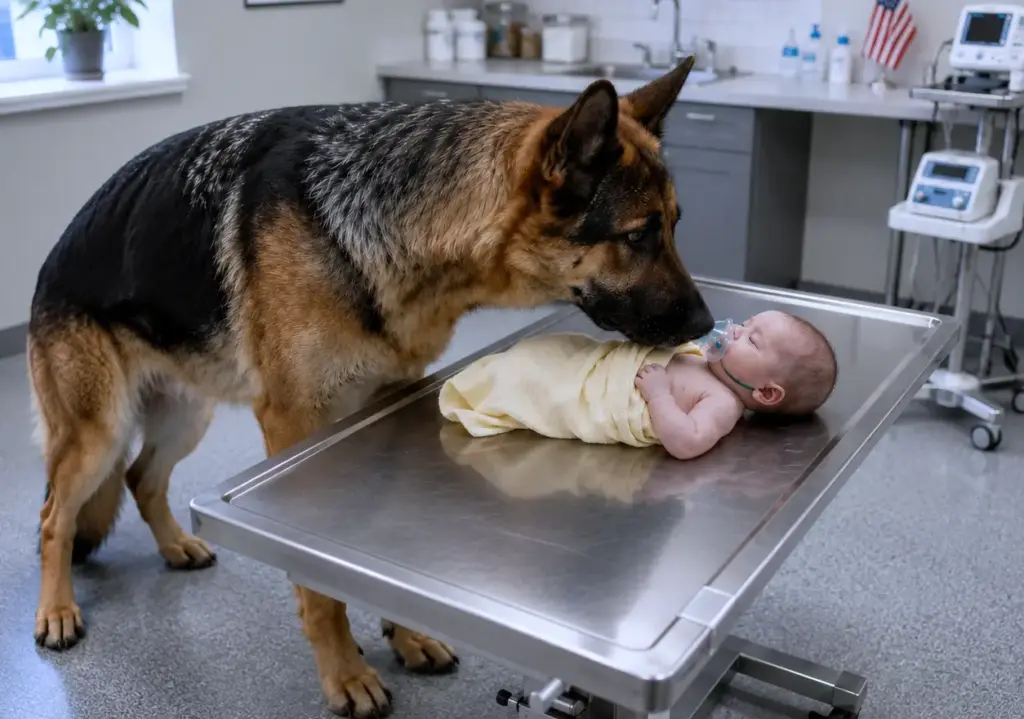
The rhythmic, mechanical sigh of the ventilator had long since replaced the ambient sounds of normal infancy. Wyatt lay incredibly still. His tiny chest rose and fell with a labored, shuddering effort, dictated entirely by the machine beside him. A single wisp of soft brown hair—the exact shade of the father who had walked out the day the medical bills started piling up—curled damply against his pale forehead, held down by a strip of white medical tape securing a feeding tube.
Riley slipped her hand through the round access portal of the crib. She stroked his head with a touch as light as a falling leaf.
“Hey, buddy,” she whispered. She forced her voice to stay even, pushing down the heavy ache lodged in her throat. “Mama’s right here. I’m not going anywhere. You just rest.”
The heavy glass door slid open on its metal track, and Linda, the veteran morning-shift nurse, stepped into the room. Linda moved with the quiet, practiced efficiency of a woman who had spent thirty years on her feet. She checked Wyatt’s vitals on the stacked monitors, charting the numbers on her digital tablet before making microscopic adjustments to the slow drip of his intravenous fluids.
Usually, Linda would offer a tired smile, maybe a comment about the Pittsburgh weather or a complaint about the cafeteria coffee. Today, she worked in complete silence. Before leaving, she paused, resting a warm hand on Riley’s shoulder. The grip was a fraction too tight, lingering a second too long.
“Dr. Marshall is going to come in and speak with you in a few minutes, Riley,” Linda murmured.
Riley gave a tight nod. After a quarter of a year living in this ward, she had learned to read the subtle telemetry of the hospital staff. She knew the difference between a routine check-in and the careful, guarded posture they adopted when the news was bad. A cold knot pulled tight in her stomach. Something fundamental had shifted in Wyatt’s chart overnight.
When Dr. Marshall finally entered, his customary brisk stride was gone. He closed the glass door securely behind him, shutting out the ambient noise of the corridor. He didn’t look at the monitors. Instead, he pulled up a rolling stool, lowering himself so he was directly at eye level with Riley. He rested his forearms on his knees, his shoulders slumping slightly beneath his white coat.
“Riley,” Dr. Marshall began. He held her gaze, and the air seemed to drain out of the room. “We’ve pushed the antibiotics as far as they can go. I’m sorry to tell you that Wyatt’s condition is continuing to decline. The bacterial infection has proven resistant to the broad-spectrum course, and his kidneys are beginning to show signs of critical stress.”
Riley’s hands dropped to her lap. Her fingernails bit into the fabric of her jeans. “There has to be another combination,” she said, her voice thin and breathless. “Another trial. You said yesterday we could look at the new anti-inflammatories.”
“We consulted with the infectious disease specialists over at the university hospital,” Dr. Marshall said softly. He didn’t reach for his chart to hide behind the data; he just looked at her with genuine, quiet sorrow. “At this stage, his organs cannot process any more chemical intervention without causing him severe pain. The most compassionate option we have left is to begin the transition to palliative care. We need to focus on keeping him comfortable.”
“No.” The word tore out of Riley before she could stop it. “He’s fighting. He’s made it three months, Dr. Marshall. He just needs more time.”
“I know how hard it is to hear this,” the doctor said, keeping his voice steady. “But we are at the point where continuing aggressive intervention is only going to prolong his suffering.”
Riley slowly turned her head to look at her son. A wave of fragmented memories hit her: the first time his eyes had focused on hers in the recovery room, the way his impossibly tiny fingers used to lock fiercely around her thumb, and the brief, unclouded periods of calm he used to have whenever Ranger walked into the room.
Ranger was a massive, thick-coated German shepherd, the anchor of the hospital’s former animal therapy program. The dog and the baby had formed an instantaneous bond. The nurses used to marvel at the monitors; Wyatt’s erratic heart rate would physically steady the moment the shepherd rested his heavy chin on the edge of the plastic mattress tray.
“Ranger,” Riley blurted out, turning back to the doctor, desperate for any tether to a positive outcome. “Could we get Ranger in here? Wyatt always responded to him. It lowered his blood pressure. It helped.”
Dr. Marshall’s expression shifted, caught between sympathy and administrative reality. “Riley, you know they suspended the K-9 program last month. It was a budget decision from the new board.”
“Please,” Riley begged, abandoning all pride. She leaned forward, gripping the edge of the doctor’s white coat. “Just one visit. If we’re transitioning to… if this is it. He deserves a few minutes of peace. The dog gave him that.”
Dr. Marshall exhaled a long, tired breath. “It requires approval from the floor administrator, especially given his critical status. I’ll speak with Dr. Sterling. But I need you to prepare yourself for a no.”
The next few hours dragged in an agonizing, suspended crawl. Riley spent the afternoon watching the oxygen saturation numbers fluctuate on the monitor, whispering quiet, desperate promises to her unresponsive son.
Around two in the afternoon, the sharp, authoritative click of hard-soled heels echoed down the hallway.
Dr. Sylvia Sterling stopped at the foot of Wyatt’s crib. She wore a tailored charcoal blazer over a crisp silk blouse, her dark hair pulled back into a severe, flawless knot. She looked less like a medical professional and more like a corporate litigator. The contrast between her immaculate presentation and Riley’s rumpled, exhausted appearance felt vast and deliberate.
“Ms. Stanton, Dr. Marshall brought your request to my attention,” Dr. Sterling stated, consulting a sleek silver iPad rather than looking at the baby. Her voice was smooth, measured, and entirely devoid of warmth.
“Dr. Sterling, I just want—”
Sterling raised a single, manicured hand, cutting Riley off with practiced ease. “We are currently preparing for a major walkthrough tomorrow. The entire intensive care ward is under strict orders to maintain absolute infection control protocols. Introducing a canine into a sterile environment, even a former therapy animal, presents unacceptable liability risks.”
“Ranger came to this exact room for two months without a single issue,” Riley argued, keeping her voice low so as not to spike Wyatt’s monitors. “He’s a certified support animal. He’s clean. He’s trained.”
“The program was suspended for valid logistical reasons,” Dr. Sterling countered smoothly. “I cannot make arbitrary exceptions to hospital policy. We are expecting a personal visit from Eleanor Prescott tomorrow morning. The Prescott Foundation’s pending grant will fund the multimillion-dollar renovation of this entire wing. We cannot have an animal shedding dander in the corridors during an inspection of our sterile capabilities.”
Riley stared at the administrator, the sheer calculation of the response rendering her momentarily speechless. “My son’s kidneys are failing,” she said, her voice dropping to a harsh whisper. “He doesn’t have days. He has hours. And you’re telling me you won’t let him have five minutes of comfort because you’re worried about a photo op with a donor?”
“I understand that you are processing difficult news,” Dr. Sterling replied, employing a tone dripping with professional condescension. “However, my responsibility is to the operational integrity of this entire facility. The answer is no. I’m sorry.”
As the administrator turned and walked away, her heels clicking sharply against the linoleum, Riley looked back at Wyatt. He looked devastatingly small. The crushing reality of her mounting medical debt—the endless shifts she had worked at the diner, the final notices stacked on her kitchen counter at home—hovered over her. She knew she would never outrun the bills. But looking at her dying child, the money meant nothing. Time was the only currency left, and she was bankrupt.
Later that evening, the ward lights dimmed for the night shift. Nurse Linda slipped quietly back into the room holding a small plastic cup of medications. She checked the corridor before letting the heavy glass door slide shut.
“I saw Sterling leaving earlier,” Linda whispered, keeping her back to the hallway window as she documented the IV lines. “I heard what she decided. I’m so sorry, Riley. That shepherd was magic with this boy.”
Riley pressed the heels of her hands against her stinging eyes. “I just wanted him to feel it one last time. Is that really too much to ask a hospital?”
“No. It isn’t.” Linda paused, her hands resting on the stainless-steel prep cart. “You know, I actually still have Jack Callahan’s number saved in my contacts. Ranger’s handler. Jack was furious when administration axed the program to save a few bucks.”
A tiny, dangerous spark ignited in Riley’s chest. She dropped her hands, looking at the older nurse. Linda’s face remained neutral, but there was a fierce, quiet rebellion in her eyes.
“Legally, I cannot hand a patient’s mother private contact information,” Linda murmured, her voice dropping to a barely audible register. “But, if I were to accidentally leave my personal cell phone unlocked on the breakroom table while I go do my rounds… well.” Linda met Riley’s gaze, holding it for a long second.
“Thank you,” Riley breathed, the words barely making it past her lips.
“I am taking my scheduled fifteen-minute break right now,” Linda announced at a perfectly normal volume. “I will be back to check Wyatt’s vitals when I’m done.”
As Linda’s rubber-soled shoes squeaked down the hallway, Riley looked down at her son. Every ragged breath he drew through the plastic tubing was a war. She thought of Dr. Sterling’s icy dismissal, prioritizing a wealthy donor’s checkbook over a dying infant’s peace. The bone-deep exhaustion and the suffocating grief of the past three months suddenly crystallized into a hard, cold determination.
“You’re going to see your dog,” Riley whispered, leaning her forehead against the plastic crib. “I’m going to fix this.”
She stood up, her stiff joints popping. The staff breakroom was fifty feet down the corridor. She had exactly fifteen minutes to secure the information. She had fifteen minutes to decide if she was willing to openly defy a hospital administration that viewed her child as a liability rather than a life.
Riley squared her aching shoulders. For Wyatt, she would burn the entire building to the ground if she had to. She stepped out into the hallway, moving with quiet purpose toward the breakroom door, which stood ever so slightly ajar.
Through the narrow gap, the glowing screen of Linda’s phone illuminated the dark table like a beacon. Riley pushed the door open and stepped into the dim room, her pulse hammering against her ribs. The suffocating weight of her reality was still there, but now it was accompanied by a fierce, wild hope…
To read the rest of the story – CLICK the NEXT button 👇👇👇