


The clippers had not started when Anna Whitaker’s phone lit up with her husband’s name. Tori, the mobile groomer, had just fastened a blue nylon loop around Clover’s neck and was testing its slack with two fingers. The cat stood rigid on the rubber-topped table, her white paws spread wide, watching Anna as if the next decision belonged to her.
Anna let the call ring twice before answering. “I’m busy.”
“Then listen,” Russell said. His voice came through clean and quiet, the tone he used when he expected agreement rather than conversation. “If that cat comes back looking the same, she doesn’t come back at all.”
Tori’s hand stopped on Clover’s shoulder. Anna turned toward the van’s narrow window, though there was nothing outside except the condo’s concrete loading bay and a parked delivery truck.
“I heard you this morning,” she said.
“Good. I have dinner with the board tonight. I’m not finding hair on another jacket.”
The call ended before Anna could answer. Clover’s ears flattened at the faint electronic click, and Tori looked from the dark phone screen to the cat.
“You’re sure you want a full lion cut?” she asked. “Her coat isn’t matted. It won’t fix shedding permanently, and she may feel exposed for a while.”
Anna knew all of that. She had read it at 2:00 a.m., sitting on the bathroom floor while Clover hid behind the laundry hamper and Russell slept with the bedroom door shut. She had also read about stress, skin sensitivity, and the way some cats withdrew after being clipped too close.
“Leave enough to keep her comfortable,” Anna said. “But take it short.”
Tori studied her for one beat longer, then lowered the clear guard over the clipper blade. “I’ll go slowly.”
That morning, Russell had found three pale hairs on the sleeve of his charcoal suit. He had not raised his voice. He had stood in the kitchen under the pendant lights, pinching the hairs between his thumb and forefinger while Anna held a mug she no longer wanted.
“I asked for one room in my own home that doesn’t look like an animal lives there,” he had said.
“The cat isn’t allowed in your office.”
“Then explain this.”
Anna could not. A hair might have clung to her blouse, the couch, or the dry-cleaning bag. Clover’s existence traveled in ways Anna could not fully contain, no matter how often she brushed her on the balcony or ran the vacuum along the baseboards before Russell came home.
Russell had set his coffee down with care. “By tonight, either the problem is solved or the carrier goes outside the condo door with her in it.”
Clover had been under the breakfast bench. Anna had seen only the white tips of her paws disappear when Russell pushed back his chair.
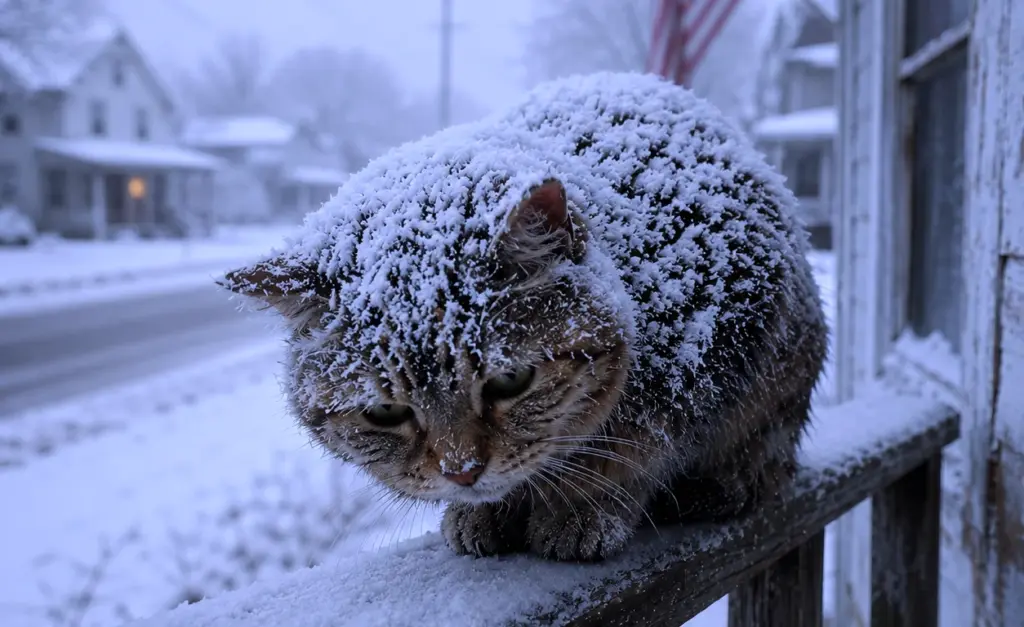
Six months earlier, Anna had found her behind a grocery store in freezing rain. The kitten was wedged between a stack of shopping carts and a concrete wall, too cold to run and too hoarse to cry properly. Anna had tucked her inside her coat and driven home with one hand on the wheel and the other cupped around a heartbeat smaller than a watch.
For the first two days, she called her “the kitten,” pretending temporary things did not need names. On the third morning, the kitten climbed onto Anna’s chest, sneezed into her chin, and fell asleep there. Anna named her Clover because finding anything alive in that weather had felt like luck.
Russell had said yes with conditions. Anna would handle the food, litter, vet visits, scratches, smells, and fur. He did not want to hear her at night or see bowls near the kitchen. Most of all, he had said, “I don’t want my life rearranged around an animal.”
Anna rearranged hers instead.
Inside the grooming van, the clipper motor came alive with a hard electric hum. Clover’s front legs bent at once. Tori steadied her without pinning her and spoke in a low, ordinary voice about the weather, about a Persian she had groomed that morning, about anything that did not sound afraid.
The first strip of gray fur slid from Clover’s back and folded onto the table. She twisted toward Anna, eyes wide, but the loop and Tori’s hand kept her in place.
“It’s okay,” Anna said.
Clover stared at her.
The words felt shameful the moment they left Anna’s mouth. Nothing about the table, the restraint, or the blade touching Clover’s skin was okay to the cat. Anna had brought her there because Russell had made cruelty sound like a practical deadline, and because Anna had spent years mistaking the avoidance of conflict for protection.
Tori paused. “We can stop.”
Anna looked at the soft coat already missing from one side. If she stopped now, Russell would see failure. If she continued, Clover would carry the cost.
“Finish,” she whispered.
Fur gathered around Tori’s shoes. Clover fought during the first few passes, then went still in a way that was easier for the groomer and worse for Anna to watch. By the time the nylon loop came off, her body looked narrow beneath the little mane left around her head, and the skin along her back quivered beneath the van’s cool vent.
Anna opened the carrier. Clover stepped into it without being guided and turned her face toward the back wall.
Tori packed her tools slowly. “Keep her warm. Give her a quiet room. And don’t make her interact before she’s ready.”
“I won’t.”
Tori’s expression said she hoped that was true.
Russell came home after eight. He set his keys in the brass bowl by the door, loosened his tie, and saw Clover watching from beneath the console table. For the first time since Anna had brought the cat home, he crouched to look at her.
“Better,” he said.
Clover backed into the wall until her clipped side pressed against it.
Anna stood near the kitchen island with both hands around the edge of the counter. “She’s frightened.”
“She’ll get over it.” Russell rose and brushed an invisible speck from his trousers. “Take her to the cabin for a few weeks. She can stay on the screened porch until the coat grows back.”
Anna looked at him. “I may stay too.”
He had already turned toward the bedroom. “That’s probably best.”
The sentence should have hurt more than it did. Instead, something inside Anna became very quiet and very clear.
Later, after Russell went to sleep, she sat on the floor beside the guest-room bed. Clover had wedged herself underneath it, beyond Anna’s reach. Anna did not call or offer treats. She placed her hand palm-up on the carpet and waited until a cold nose touched one fingertip.
“I thought keeping him calm would keep you safe,” she said. “I’ve been wrong about that for a long time.”
Clover did not come closer, but she stayed.
Anna packed before dawn. She put clothes in one suitcase and work papers in another, then added her passport, bank records, copies of the cabin paperwork, and a folder she had picked up two weeks earlier from a family-law office in Milwaukee. She hesitated over the folder, then slid it beneath two sweaters.
Russell found her fastening the carrier into the passenger seat. He wore running clothes and held a travel mug, as if she were leaving for an ordinary weekend.
“How long?” he asked.
“I don’t know.”
His eyes moved to the packed back seat. “You always know.”
“Not this time.”
For a moment, she expected him to order her upstairs. Instead, he took a slow drink and stepped away from the car. “Don’t turn this into theater, Anna. You’re upset about a haircut.”
She closed the passenger door. “No. I’m upset that she knew to hide before you even came into the room.”
Russell’s mouth tightened, but Anna was already walking around the hood. Her hands shook when she started the engine. She drove out of the garage without looking in the rearview mirror until the building had disappeared behind the freeway ramps.
The cabin stood on the edge of Pineglass Lake, three hours north of Milwaukee, where the road narrowed between pines and cell service faded in and out. The cabin had belonged to Anna’s aunt. After her death, Russell bought it from the estate, kept the deed in his own name, and renovated it before gradually teaching Anna to call it theirs. It had old plank floors, a stone fireplace, and a screened porch that smelled of cedar boards warmed by the sun.
Clover remained in the carrier for nearly twenty minutes after Anna opened it. She tested the air, listened to a chickadee calling from the birch tree, and finally placed one white paw onto the porch. Anna stayed seated on the floor several feet away.
By late afternoon, Clover had found the darkest corner under a wicker bench. Anna brought a folded quilt, a shallow dish of water, and half a spoonful of wet food. She did not touch her.
The first purr came after sunset, so faint Anna thought at first it was an insect against the screen.
Then tires ground over the gravel beyond the gate.
Clover stopped purring. Her body flattened before the black SUV appeared between the trees.
Russell parked beside Anna’s car and climbed out with Clover’s gray felt bed under one arm. In his other hand, a new brass padlock swung from a short length of chain.
Anna stepped off the porch. “What is that?”
“The gate latch is loose.” He carried the chain to the entrance and threaded it through the metal bars. “I don’t want her wandering onto the road.”
“You could have brought a hook.”
Russell snapped the padlock shut. The sound traveled cleanly across the yard. Behind Anna, Clover gave one small, frightened cry. Russell slipped the only visible key into his pocket. “There,” he said. “Now nothing gets out…”
To read the rest of the story – CLICK the NEXT button 👇👇👇