


The plastic bag on the hospital counter had his son’s blood inside. Ethan Mercer noticed that first. Not the nurse’s careful voice. Not the paper bracelet being slid across the counter for him to confirm. The blood. It had dried almost black into the torn sleeve of Noah’s green volunteer hoodie, the one he wore every Saturday morning at the animal shelter because the dogs knew him by smell before they knew him by name.
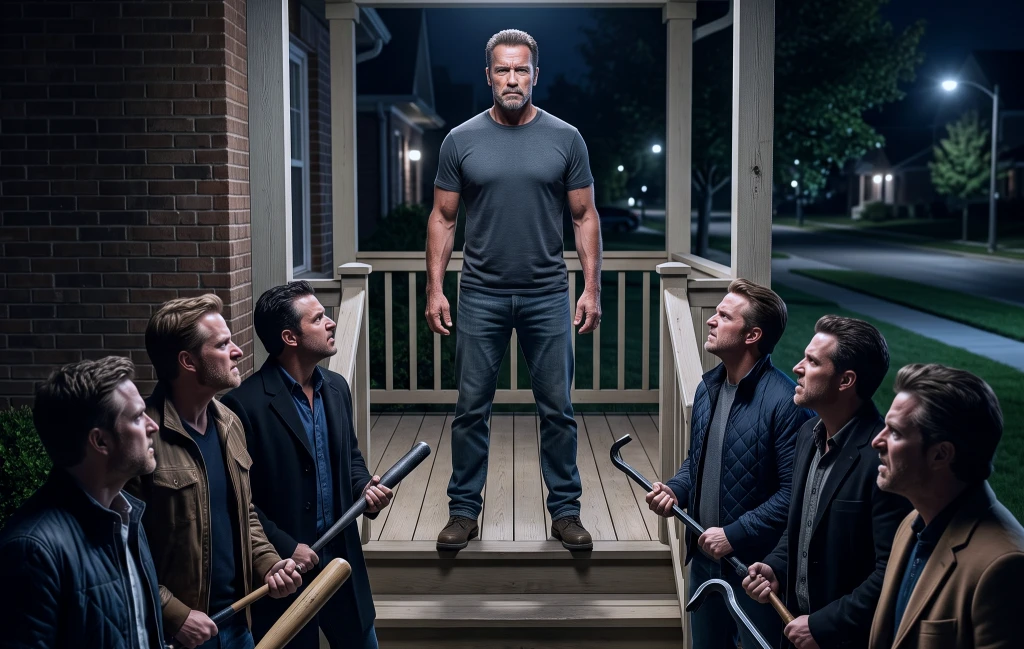
Beside the hoodie lay one cracked lens from his glasses, a broken phone, and a sneaker with the laces missing.
“Mr. Mercer?” the nurse asked softly. “I’m sorry. We need you to sign for his belongings.”
Ethan did not reach for the pen right away. He stood in the fluorescent brightness of Mason County Medical Center with his truck keys still clenched in one hand, listening to a ventilator hiss behind a glass wall. He had been retired from the Army for three years, long enough to repaint the porch, learn how to make decent pancakes, and stop waking up at every passing siren. At least that was what he told people.
Then Cedar Ridge High School had called at 2:43 on a Tuesday afternoon, and the voice of Noah’s English teacher had come through the phone thin with fear.
“Mr. Mercer, it’s Sarah Voss. There’s been an incident. Noah’s being taken by ambulance. Please come to the hospital.”
“What happened?” he had asked.
A pause had followed, too long to be accidental.
“The football players,” she whispered. “I tried to get there in time.”
Now Noah lay in an ICU bed on the other side of the glass, seventeen years old and barely visible under wires, gauze, and swelling. The left side of his face had bloomed purple. A bandage wrapped his head. His chest rose only because the machine beside him insisted on it.
Ethan signed the form with a hand that did not shake.
A doctor came in a few minutes later, a woman with tired eyes and a white coat folded at the sleeves. “I’m Dr. Anita Rhodes,” she said. “Your son has a severe concussion, a small skull fracture, three broken ribs, and significant bruising around the abdomen. He’s stable for now, but the next forty-eight hours matter.”
“For now,” Ethan repeated.
Dr. Rhodes did not flinch from him. He appreciated that. “He’s young. He’s strong. That helps. But we’re watching the swelling closely.”
“Was he conscious when they brought him in?”
“No.” Her mouth tightened. “The paramedics said school security found him in the west stairwell.”
School security. Found him. The words arrived dressed like facts, but Ethan could hear what they were covering. He had spent half his adult life listening for the space between official language and truth.
A uniformed officer stood near the nurses’ station, speaking quietly with a man in a rumpled gray suit. The man looked over once, then came toward Ethan with a small notebook in his hand.
“Mr. Mercer. Detective Marcus Bell, Mill Creek Police.”
Ethan turned fully toward him. “Tell me what you know.”
Bell had the expression of someone who had already seen too much and expected to see worse before dinner. “Initial statements say there was an altercation after fourth period. Seven students involved. All varsity football players.”
“Altercation,” Ethan said.
“That’s the word the school used.” Bell’s jaw flexed. “Their story is that your son shoved one of them first, then things got out of hand.”
“My son weighs one hundred and thirty-eight pounds,” Ethan said. “He gets dizzy if he skips breakfast. He volunteers with scared dogs because he’s patient enough to sit on a kennel floor for an hour until they come to him. You’re telling me he started a fight with seven football players?”
“I’m telling you what their parents’ attorneys are already saying.”
Ethan looked back through the glass. Noah’s hand lay palm-up on the blanket, swollen at the knuckles, as if even unconscious he had tried to protect his face. “Names.”
Bell hesitated. Not long. Long enough.
“Logan Pierce. Mason Vance. Drew Sutter. Brady Keane. Miles Redford. Cole Abbott. Hunter Quinn.”
Ethan knew most of them by sight. Mill Creek was not a large town. Their faces stared from banners along Main Street every fall, shoulder pads squared under the slogan CEDAR RIDGE PRIDE. Logan Pierce was the quarterback with two college recruiters following him around like weather. Mason Vance’s father sat on the city council. Drew Sutter’s father owned half the construction trucks in the county. Miles Redford’s mother chaired the school board’s athletics committee.
“Are they in custody?” Ethan asked.
Bell glanced toward the ICU doors before answering. “They were taken to the station for statements. Their families arrived with lawyers. No arrests yet.”
“No arrests,” Ethan said.
“I don’t like it either.”
“Then change it.”
Bell lowered his voice. “I need witnesses willing to talk. I need footage. I need something that survives a courtroom. The school says the stairwell camera malfunctioned during that period.”
Ethan turned his head slowly. “Of course it did.”
The detective’s eyes held his. “I know who you were, Mr. Mercer. I read the quick background before I came in here. I also know what a father can become when his kid is in that bed. Don’t make this harder for him by doing something that lets them turn you into the story.”
For the first time since the phone call, Ethan felt something inside him want to move. Not rage exactly. Rage was loud and messy. This was colder, an old clarity sliding into place.
“My son is the story,” he said. “Don’t forget that.”
He stayed beside Noah until the sky outside the ICU windows turned dark. Nurses came and went. Machines beeped in patterns Ethan learned against his will. At one point, Noah’s blood pressure dropped and three people rushed in while Ethan stood outside the glass, useless in a way he had never been useless before.
He had carried wounded men under fire. He had read maps in dust storms. He had made decisions with seconds left and lives attached to each one. None of it helped him reach through a pane of glass and make his son breathe on his own.
Just after dawn, when Dr. Rhodes said Noah was still stable, Ethan drove to Cedar Ridge High.
The school sat on a rise above town, red brick in front, new athletic complex in back. The football stadium had fresh turf, a digital scoreboard, and donor plaques polished bright enough to catch the morning sun. Noah had once joked that the school treated the stadium like a cathedral and the library like a storage closet. Ethan had laughed at the time because Noah had.
He did not laugh now.
Principal Dale Wexler’s office was lined with framed photographs of winning teams. Wexler himself stood when Ethan entered, smoothing his tie as if the right knot could make him a decent man.
“Mr. Mercer,” he said. “I can’t tell you how sorry we all are. This is every administrator’s nightmare.”
“My son’s nightmare is happening in an ICU bed,” Ethan said.
“Of course.” Wexler folded his hands on the desk. “I only meant that we take this seriously. The boys have been suspended from team activities pending review.”
“Team activities.”
“And school discipline will follow policy. But I do want to caution against rushing to conclusions. These situations can be more complicated than they first appear.”
Ethan looked at the championship photos behind him. “Seven athletes cornered my son in a stairwell.”
“That is one interpretation.”
“What’s yours?”
Wexler’s mouth twitched. “There had been tension. Noah struggled socially. He could be, from what I understand, sensitive. Some students said he made accusations about the team.”
“Were the accusations true?”
“That’s not the point.”
“It usually is.”
Wexler sat back. His sympathy thinned. “Mr. Mercer, Cedar Ridge has a responsibility to every student involved. The young men you’re accusing have futures. Scholarships. Families. One terrible moment should not destroy seven lives.”
Ethan stared at him until the principal looked away first.
“One terrible moment,” Ethan said. “Is that what you’re calling it?”
“I’m saying we need perspective.”
“My son’s skull is fractured.”
“And we are praying for his recovery.”
“No,” Ethan said. “You’re praying this stays quiet.”
Wexler’s face hardened. “I understand you’re upset. But I won’t be threatened in my office.”
“I haven’t threatened you.”
“You came here with that military stare, expecting people to jump.” Wexler stood again, trying to reclaim the room with height and polished shoes. “This is not a battlefield, Mr. Mercer. This is a school. We have procedures. We have lawyers. And frankly, if Noah had concerns, there were appropriate channels.”
Ethan thought of Sarah Voss’s broken voice on the phone. I tried to get there in time.
“Show me the reports he filed,” Ethan said.
Wexler blinked once. “Excuse me?”
“If there were appropriate channels, show me what happened when he used them.”
The principal’s silence was almost an answer.
Ethan left without slamming the door. In the hallway, students moved around him in nervous currents, pretending not to stare. Some wore jerseys over hoodies. Some looked at their shoes. Near a row of trophy cases, a girl with a blue backpack saw him and started crying so suddenly that her friend pulled her into the bathroom.
Outside, Sarah Voss waited near the faculty parking lot, arms wrapped around herself though the morning was warm. She was in her early thirties, with dark circles under her eyes and a stack of ungraded essays pressed to her chest like a shield.
“Mr. Mercer,” she said. “How is he?”
“Alive.”
The word hit her visibly. She nodded, once, and looked toward the school windows. “I reported it. I need you to know that. Noah came to me in October, then again after winter break. They were shoving him into lockers, taking pictures, calling him names. He didn’t want to make it worse, but last week he said they had hurt another boy.”
“Who?”
“I don’t know. He wouldn’t tell me yet.” Her eyes filled. “He said he had proof. He was going to bring it to me after fourth period yesterday.”
Ethan absorbed that. “Did Wexler know?”
“I went to him three times. He told me not to turn teenage friction into a crusade.” Her voice dropped. “Yesterday, when I heard shouting in the west stairwell, I ran. By the time I got there, Coach Danvers was blocking the door and telling students to move along.”
“Coach Danvers was there?”
“For part of it. I think so. I saw his jacket.” She wiped under one eye with the heel of her hand, angry at herself for crying. “The camera over that stairwell didn’t malfunction. It was working when I passed it before lunch.”
Ethan said nothing for a moment. Cars hissed by on the road beyond the parking lot. Somewhere behind the school, a whistle blew on the practice field, sharp and ordinary.
Sarah looked at him. “Be careful. The Pierces and the Vances and the rest of them—they don’t just defend their kids. They protect the whole machine around them.”
“My son is not a machine part,” Ethan said.
“No,” she whispered. “He’s the reason I called you before the school could tell you their version.”
That evening, Ethan returned home for the first time in almost thirty hours. He showered because Noah would notice if he smelled like fear and hospital coffee when he woke. He changed into clean jeans. He stood in Noah’s bedroom doorway and looked at the unfinished sketch taped above the desk: a shelter dog with one torn ear, drawn so gently the animal seemed about to lift its head.
Then something scraped against the front door.
Ethan turned off the hall light and moved without sound. A small padded envelope slid through the mail slot and dropped onto the rug. By the time he opened the door, the porch was empty, the street quiet except for a sedan turning the corner too fast at the far end of the block.
He brought the envelope to the kitchen table. There was no note inside. Just a flash drive wrapped in a cafeteria napkin and a torn piece of notebook paper with five words written in shaky blue ink. WEST STAIRWELL. BEFORE THEY ERASED IT…
To read the rest of the story – CLICK the NEXT button 👇👇👇