


The radio cracked once, then a voice came through so hard with static it barely sounded human. “They took the Colonel. Repeat, they took Whitaker.”
Captain Mara Lawson had been standing over a paper cup of coffee gone cold hours ago, her eyes fixed on the glowing map inside the joint operations trailer. Around her, the room froze. Keyboards stopped. A dispatcher lifted one hand from her headset and held it in the air as if any movement might break the voice apart.
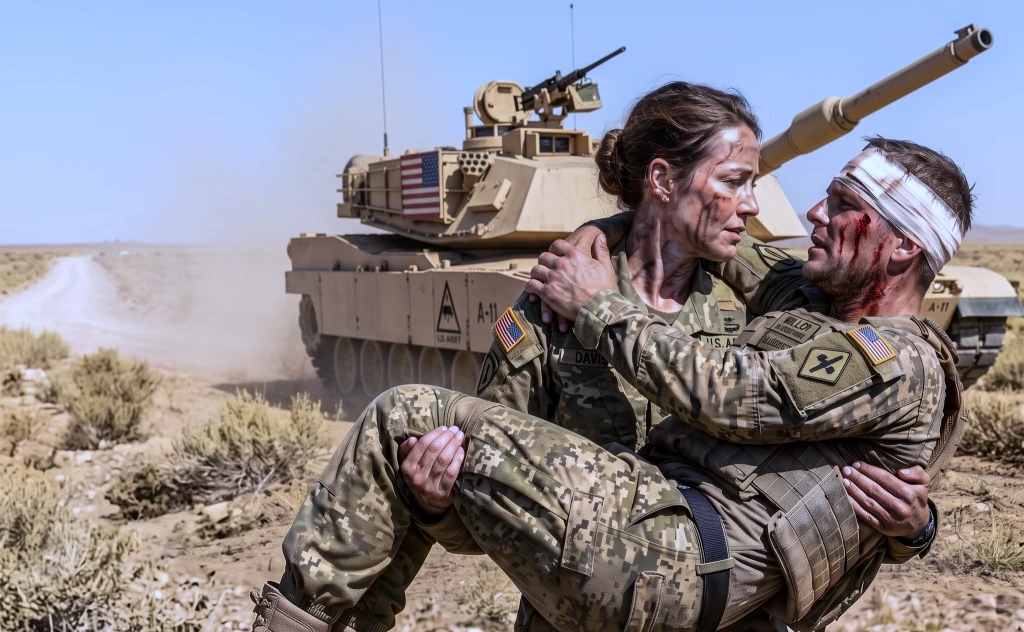
Gunfire snapped in the background of the transmission. Someone shouted. Then came the flat thump of something heavy, a burst of yelling, and the radio died.
For a moment, the only sound in the trailer was the hum of equipment and the rain ticking against the metal roof.
Mara did not ask which colonel. Everyone in that trailer knew. Colonel Thomas Whitaker, commander of the state police special operations task force, had been on his way back from an inspection checkpoint outside Black Hollow when his convoy disappeared from the tracker. He was the one person on that mountain road the armed men could use as leverage, the one face they could put on a camera and turn into a message.
Major Russell Pike was the first to speak.
“Lock down the comms,” he said, already reaching for the red binder beside the map table. “No one leaves this post. Notify the federal liaison. We follow hostage protocol exactly.”
Mara looked at the digital map. A red marker pulsed in the ridges twelve miles east, where the old Black Hollow coal plant sat behind rusted fencing and second-growth pine. The place had been closed for twenty years. People in Monongahela County still used it as a landmark because the coal tipple stood over the valley like a broken gallows.
“Sir,” Mara said, “if they have him there, they won’t wait for protocol.”
Pike did not look at her. He flipped through the binder with damp fingers, his lips moving as he read. “Captain, we are not freelancing a rescue because your nerves are up.”
“My nerves are fine.”
“Then use them to do your job.”
Several heads turned away from the exchange. Nobody wanted to be caught watching Pike put her back in place. Mara knew that movement. She had seen it when she first came into the tactical division seven years earlier, when men twice her size had looked at her like she was somebody’s mistake in a pressed uniform.
Back then, Whitaker had not softened the room for her. He had not made speeches about fairness or opportunity. He had simply handed her an operations packet thick enough to hurt if dropped on a foot and asked one question.
“Can you make decisions when people are bleeding and everyone else is talking?”
“Yes, sir,” she had said.
“Then prove it on paper first. Prove it under pressure next.”
He had given her the ugliest assignments, the worst hours, and the kind of correction that left no room for self-pity. But when others called her too cautious, too sharp, too ambitious, Whitaker judged only the work. By the end of her first year, the same troopers who had snickered behind coffee cups were asking her to check their raid plans before they handed them up the chain.
Now Whitaker was somewhere in the dark, injured or bound or both, with men who had already shown they wanted spectacle more than money.
Mara stepped closer to the map table. “Their last upload hit a fringe channel within eighteen minutes of the abduction. They edited fast. They’re not waiting for demands to be negotiated.”
Pike’s jaw tightened. “You don’t know that.”
“I know their pattern.”
“What you know is not a legal order.” He shut the binder and looked at the room as if the room belonged to him by volume alone. “We stage. We request federal tactical support. We get air. We get negotiators. We do this clean.”
Clean. Mara almost laughed, but there was no humor in her. Clean was what people called a decision when someone else would carry the body bag. Clean was the word men used when they wanted paper between themselves and guilt.
She turned back to the map. The flashing marker was not official confirmation. It was a signal fragment from a tracker sewn into Whitaker’s jacket lining, a redundancy he had insisted on after a previous ambush on a sheriff’s transport. The signal had pinged once near Black Hollow and then gone quiet, either blocked by concrete or found and destroyed.
Still, one ping was enough.
Pike leaned over the radio operator. “Get me Charleston. Then get me the federal response desk.”
“Major,” Mara said carefully, “the federal team is three hours away if the weather holds. More if they have to stage below the ridge.”
“We are aware of the roads, Captain.”
“They could have him on camera before sunrise.”
Pike finally looked at her. His face was pale under the fluorescent lights, but his voice stayed official. “And if you rush in and get him killed, who carries that? You?”
Mara held his stare. “Yes.”
The word landed harder than she expected. It made one of the younger troopers at the comms desk glance up. Pike’s eyes narrowed, and for a second Mara saw something behind his irritation that did not belong there. Not fear of the kidnappers. Not fear for Whitaker.
Fear of her moving before he could stop her.
“Captain Lawson,” he said, low enough that only the nearest people could hear, “you will stay at this post unless I personally release you. Is that understood?”
Mara gave the answer the uniform required. “Understood.”
She walked away before her face could give her up.
In the equipment room, the air smelled like damp canvas, gun oil, and wet wool. Mara closed the door behind her and stood still for one breath, then another. The cold logic Whitaker had trained into her began to move beneath the anger. She had a location. She had terrain familiarity. She had bad weather, darkness, and a command structure already slowing itself down.
She also had no permission.
Mara changed out of her marked jacket and into a plain dark rain shell. She took only what she could carry without clatter: radio, medical kit, flex cuffs, a compact field camera, spare batteries, and her service weapon. She left the heavier gear behind. A one-person rescue did not become smarter because the person decided to look like a movie poster.
At the back gate, Trooper Eli Barnes stepped out of the booth, rain shining on the brim of his campaign hat. He was twenty-two, maybe twenty-three, with the anxious politeness of someone still new enough to believe every rank meant certainty.
“Captain?” he said. “I don’t have a movement log for you.”
“Repeater relay,” Mara said, lifting the hard case in her left hand. “East ridge lost signal. Pike wants it patched before the federal team starts screaming about dead zones.”
Barnes hesitated. “Major Pike didn’t call it down.”
“Then call him and ask.” Mara did not raise her voice. She only shifted the case in her hand and let the silence grow. “Or open the gate and let me fix the thing everyone will blame us for in an hour.”
The boy swallowed. The gate buzzed. It rolled open just wide enough for her to take the unmarked county truck out into the rain.
The road beyond the command post dropped between black trees and washed-out ditches. Mara drove without music, without headlights whenever the ridge line allowed it, following the old service roads by memory and map glow. Black Hollow was not just a dot to her. She had grown up two counties over, in a house where coal dust came home in the cuffs of men’s jeans and everyone knew somebody who had lost a finger, a lung, or a father underground.
Her own father had not worked Black Hollow, but he had taught her the lesson every miner’s child heard early: never trust one way out.
The old plant appeared first as a darkness inside the darkness. The coal tipple rose above the ridge in a jagged silhouette, its steel bones catching faint gray from the sky. Mara parked the truck in a cut below the road and covered the last stretch on foot, moving through wet brush until she reached the old drainage berm that overlooked the yard.
There were lights inside the administration building. Not many, but enough. Shapes moved near the fence. A generator chugged somewhere under sheet metal. Two SUVs sat in the yard with their doors open, and a smaller car was backed up near the loading dock, ready to move.
She counted guards by motion rather than by hope. More than a dozen outside or near the windows. More inside. Too many for a clean fight. Too few for them to feel careful.
That arrogance was the first thing in her favor.
Mara lifted the binoculars and found the window on the east side of the building. It took her a moment to make sense of what she saw through rain-streaked glass and dirty light. A chair. A man tied to it. A blood-dark mark at his hairline. Shoulders held too straight for a man who had given anything away.
Whitaker.
Her chest tightened once, hard and private. Then the training closed over it.
Two men stood near him. One held a phone on a stabilizer. Another moved around the room with a black hood in one hand, rehearsing gestures more than guarding a prisoner. They were preparing a show. Not a negotiation. Not a delay.
Mara reached for her radio.
Then her eyes shifted to the wall behind Whitaker.
Taped above the cheap camera was a laminated page with a blue header she knew because she had printed the binder herself three nights earlier: JOINT TASK FORCE TIMBERLINE — EMERGENCY HOSTAGE RESPONSE. Under the heading, in red marker, someone had circled the expected federal staging timeline. Beneath that, in a different hand, someone had written four words.
Wait for Pike’s call. Mara’s finger lifted from the radio button. The men inside Black Hollow were not just ahead of the task force. Somebody at the command post had handed them the playbook…
To read the rest of the story – CLICK the NEXT button 👇👇👇