


At 5:43 on a cold October morning, Captain Rachel Mercer, forty-six, saw headlights rush up behind her father’s old blue Honda Accord. Fog lay over the fields of Briar County, Missouri, as Route 17 unrolled toward the Ozarks. Rachel was doing fifty-three in a fifty-five, both hands on the wheel. The headlights stayed inches from her bumper.
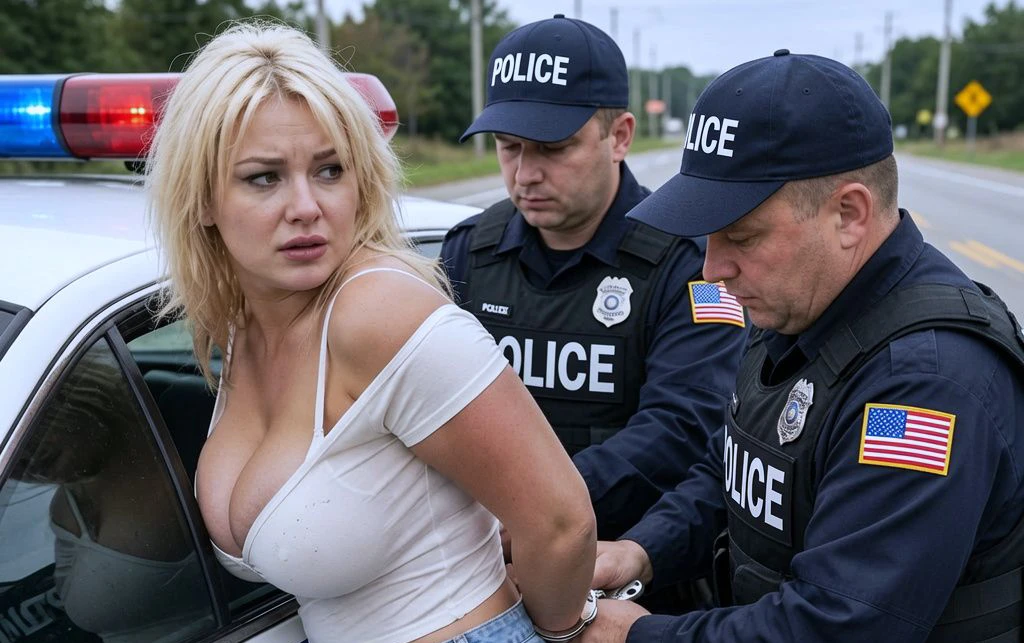
Then red and blue lights exploded across the rearview mirror.
Rachel signaled and pulled onto the shoulder. Before she had shifted into park, the Highway Patrol SUV swung across the Accord’s nose, trapping her beside a drainage ditch.
That was the first thing that felt wrong.
The second was the sergeant striding toward her door before the emergency lights had finished their first flash cycle.
He slapped the roof hard enough to make the thin metal boom.
“Engine off. Window down. Hands where I can see them.”
Rachel turned the key and lowered the window four inches. Wet air slipped into the car, smelling of leaves and diesel exhaust.
“Good morning,” she said. “Why did you stop me?”
The sergeant leaned close. His nameplate read KELLER. He had a gray mustache and the impatience of a man who expected obedience before explanation.
“License, registration, proof of insurance.”
“I’ll provide them. What was the reason for the stop?”
His eyes moved over her navy jacket, gray-streaked hair, and the Accord’s cracked vinyl. Rachel knew what he saw: a middle-aged woman alone in a cheap car.
He did not see the uniform across the back seat or the silver bars inside her credential case. Her appointment had taken effect at midnight; at eight o’clock, she would be formally introduced as Troop G’s new commander.
“Plate light looked out,” Keller said at last. “Vehicle drifted over the fog line.”
Neither claim was true. Rachel had checked every light the night before, and she had held the Accord steady even when the SUV crowded her bumper.
Still, she reached slowly toward the glove compartment. “My documents are in here.”
“Then get them.”
The second trooper arrived. He was young enough that his campaign hat looked borrowed. BROOKS was stamped above his pocket. His flashlight lingered on Rachel’s overnight bag.
“Anything in the vehicle I need to know about?” Keller asked.
“No.”
“Weapons? Pills? Weed?”
“No.”
“Then you won’t mind if we take a look.”
Rachel passed her driver’s license, registration, and insurance card through the opening. “I do not consent to a search.”
Keller smiled, but nothing in his face softened. “That wasn’t really a question.”
He carried her documents back to his SUV. Brooks remained beside the Accord, rocking once on his heels.
Rachel watched him in the mirror. His body camera showed no blinking status light.
“Trooper Brooks,” she said, “is your body camera recording?”
His shoulders tightened. “Don’t worry about my equipment, ma’am.”
“I am asking because your policy requires activation during an enforcement contact.”
“Sergeant said the batteries have been acting up.”
“Both cameras?”
The young trooper glanced toward the SUV. For one second embarrassment crossed his face. Then he aimed the flashlight at her again.
“Step out of the vehicle.”
“For what purpose?”
“We need to make sure you’re not impaired.”
Rachel felt a familiar coldness settle behind her ribs. Not fear exactly. Recognition.
During twenty-four years in law enforcement, she had reviewed stops like this: a weak reason, an isolated driver, questions designed to manufacture suspicion, then pressure and a bargain no honest officer would offer.
She had never expected to watch the sequence unfold through the window of Sam Mercer’s car.
Her father bought the Accord after retiring from the Briar County school district. He had taught civics for thirty-one years and treated maintenance as a moral duty. Every service record was organized by date in the glove box.
Sam had died seven months earlier. Rachel had not been ready to sell the car.
Driving it into her new command had seemed like a way of bringing him home.
Now Brooks was rapping on its passenger window.
“Out of the car, ma’am.”
Rachel considered her options. Fighting the order on the shoulder would create danger and obscure the misconduct already taking shape.
“I will comply,” she said. “I still do not consent to a search.”
She unlocked the door and stepped into the fog with her hands visible. Keller returned carrying her papers and the leather case she had placed beneath them.
“What’s this?” he asked.
“My agency credentials.”
He opened the case under his flashlight.
Rachel saw the instant he read her name and title. His eyes paused on CAPTAIN, then on COMMANDER, TROOP G. Brooks leaned over his shoulder.
For a moment, the rookie looked uncertain.
Keller laughed.
It was a loud, ugly sound on the vacant road.
“Captain Rachel Mercer,” he read. “Incoming commander. That’s ambitious.”
He tossed the open case onto the Accord’s hood. It slid several inches before stopping near the windshield.
“Those credentials are valid,” Rachel said. “You can confirm them through Troop G communications.”
“Sure I can.” Keller looked at Brooks. “You hear about a new captain arriving in a twenty-year-old Honda?”
“I heard Cole was acting commander until the appointment,” Brooks said carefully.
“Exactly. And Dennis Cole would have told me if somebody important was coming through his county.”
Rachel understood then that their disbelief was genuine. They had not recognized her car, had not planned a test for their new commander, and had not pulled her over because of an internal power struggle.
They had simply seen someone they believed was safe to exploit.
That made the stop worse.
“Call communications,” she repeated. “Ask them to verify my commission number.”
Keller stepped closer, forcing her against the closed driver door. “Here’s what I think. I think you bought a novelty badge online. I think this registration address is three counties away, and I think you’re nervous because you’ve got something in that trunk.”
“My address has no bearing on a search. Neither does your opinion of my car.”
“You always talk like a lawyer?”
“I talk like someone who knows the limits of your authority.”
His jaw shifted.
Brooks looked down. His camera was mounted correctly. His thumb moved deliberately along its side until the faint standby glow disappeared.
“Trooper Brooks,” she said, “do not turn that camera off.”
He froze.
Keller’s voice hardened. “Nobody turned anything off.”
“I watched him do it.”
“Then maybe your eyes are as bad as your driving.”
Rachel could hear an engine far away, but it faded toward another road. No houses were visible. Her phone remained in the Accord’s center console, close enough to reach if Keller allowed it and useless if he did not.
Keller held out his hand. “Keys.”
“Am I under arrest?”
“You’re being detained while we investigate.”
“Investigate what specific offense?”
“Possible impairment. False credentials. Maybe trafficking, depending on what we find.”
“You have observed no impairment, and you have no probable cause to search this vehicle.”
“Give me the keys, and we can keep this simple.”
There it was: not procedure, but a negotiation.
“Simple for whom?” Rachel asked.
Keller stared at her. Then he nodded toward Brooks. “Call it in—suspicious movement toward the floorboard.”
The rookie blinked. Rachel had never moved toward the floorboard.
“Sergeant?”
“You heard me. Tell her what you saw.”
Brooks swallowed. “I saw her reaching toward the passenger floorboard.”
“No, you did not,” Rachel said.
“And she was shaking,” Keller added. “Wouldn’t make eye contact.”
“My hands were visible on the steering wheel. You have both just fabricated observations in front of a witness.”
Keller lowered his voice. “You think being calm makes you untouchable? Around here, calm just means we have to work a little harder.”
He turned toward the patrol SUV.
Brooks stayed behind. Up close, Rachel could see that he was breathing too quickly.
“How long have you been out of the academy?” she asked.
“That’s none of your business.”
“Long enough to know this is wrong?”
His eyes flicked to hers.
“You don’t know anything about how it works here,” he murmured.
“Then tell me.”
“Stop talking.”
Keller opened the rear passenger door of the patrol SUV and bent inside. When he straightened, he held a clear evidence pouch between two fingers.
Something white rested in the bottom.
Brooks went still.
Rachel’s heartbeat struck once, hard. She looked from the pouch to the rookie’s face. Surprise was there, followed by dread. Whatever Keller was doing, Brooks had not known this exact step was coming.
But he did know enough not to ask aloud.
Keller walked back with the relaxed confidence of a man retrieving a tool he had used before.
Rachel reached through the open driver’s door and touched her phone. She pressed the side button sequence that sent an emergency alert and live location to the Professional Standards contact she had programmed the previous evening. Lieutenant Marcus Reed and his audit team were scheduled to meet at the Briar County communications annex before dawn. If they were already there, they were less than ten miles away.
Keller saw the screen light.
He snatched the phone from her hand and threw it onto the driver’s seat.
“No calls.”
“I have requested a supervisor.”
“I am the supervisor.”
“Then request someone who is not participating in the stop.”
He lifted the pouch so she could see it clearly. Behind him, Brooks whispered, “Sarge, maybe we should verify the credentials first.” Keller did not turn around. “Last chance,” he told Rachel. “Open the trunk—or this becomes yours.” Blue lights appeared in the fog behind him…
To read the rest of the story – CLICK the NEXT button 👇👇👇