


At Washington Union Station, nine-year-old Grace Ward fastened a small silver locket around her mother’s neck and said, “If you get scared, open it.”
Ellen looked down at the heart resting against her navy blouse. The hinge had been loose for months, and Tom had finally taken it to a jeweler on Connecticut Avenue. Inside was Grace’s school photograph, cut into an oval no bigger than a thumbnail. Her front teeth had not quite grown straight.
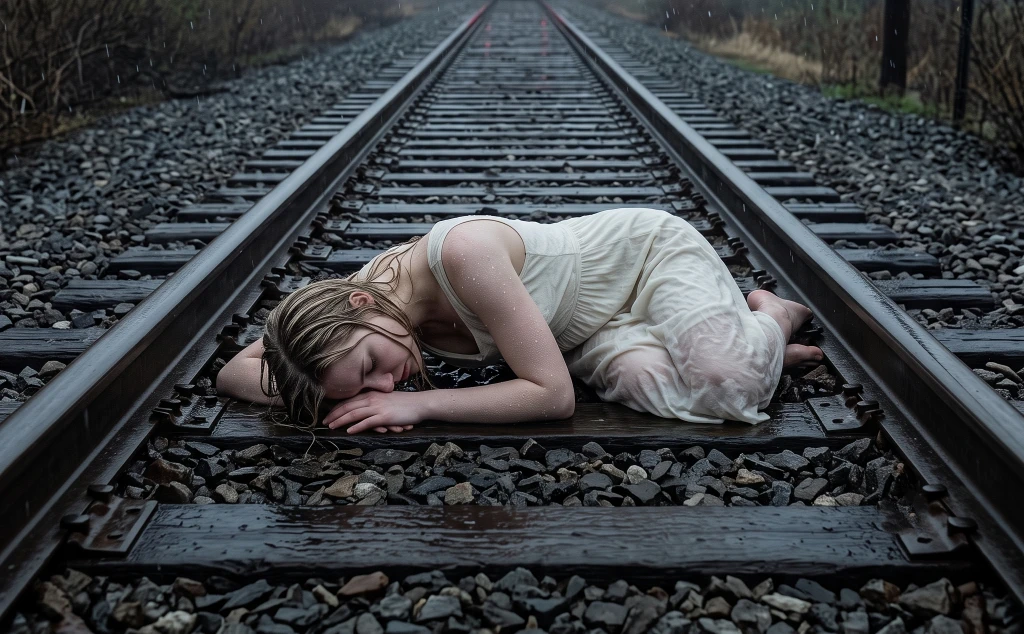
“What if I only get hungry?” Ellen asked.
“Then you open the paper bag Dad packed.”
Tom stood beside them with one hand on the handle of Ellen’s suitcase. He smiled for Grace, but the smile did not reach his eyes. Above the platform gate, the board showed the northbound Montrealer on time.
“Where’s Agent Walsh?” he asked.
Ellen adjusted the strap of her gray handbag. “Meeting me farther up the line.”
“Where?”
“Tom.”
Grace had already turned toward the high windows, where the last daylight lay in pale rectangles on the floor. Ellen used the moment to touch Tom’s wrist.
“It’s one night on a train,” she said. “I’ll call from Vermont.”
He studied her face as if there were an answer printed there that he could make her read aloud. Then the gate opened, the waiting passengers moved, and Grace threw both arms around Ellen’s waist.
“Tuesday,” Grace said into her coat.
“Tuesday.”
Ellen kissed the part in her hair. She hugged Tom next, longer than she had intended, and felt him hold on after she had begun to let go.
The Montrealer carried her out of Washington in the blue end of the afternoon. Ellen had grown up around railroads. Her father had spent thirty-one years maintaining track in Pennsylvania, and family trips had come with lessons about mileposts, station order, and why a quiet line was never an invitation to walk between the rails. Even now, she noticed curves and grade crossings before scenery.
Roomette six was barely wider than Ellen’s outstretched arms. A rust-colored seat faced a narrow window; the folded berth filled most of the opposite wall. She put her suitcase in the lower rack, set the tan attaché on the floor between her shoes, and tucked the gray handbag behind the pillow, where she could reach it without getting up.
The attaché held working copies from the Northern Freight investigation: interview summaries, freight records, and a draft list of witnesses the government had not yet approached. The originals were locked in Washington. The copies were still dangerous in the wrong hands.
On Thursday, someone had pushed an anonymous fax under Ellen’s office door. It was a copy of her approved travel itinerary. The departure date and Agent Walsh’s name had been circled in black marker. Under them, four words had been typed:
STAY OFF THE TRAIN.
Martin had canceled the reservation and arranged for FBI Special Agent Nora Walsh to travel with her the following evening. Ellen had agreed. Then she had spent half the night staring at the circled departure date and thinking about how few people should have known it.
At eight the next morning, without telling Martin, she had bought a seat on an earlier Montrealer and upgraded to the only roomette left. She told herself that an unexpected departure was safer than a protected itinerary that had already leaked. She told herself the people watching the case would be waiting tomorrow. She did not tell herself that leaving alone also let her avoid admitting fear.
Now the train ran north through Maryland, and her new reservation sat in Amtrak’s passenger records under her own name. The fact should have felt like a safeguard. Instead, she found herself wondering who could see it.
The sleeping-car attendant introduced himself as Leonard and showed her the call button, the washroom, and the latch. Across the corridor, Bernice Hall was knitting a blue sleeve for a grandchild who would not be born until December. She was sixty-three, broad-shouldered, and traveling to Montpelier to help her younger sister through a hip replacement.
“First time in a roomette?” Bernice asked when Ellen stepped into the corridor after Baltimore.
“Is it that obvious?”
“You keep checking whether the door stayed shut.” Bernice pushed her glasses higher with a knitting needle. “It stayed shut for me all the way to Florida in 1978. It’ll stay shut for Vermont.”
Ellen laughed, and for the first time since Union Station, her shoulders loosened. She called home from a pay phone during the New York stop. Grace told her about a spelling test. Tom asked again where Agent Walsh would board.
“New Haven,” Ellen said. The lie came easily enough to frighten her.
After midnight, the train left the shoreline and turned inland through Willimantic and Palmer. Rain ticked against the window. Ellen read until the words on the freight reports began to swim, then changed into a long cotton nightshirt and placed the attaché under the folded seat where her foot would touch it if anyone moved it.
She opened the locket before turning out the light. Grace’s photograph caught a small stripe of light from the corridor. Ellen pressed the silver heart closed and slept with it in her hand.
She woke after Amherst because someone had opened her door.
The corridor light framed two men. The nearer one wore an Amtrak uniform and the silver nameplate of an assistant conductor: KEVIN DOYLE. Ellen had seen him checking tickets in the coaches. The other man wore a dark raincoat over work clothes. He was tall, heavy through the chest, and familiar from a surveillance photograph clipped inside the tan attaché.
Raymond Sutter.
Ellen sat up. “Get out.”
Kevin looked at the floor. Ray closed the door behind them.
“The case,” Ray said.
“You’re making a mistake.”
“No. You made one when you got on early.”
For one second, the roomette seemed to hold no air at all. Her changed reservation had not protected her. It had merely stripped away the people who were supposed to know where she was.
Ellen reached for the call button. Kevin caught her wrist.
“Don’t,” he said. His voice was soft and breathless. “Please don’t make this worse.”
“You opened my door.”
“Give him the case.”
“And then what?”
Neither man answered. Ray found the attaché beneath the seat. He lifted it by the handle, tested the lock, then struck Ellen across the mouth when she would not give him the combination.
“They’re working copies,” she said, tasting blood. “Nothing in there can stop the investigation.”
“Names can.”
That told her what he wanted. Not acquittal. Time to reach the people who had spoken.
Ellen turned to Kevin. “Those witnesses have families. Whatever he told you, you know what happens if he reads those names.”
Kevin’s grip shifted on her wrist. Ray noticed. “Vestibule,” he said.
Kevin looked up. “You said we were taking the case.”
“And now we’re making sure she can’t identify us.”
“She already knows our names.”
“Exactly.”
Ellen drove her heel into Ray’s knee and twisted free. She got the door half open before Kevin caught the back of her nightshirt. Her shoulder struck the wall. Ray seized her hair, and her temple hit the metal doorframe hard enough to leave a red smear beside the latch.
Across the corridor, Bernice Hall woke at the sound. Not a scream. A hard, flat blow, followed by something scraping along the wall.
She sat up, reached for her glasses, and opened her door a fraction. At the far end of the corridor, she saw two men supporting a woman whose head hung low. One of them wore a railroad uniform. The woman stumbled, and the connecting door swung shut behind them.
Kevin dragged Ellen into the corridor. One slipper came off beside roomette six. She hooked her fingers around the brass handrail, but Ray pried them away one at a time.
“Kevin,” she said. “You can still stop.”
Kevin glanced back toward the open roomette, but he did not release her. Ray shoved Ellen forward. “No time.”
They moved her through the swaying cars. Kevin unlocked the vestibule side door with his service key. Cold rain burst into the metal chamber, carrying the smell of wet leaves and river mud. The line wound along a curve south of Bellows Falls, and the train had slowed, but the ground outside still passed in a dark, violent blur.
Kevin stared through the opening. “Ray, no.”
“You’re already here.”
Ellen braced one foot against the doorframe. Ray struck her injured temple with the heel of his hand. Her knee folded. Kevin caught her under one arm—whether to hold her up or help throw her, she could not tell—and Ray took the other.
The last thing Ellen saw inside the train was Kevin’s face.
Then they threw her into the night.
She hit brush first, then the descending embankment. Branches tore at her nightshirt. Her shoulder struck earth, her head snapped back, and the world went black before she reached the wet leaves at the bottom.
Ray pulled the vestibule door shut. “Bellows Falls in six minutes,” Kevin said. He was shaking.
“Then get me there.”
They returned to roomette six. Ray took the tan attaché. Kevin stood beside the slipper and the blood on the doorframe while Ray hurried him toward the vestibule. Neither man looked behind the pillow.
The gray handbag remained there, unopened.
Ray stepped off during the scheduled stop at Bellows Falls before anyone had circulated his name. Kevin stayed aboard and told Leonard that the woman in roomette six had complained of nausea and wanted privacy.
Bernice heard the platform doors, low voices, and the train’s departure signal. Because one of the men wore a uniform and the woman had looked ill, Bernice believed they were helping a sick passenger. She waited until the corridor went quiet and the train moved again. Then she opened her door.
Ellen’s slipper lay on its side in the corridor. The dark smear beside the latch was too red to be rust. Bernice knocked once, then twice. When no one answered, she called for Leonard and pushed the unlatched door with two fingers.
The room was empty. Leonard went for the conductor. Bernice saw the gray strap behind the pillow and drew out the handbag. She opened it only far enough to find a name and an emergency contact.
The black identification wallet lay directly beneath Grace’s photograph. Bernice unfolded it.
UNITED STATES DEPARTMENT OF JUSTICE
ELLEN MARIE WARD
TRIAL ATTORNEY…
To read the rest of the story – CLICK the NEXT button 👇👇👇