


The German shepherd pup hit Graham Holt at a run, caught the lace of his left boot, and sat down on the toe as if he had been sent to prevent one particular man from leaving Colorado.
Graham looked at Walt Danner across the training yard. “Is this part of the sales pitch?”
“I don’t have a sales pitch.” Walt tucked his bare hands under the arms of his canvas coat. At sixty-eight, he had the wind-burnished face of someone who had spent more winters outside than good judgment recommended. “I open the gate. The dogs tell me what they think.”
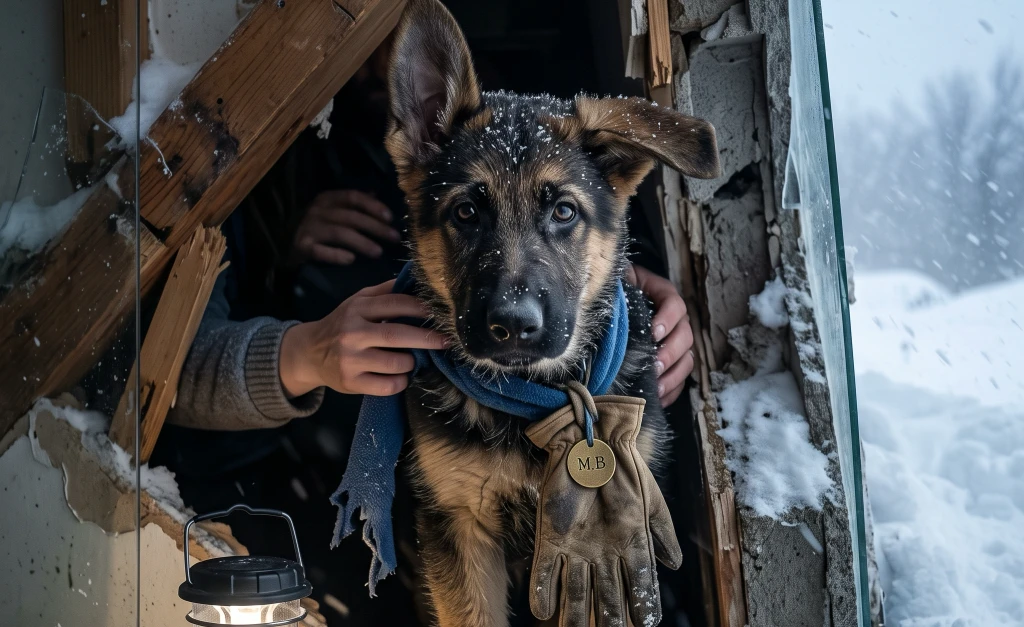
The other two five-month-old shepherds had gone after the rubber ball Walt had thrown. This one had ignored it. He was all long legs and unfinished proportions, with a dark saddle that narrowed crookedly above one hip. His right ear stood. His left leaned outward, giving him the look of a serious animal interrupted by a private joke.
Graham moved his foot. The pup moved with it.
“Let go.”
The pup released the lace, rose, and pushed his muzzle into the pocket of Graham’s old field jacket. He came out with a black leather glove and backed away, inviting pursuit.
Graham laughed before he could stop himself. The sound felt rusty. He had been back in the United States for fifty-one minutes, and this was the first thing that had asked nothing about the weather off Norway, the dead trainee, or what Graham intended to do next.
The pup froze at the laugh. Then he returned, dropped the glove, and sat on Graham’s boot again.
High Country Shepherds occupied a bench of land above the small town of Mesa Creek, where chimney smoke climbed through hard January light and the southern Rockies filled the northern horizon. Graham’s house—and Mara—waited a little over a mile down the county road. His gray deployment case stood behind the passenger seat of his pickup. Beneath two folded shirts lay an eighteen-month contract that would take him back across the Atlantic in August. Northline wanted his answer by June 15.
He had not told his wife about it.
“How much?” he asked.
“The two with ordinary judgment are five hundred. The one on your foot is three.”
Graham looked down. “What’s wrong with him?”
Walt’s face cooled. “A family returned him after seventeen days. They wanted a handsome dog who slept while they worked and posed beside the fireplace. He opened their pantry, ate a couch cushion, and howled every time they put on coats.”
“So three hundred because he’s difficult.”
“Three hundred because buyers hear ‘returned’ and stop listening.” Walt bent to turn the pup’s collar. Behind the kennel tag hung a scratched brass disk stamped M.B. “Before that, he belonged to a man who worked here. The man left in a hurry. The dog learned doors can take people away.”
The pup’s mouth closed around Graham’s lace once more, though this time he did not pull. Graham thought of Mara standing in the kitchen during their last video call, one hand wrapped around her green mug. She had said she was glad he was coming home. She had not said she had missed him. He had pretended not to notice the difference.
“I’ll take him.”
“You should call your wife.”
“He’s for my wife.”
“That isn’t what I said.”
Graham straightened. During twenty-six years in the Navy, most of them with the SEAL teams, he had learned to distrust men who disguised an order as advice. Retirement had not cured him of the reflex.
Walt met his stare without interest. “A dog isn’t a flower you bring home because you were gone too long.” The pup stole Graham’s other glove and saved him from answering.
On the drive home, the dog inspected the floorboards, the glove compartment, and an old road atlas with equal suspicion. He put both paws on the dashboard until Graham ordered him down, then tried to climb into Graham’s lap while the truck was moving.
“You need a name,” Graham said, wrestling the atlas from his teeth. “And boundaries.”
The dog sneezed on his sleeve. “Tucker,” Graham decided. “Tuck, if you earn the shorter version.”
Tuck planted one oversized paw on Graham’s thigh and watched the white road unwind between the pines.
The closer they came to the house, the more carefully Graham breathed. He had imagined this return in temporary rooms from Bergen to Tromsø: Mara running down the porch steps, his face in her hair, the familiar weight of her against him. He had imagined their marriage preserved in his absence like a room shut against dust.
The cedar house appeared on a low rise. Mara’s glass workshop caught the afternoon sun, laying bars of amber and blue across the snow. She stood on the porch in a cream coat, her chestnut hair tied back with indigo cloth. There was more silver in it now.
Graham stopped the truck and got out. For one second, they only looked at each other. Then Mara came down the steps quickly, and he opened his arms. Tuck struck the passenger window with both paws.
Mara turned at the sound. She opened the door, and fifty pounds of adolescent enthusiasm almost knocked her into the snow. Tuck covered her chin with wet kisses, caught her hair ribbon, and braced his paws against her coat.
Her laugh carried across the yard. Graham stood with his arms still half open.
“I’ve been home ninety seconds,” he said, “and you’ve replaced me.”
Mara looked over the dog’s head. Tears shone along her lower lashes. “You brought me a shepherd?”
“Apparently I brought him a house.”
She eased Tuck down, crossed the last few feet, and put her arms around Graham. He held her hard enough to feel the edges of her shoulder blades. Her embrace was warm, real, and careful. He felt the care.
That evening they talked about airfare, a burst pipe in the barn, and the new bakery on Main Street. They did not talk about Norway. They did not talk about the four sealed cartons beneath Mara’s worktable, each marked in thick black ink: MESA CREEK ARTS EXCHANGE—STUDIO 6.
Tuck filled every pause. He barked at his reflection in the patio door, pushed his water bowl halfway across the kitchen, and carried a bath towel upstairs while Graham showered. By the time Mara caught him, the towel had snagged beneath the open deployment case and pulled two shirts onto the floor. The cream envelope slid out with them.
Mara picked it up. The return address belonged to Northline Cold Weather Training. Beneath Graham’s name, visible through the envelope window, were the words CONTRACT RENEWAL—EIGHTEEN MONTHS.
At the same moment, Graham entered her workshop looking for Tuck’s purchase papers. He saw the cartons. One flap had not been taped shut. Inside were rolls of copper foil, small tools, and framed pieces wrapped for transport.
He lifted the label from the nearest box.
When he returned to the bedroom, Mara stood beside the bed with the contract in one hand. Graham held the label in the other. Tuck sat between them with the towel hanging from his mouth.
“It isn’t signed,” Graham said.
“The boxes aren’t moving tonight.”
“You rented a studio?”
“They offered me one.”
“That wasn’t my question.”
Mara looked at the gray case, then at the young dog who had climbed into it and settled on Graham’s shirts. Tuck rested his chin on the sealed contract. “Did you bring him home because you wanted to stay,” she asked, “or because you meant to leave me something living when you went…”
To read the rest of the story – CLICK the NEXT button 👇👇👇