


By the time Evelyn Hart carried the last split pine into the mudroom, snow had erased the chicken yard and climbed halfway up the pasture fence. The radio warned of whiteouts and closed county roads. Evelyn switched it off when the message repeated. At seventy-eight, she knew a Montana blizzard without a young man in Helena explaining it.
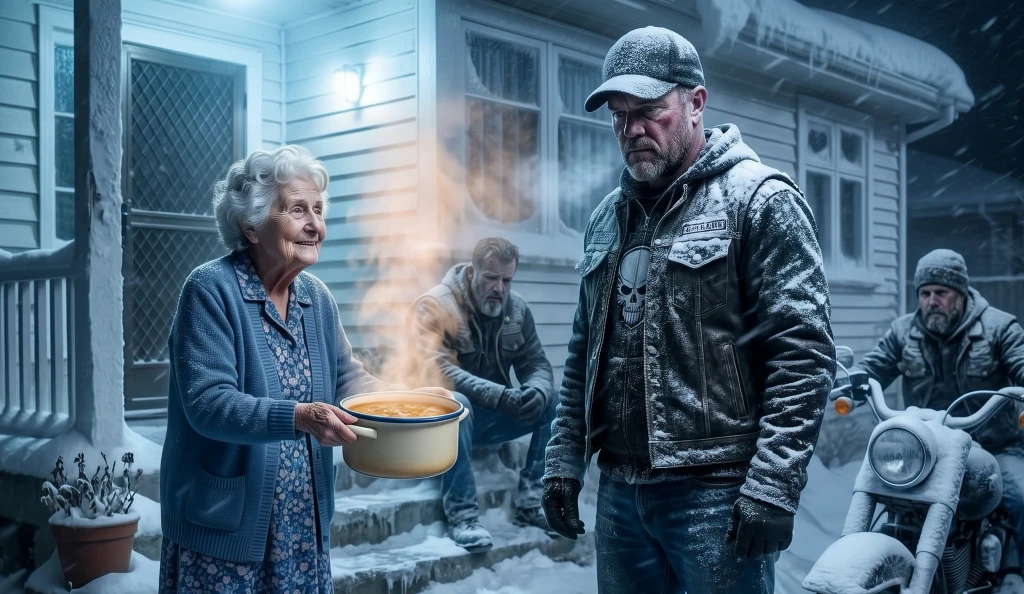
She checked the latch and listened to the house: stove pipe ticking, wind worrying the west eaves, the grandfather clock measuring silence. Those noises had once meant Sam was nearby, perhaps in the barn or bent over a hinge. In the six years since his death, they had become company after dark.
Evelyn minded solitude less than people in Red Creek believed she should. She fed twelve stubborn hens, knitted unrequested mittens, and wrote to Sam in a blue school notebook beneath the flour tin. The words gave certain thoughts somewhere to go.
That evening she had written one line—The storm came early—before the kitchen light blinked. She put the notebook away and set an oil lamp on the table. The wall phone was dead, and her cell showed no signal, but the woodshed was full, the pantry deep, and the hand pump sound.
The vibration under her slippers did frighten her.
It began so faintly that she laid a palm against the table, wondering whether a snowplow had reached Red Creek Road. Then the cups in the pine hutch touched rims with a tiny glass sound. The vibration became a low mechanical growl, many engines working against wind and grade. No county plow traveled in a pack.
Evelyn lifted a corner of the front curtain. A headlamp swam through the whiteout, dipped below her driveway, and rose again. A second appeared, then a third, then enough to make her count twice.
Fifteen motorcycles turned through her gate.
Their tires slipped before finding the ruts. One bike nearly went down beside the mailbox; two others boxed it in until the rider recovered. They came slowly, but fifteen engines on a quiet farm did not need speed to sound threatening.
Evelyn let the curtain fall. Her fingers reached the deadbolt, then stopped. A lock would mean little if fifteen men intended to force it, and reaching the root cellar meant crossing their lights. She glanced at the dead phone anyway.
The engines cut off one after another. Their absence left the wind sounding thin and sharp.
The riders pushed their motorcycles along the sheltered side of the barn. Snow crusted their scarves and shoulders. Several leather vests bore the same mountain patch: BLACK RIDGE RIDERS. Evelyn had heard the name at Dwyer’s Market in stories about fights, broken windows, and a deputy forced off a highway years ago. The stories never included anyone who had seen those things happen.
That distinction felt less comforting with fifteen strangers in her yard.
Still, their behavior did not match the invasion her fear was arranging. A rider who wandered toward the porch was called back before he reached the steps. Another man pointed out Evelyn’s buried flower border, and the bikes were shifted away from it despite the effort of pushing through snow. No one tried the barn door or circled the house. The broadest rider stood beneath the porch light, removed his helmet, and waited while the others remained behind him. Evelyn had spent enough years around livestock to distrust appearances and watch movement instead. These men were exhausted, perhaps desperate, but someone among them was keeping desperation from becoming permission.
Three knocks struck the door and did not come again. Evelyn held the iron poker out of sight beside her skirt and asked who was there.
“Cole Maddox, ma’am.” The answer came through two inches of old pine, low and hoarse. “We’re trying to get west, but the highway’s shut and we lost the county road. We don’t want money, and we’re not looking for trouble.”
Another voice said something she could not make out. Cole turned away from the door and answered sharply, then spoke to her again.
“One of our younger men is getting too cold. If you have a shed we can sit in until the wind drops, we’d be grateful. We’ll stay out of your house.”
The machine shed faced west, one hinge was loose, and there was no heat. It would give them a roof and little else. Evelyn remembered the winter, forty-three years earlier, when Sam’s pickup stalled outside Lewistown. A rancher they had never met put them beside his furnace, fed them canned soup, and refused Sam’s five dollars.
Sam had told that story whenever someone called kindness foolish. He never made it sound heroic. He said only that they would not have reached morning without it.
Evelyn set the poker against the wall but kept it within reach. “How many?”
“Fifteen.”
“Any weapons?”
There was a pause. “Pocketknives, most likely. Nothing comes through your door unless you allow it.”
The plainness of the answer steadied her more than a quick denial would have. She slid the deadbolt back but left the chain fastened, opening the door three inches. Snow blew through the gap and peppered her cheek.
The man on the porch was broad-shouldered, his gray-shot beard packed with ice. His bare hands stayed where she could see them. Fourteen riders waited below the steps, large in leather but beaten down by weather. One hugged himself; another bent over his tucked hands. The youngest kept flexing gloved fingers without seeming to feel them.
Cole met Evelyn’s eyes without trying to smile. “You can shut the door. I won’t blame you.”
That nearly decided her in the opposite direction.
“The mudroom first,” she said. “Boots on the rubber mats. Knives in that washtub. Nobody wanders upstairs, nobody goes into the desk, and nobody smokes under my roof. If any man objects, all of you leave.”
Cole turned his head. “You heard Mrs. Hart.”
No one argued. Metal clicked into the galvanized tub as the riders filed through the mudroom, each man waiting until the one ahead had moved clear. They stamped snow outside, leaned helmets along the wall, and took off wet outer layers without being asked twice. The house filled with the smells of cold wool, leather, gasoline, and air so sharp it seemed to have followed them indoors.
Evelyn counted again as they entered the front room. Fifteen. Cole came last and shut the door carefully, testing the latch as though it belonged to someone he respected.
For several seconds, she and the riders simply looked at one another. Her small house had never held that many people, not even after Sam’s funeral. Men stood shoulder to shoulder between the sofa and the bookcase, trying not to brush the china lamp or the framed wedding photograph on the piano. One ducked beneath a low beam. Another caught a dripping sleeve before it touched her knitting basket.
They were still strangers. Evelyn did not forget that. But strangers could freeze as surely as friends.
She pointed toward the woodstove. “No rubbing numb skin, and nobody puts frozen hands against that iron. Warm up slowly.” Her gaze settled on the youngest rider, who had not removed his gloves. “Now tell me—which one of you can’t feel his fingers?”
To read the rest of the story – CLICK the NEXT button 👇👇👇