


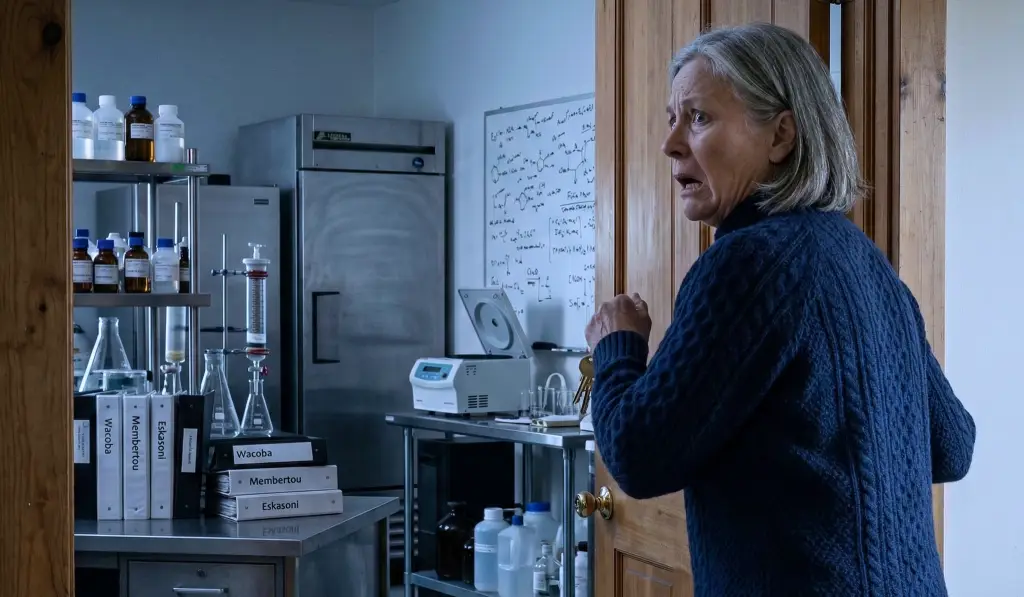
For four years, I believed a lie built on black mold and compromised floorboards. That was the story my daughter and son-in-law spun to keep me away from their property on the Atlantic coast, and I swallowed it without a second thought. My name is Margaret Ouellet. At sixty-four, having retired from a thirty-one-year career teaching French immersion in Thunder Bay, Ontario, I assumed the narrative arc of my life had gracefully leveled out.
My days had settled into a comfortable, quiet rhythm: brisk morning walks along the frost-touched shores of Lake Superior, tending to the fragile shoots in my indoor herb garden, and the occasional video call with former colleagues. I truly believed the most significant chapters of my story were already written and safely filed away.
I could not have been more wrong.
My daughter, Renee, was an environmental toxicologist working out of a university in Halifax. She was brilliant, fiercely principled, and possessed a rigid moral compass. She was the kind of woman who drafted painstakingly researched letters to city councils about local ecological hazards and, remarkably, expected them to write back with actionable solutions. When she was thirty-two, she married Thomas Beausoleil. He was a quiet, profoundly thoughtful man who dedicated his days to community health outreach, traveling between indigenous communities across Cape Breton Island.
Together, they purchased an old piece of land right on the Cabot Trail. From the pictures they sent, it was a wide-windowed structure that looked out over the vast, gray expanse of the Gulf of St. Lawrence. Every time I brought up the idea of flying out for a visit, Renee would offer a soft, evasive laugh.
“Not yet, maman,” she would say, her voice warm but resolute over the phone. “The mold remediation is taking forever. The air quality is awful, and the contractors have the place torn apart. You’d be miserable.”
So, I waited. I packed frozen casseroles into heavily insulated courier boxes and shipped them across the country. I mailed handwritten cards for every minor holiday. And I waited.
Then came a bleak Tuesday in March. I answered the phone to find a woman named Patricia Duval on the line, introducing herself as Renee’s lawyer. Her tone possessed that careful, overly measured gentleness people adopt when they are entirely aware they are about to shatter your reality. She explained that there had been a horrific car accident on the TransCanada Highway. A heavy transport truck had lost traction on a treacherous, icy stretch of road near Antigonish, violently crossing the center line.
Renee and Thomas were gone.
I remember sinking down onto the cold linoleum of my kitchen floor. It wasn’t a conscious decision; it was simply the way pure, unadulterated grief bypasses the cognitive brain entirely and goes straight to the knees. I sat there for hours, my back pressed against the lower cabinets, listening to the mechanical, indifferent humming of the refrigerator while my entire universe rapidly reorganized itself around a permanent absence.
Three days later, Patricia called again, asking me to come into her office. I found her in a small suite in downtown Thunder Bay, a space that smelled heavily of aged paper and stale, weak coffee. Without much preamble, she slid a sealed envelope across her desk. The front bore my name in Renee’s familiar, elegant handwriting. Patricia quietly informed me that the Cape Breton property had been left to me in its entirety.