


Mary Elizabeth Sullivan stood on the cracked concrete sidewalk, the crisp morning air biting through her thin cardigan. She was seventy-five years old. For twenty-three years, the modest two-story house behind her—the one with the peeling yellow paint and the overgrown garden she had lovingly coaxed into blooming—had been her anchor. Now, she was watching strangers casually toss her entire existence into the back of a rumbling donation truck.
It wasn’t even a moving van. It was a charity truck. Her own children had hired strangers to pick through four decades of her memories, deciding what had value and what was just trash. They weren’t boxing up her life to store it in case she needed it later. They were getting rid of it entirely. They were treating her like she was already in the ground, an inconvenience to be cleared out as quickly and efficiently as possible.
“Mom, you really need to move now,” Robert said.
He didn’t even bother to look up from his phone. At fifty, her oldest son had mastered the flat, businesslike tone he probably used to dismiss difficult clients at his law firm. This was the same boy she had rocked through a hundred feverish, sleepless nights. Now, he couldn’t bring himself to meet her eyes.
“The new owners are coming tomorrow morning to start renovations,” Robert continued, swiping at his screen. “You can’t be here when they arrive. It’ll be awkward for everyone.”
Awkward. Mary let the word echo in her mind. Not tragic. Not unjust. Not heartbreaking. Just an awkward social hurdle to step over.
She looked back at the house. It had never been a grand estate, but she had paid her rent religiously every single month since her husband, Thomas, passed away. The elderly landlord had been a kind man. He knew what it meant to be left alone in the world, promising her a place to stay for as long as she drew breath. But a handshake agreement meant absolutely nothing to the law. When the landlord passed away peacefully in his sleep at ninety-two just three months ago, everything unraveled. His daughter out in California saw the property only as a line item on a spreadsheet. She immediately sold it to developers who wanted to bulldoze Mary’s garden and throw up something modern and profitable.
Her children could have fought it. Robert was a lawyer, for heaven’s sake. They could have hired counsel to delay the eviction, argued for tenant rights, or at least bought her a little grace period. They could have driven her around to look at apartments or co-signed a lease. Instead, they just shrugged. They told her it was probably for the best, a sign she belonged in an assisted living facility where professionals could handle her. They talked about her like she was a broken appliance that needed to be warehoused.
Mary had drawn a hard line. She wasn’t going to spend her final years staring at a linoleum floor in a communal room, playing bingo and waiting for the clock to run out. She absolutely refused to surrender her last shreds of independence and dignity.
So, her children simply washed their hands of her. The phone calls stopped. The visits dried up. The only time they reached out was to ask about her move-out date. And now, with less than twenty-four hours before the property changed hands, she stood on the curb with a single, scuffed suitcase.
“Where exactly am I supposed to go?” Mary asked quietly. Her chest felt tight, bound up by a suffocating mix of panic and profound grief, but she fought to keep her voice perfectly steady.
Sarah, her forty-eight-year-old daughter, let out a heavy sigh. She finally looked at Mary, her expression a messy blend of barely concealed exasperation and the kind of irritation that flares up when someone is forced to feel guilty.
“Mom, we’ve been over this a hundred times,” Sarah said, crossing her arms. “You can’t stay with any of us. We literally don’t have the room. Michael has the new baby, and his house is already crowded. I have my career and I’m constantly traveling for work. Robert’s place is too small, and Linda has made it crystal clear she doesn’t want long-term houseguests. We aren’t being mean. We’re just being realistic. We told you months ago to apply for senior housing.”
“I did apply,” Mary fired back, clenching her jaw to keep her chin from trembling. “I applied to every single facility within a thirty-mile radius. There is a waitlist for all of them. Nine months minimum. Most are over a year. They told me that explicitly. I can’t just wave a magic wand and make a space appear.”
“Well, that’s hardly our fault, is it?” Robert snapped. Whatever paper-thin patience he’d started the morning with was completely exhausted. “You should have planned better, Mom. You should have saved money over the years. You should have had a safety net in place for emergencies. This is what happens when you coast through life without building any financial security. Actions have consequences.”
The words hit her like a barrage of physical blows. The absolute nerve of him. It was a lifetime of quiet resentment finally boiling over. Her kids blamed her for being poor. They blamed her for not building a fortress of wealth, completely ignoring the fact that she had poured every single dollar and ounce of energy she had into feeding, clothing, and raising them.
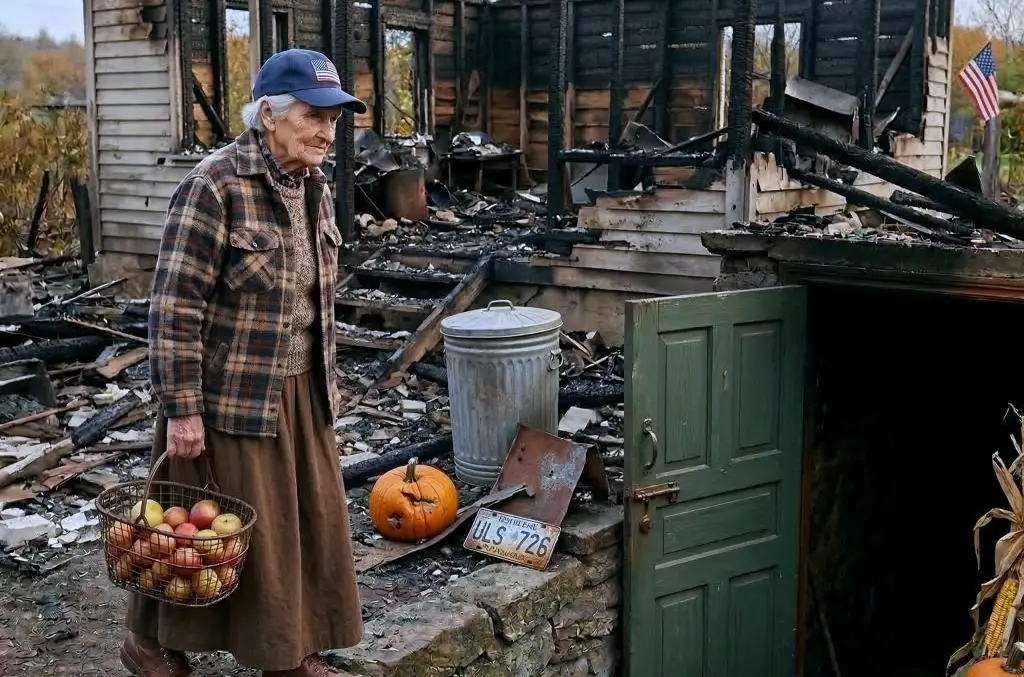
“I have somewhere to go,” Mary blurted out. The words slipped past her lips before her brain even fully formed the thought. Desperation was building an escape plan in real time. “Grandma Eleanor’s old property. The main house is gone, but the land is still in the family trust. There’s a basement structure built into the hillside out back. It’s still standing. I can stay there.”
Her children actually laughed. It wasn’t an awkward, nervous chuckle, either. It was genuine, dismissive amusement at what they considered a ridiculous idea.
“That old dump?” Michael scoffed. Her youngest was forty-five, and this was the first time he’d bothered to speak up all morning, his voice dripping with the same dismissive tone his siblings had mastered. “Mom, that place has been abandoned for fifteen years since the house burned down. There’s no electricity. No running water. The roof probably caved in a decade ago. You can’t seriously think you can live there. It’s not even a house anymore, just a hole in the ground.”
“I’m not asking for your permission,” Mary said. The sudden, icy steel in her voice made all three of them snap their mouths shut and actually look at her for the first time that morning. “I am telling you where I’ll be. If you need me—though I sincerely doubt you will—that is where I am going. If you ever decide you actually care what happens to me, you’ll know where to find me. Not that I’m holding my breath waiting for that particular miracle.”
She gripped the handle of her lone suitcase, the only piece of her entire household they had agreed to let her keep, and started walking down the sidewalk.
She didn’t look back to see if they were watching. She didn’t want to witness the relief washing over their faces as they realized the difficult problem of their elderly mother had finally solved itself through her own exile.
“Let her go,” Robert’s voice drifted down the street, cold, dismissive, and carrying clearly in the morning air. “Give her a week, maybe two at most. She’ll come crawling back the second she realizes she can’t handle living in a basement like some kind of homeless person. Then maybe she’ll be reasonable about accepting a facility placement instead of making everything so difficult.”
Also on Realish: The Inheritance: My Sister Got the Mansion, I Got a Shack with a Secret That Changed Everything