


The morning sun bled through the reinforced acrylic windows of British Airways Flight 847, painting the cabin in a wash of warm, golden light. It was a picture-perfect Tuesday, the kind of mundane morning that promised nothing more than a smooth descent into London Heathrow. The Boeing 777-300ER had pushed back from the gate at John F. Kennedy International Airport right on the dot, swallowing 284 passengers into its belly for the eight-hour transatlantic leap. The air smelled of stale coffee, recycled oxygen, and the quiet anticipation of arrival.
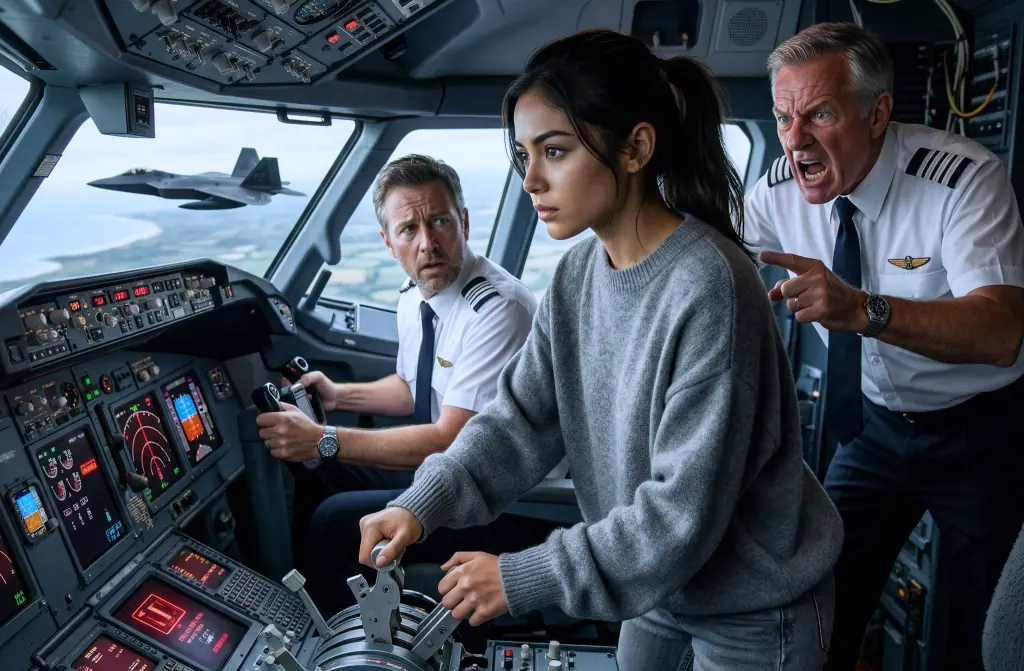
Up in the flight deck, Captain Michael Harrison and First Officer Sarah Chun were running through the motions of their standard pre-descent checklists. Harrison was a twenty-three-year veteran with British Airways. He had flown this exact route over a thousand times, knowing every invisible bump and current in the sky. The weather outside was absolute glass. They had clear skies, virtually zero turbulence, and London was reporting sunny conditions with nothing more than a lazy breeze. It was the sort of flawless flying day that lulled you into a sense of utter routine.
Back in the cabin, the manifest reflected the usual tapestry of international transit. First-class business executives aggressively typed on sleek laptops, rushing to prep for Monday morning board meetings. Deeper in economy, exhausted parents desperately tried to wrangle cranky toddlers who had long since run out of patience for the journey. Backpack-clad college students slumped against the plastic sidewalls, either dead to the world or glued to downloaded movies on their glowing screens.
Absolutely no one spared a second glance at the young woman sitting in seat 23C.
According to the passenger manifest, she was simply F. Martinez, Passenger 127. She looked to be somewhere in her mid-twenties, possessing the kind of quiet, understated aura that let her vanish into a crowd without a trace. Her dark hair was swept back into a practical, no-nonsense ponytail. She wore civilian basics, just faded jeans, a comfortable oversized sweater, and scuffed sneakers. There was not a single sharp edge about her that screamed military service or high-stakes aviation.
For the entire flight, Fallon had played the role of the model passenger. She had politely waved off the mid-flight meal service, burying her nose in a battered paperback novel. The cabin crew barely registered her existence, stopping only to offer the standard beverage service. She had accepted a black coffee with a soft “thank you,” her voice carrying a faint, melodic European lilt.
But Fallon wasn’t just reading. Her dark eyes were pulling double duty, tracking a whole lot more than printed words.
Every thirty minutes, like clockwork, she flicked her gaze to her wristwatch. It wasn’t impatience gnawing at her; it was deeply ingrained muscle memory. She mentally mapped the flight attendants’ positions during their service rounds. She logged the nervous twitches of anxious flyers across the aisle. Most importantly, she unconsciously analyzed every hum, rattle, and pitch change of the massive aircraft. These were not the frantic observations of a white-knuckle flyer. They were the cold, calculated threat assessments of an operator trained to catalog the world in high definition.
The book resting in her lap was a collection of Pablo Neruda’s poetry. The pages were dog-eared and heavy with ink, giving off the vibe of a well-loved romantic keepsake. But hidden between those passionate verses were microscopic annotations scribbled in three different languages. They were complex, coded operational reminders. To the businessman snoring in 23A, they were just messy handwriting. To anyone with a background in operational security, they were a masterclass in tactical prep.
Meanwhile, hundreds of miles ahead, London Heathrow’s Air Traffic Control was orchestrating the chaotic morning rush. Seasoned controllers juggled the intricate ballet of heavy metal dropping from the sky. Everything was ticking along like a Swiss watch until a slightly unusual transmission buzzed in from RAF Coningsby. Two F-22 Raptor fighter jets had just scrambled for what was billed as a standard training exercise.
The Raptors were flying under a joint NATO training umbrella, tasked with running intercept drills on commercial heavyweights. It was a routine flex of military muscle, designed to keep response times razor-sharp and communications tight. Flight 847 had been randomly tagged as the designated practice target, a ghost intercept that passengers rarely ever noticed. Leading the charge was Squadron Leader James Morrison, a heavily decorated RAF officer boasting over two thousand hours in the seat of fighter aircraft. Glued to his wing was Flight Lieutenant Rebecca Torres, one of the youngest hotshots ever cleared to tame the F-22.
As the two stealth fighters carved through the sky toward the Boeing’s coordinates, Morrison’s radio crackled with mundane chatter from civilian air traffic control. The drill was playing out flawlessly. The commercial bird held its course and altitude, oblivious, while the fighters swooped in to run their invisible protocols. It was a textbook run, destined to be jotted in a logbook and forgotten by dinner.
But the universe has a funny way of flipping the script on routine days. Sometimes, the most forgettable moments forge the most unforgettable heroes. In seat 23C, Fallon Martinez gently closed her book and stared out the scratched acrylic window at the patchwork of English countryside rolling far below. She checked her watch one last time, calculating their precise altitude and descent rate with a savant’s ease. She didn’t know it yet, but the clock was ticking. In exactly twelve minutes, the sky was going to fall apart.
Fallon had figured out years ago that flying under the radar was a massive tactical advantage. Standing a modest five feet four inches, with a slender build and a soft-spoken demeanor, she possessed a superpower. She was entirely unthreatening. The corporate suit in 23A had sized her up during boarding, instantly pegging her as a grad student blowing off steam. The sweet older couple in the middle seats had beamed at her when she effortlessly hoisted the woman’s heavy carry-on into the overhead bin, entirely missing the coiled strength required to do so.
They only saw the shell. They didn’t see the weapon underneath.
Her steady hands weren’t just relaxed. They were the very same hands that had strangled life-saving performance out of crippled, complex avionics systems under crushing pressure. Her quiet, observant eyes weren’t just polite. They were forged in the crucible of active combat, trained to process chaos at the speed of sound.
Born in the vibrant heart of Barcelona to a Spanish mother and an American father, Fallon had grown up straddling two distinct worlds. That cultural elasticity had made her adaptable to her core. Her youth had been standard-issue with decent grades, a tight circle of friends, and an absolute obsession with the sky. That spark had been fanned into a roaring flame by her grandfather, a retired Iberia Airlines captain who spun wild tales of chasing the horizon.