


My name is Ava Bennett. I was thirty years old the day my father decided to turn my eviction into a neighborhood festival, unveiling my departure with the fanfare of a grand opening. I had just pulled my car into the familiar, sun-baked driveway of our home in the Phoenix suburbs to collect my very last box. Before I even shifted into park, the first thing that caught my eye was the massive, heavy-duty vinyl banner stretched taut across the double doors of the garage.
Printed in screaming red block letters no doubt run through the wide-format printer at his own shop were five words: “Goodbye, freeloader. Don’t come back.”
Thick, gray smoke was already billowing from the backyard grill, carrying the heavy scent of charcoal and searing meat into the dry afternoon air. Classic country music blasted from a pair of outdoor speakers, vibrating against the stucco walls. People were milling about, holding plastic cups and laughing with the easy, careless energy of a summer holiday. From somewhere on the patio, a slurred, deeply intoxicated voice shouted over the music, declaring that a thirty-year-old woman with no real career ought to be thoroughly ashamed of herself for leeching off her hardworking parents.
Another voice immediately chimed in, yelling that my poor, exhausted family had carried my dead weight for long enough.
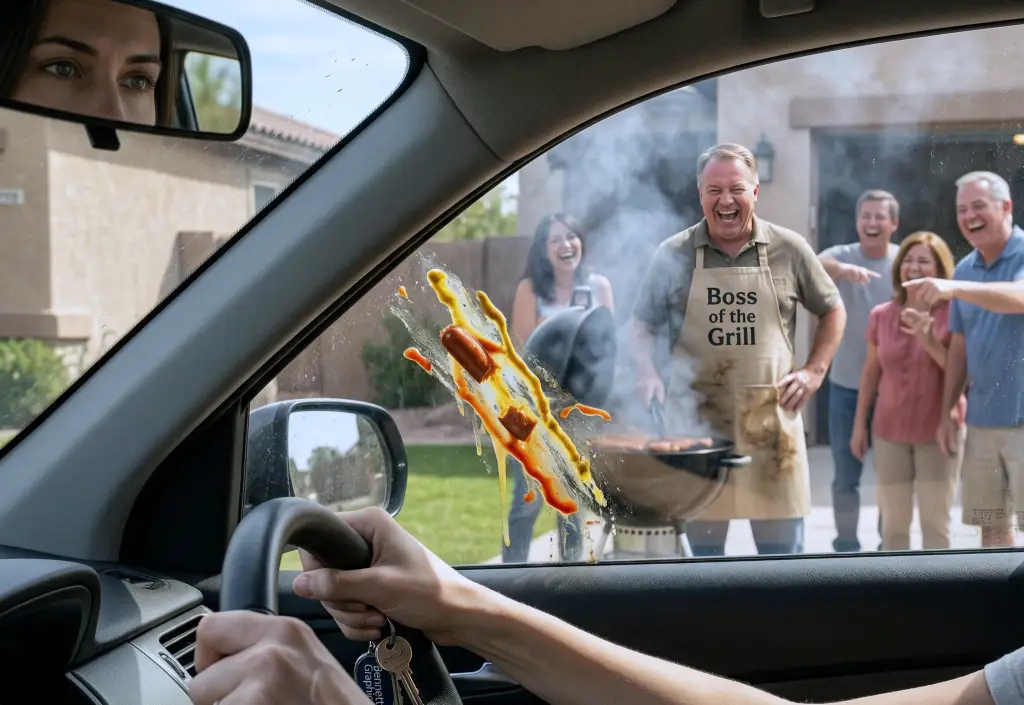
Then came the dull, wet thud against the side of my car. I flinched. Someone had actually thrown a hot dog at my window. It left a greasy streak of mustard sliding down the glass.
“There’s your last free meal, loser!” a voice shrieked, swallowed instantly by a chorus of howling laughter. Even the neighbor’s children, paused in their lawn games, were pointing at my car.
I sat there for a long moment, the engine still idling. I gripped my keychain so fiercely that the metal ridges of the house key bit deep into the flesh of my palm, leaving pale crescent moons in the skin. The most surreal, terrifying part of that entire sun-drenched spectacle wasn’t the cruelty itself. It was the absolute, unwavering conviction in their eyes. Nobody at that barbecue thought they were participating in a lie. This was the narrative they had constructed, polished, and repeated so many times that it had crystallized into their absolute truth. They believed every single word of it.
I didn’t argue. I didn’t roll down the window to scream, and I certainly didn’t let them see me cry. I calmly stepped out of the vehicle, the heat of the pavement radiating through my shoes, and walked straight past the jeering crowd. I went inside the empty, blessedly quiet house, made my way to the laundry room, and picked up the final cardboard banker’s box waiting on the linoleum. When I walked back outside, shifting the weight of the box against my hip, I pulled out my phone. I framed the garage, the smoking grill, the cruel vinyl banner, and the grinning faces of my relatives standing proudly beneath it.
I took exactly one photograph.
My father, wearing his favorite apron, caught me doing it. He offered a smug, self-satisfied smirk, looking at me as though I were a pathetic tourist taking a desperate souvenir from the sanctuary that had so graciously sheltered me. I didn’t give him a reaction. I loaded the box into the trunk, got into my car, and drove away without uttering a single syllable.
Exactly two weeks later, the screen of my phone would light up in the dead of night with a frantic string of messages I had never expected to receive.
“Talk now.”
“Please call me back.”
“I’m begging you.”
The version of my life that my family had peddled to everyone was simple, cleanly defined, and deeply humiliating in a way that people naturally gravitate toward, simply because it allows them to feel a warm glow of superiority. I was the thirty-year-old cautionary tale. I was a woman divorced before she was ever actually married, having watched a long-term engagement slowly disintegrate. I was the girl who sat around clicking on a laptop all day, occupying a childhood bedroom in her father’s house, supposedly drifting aimlessly through adulthood while the real adults broke their backs to subsidize my existence.
It was a fantastic story. It played remarkably well over macaroni salad at church cookouts, during twilight conversations in neighborhood driveways, and in the comment sections of passive-aggressive Facebook posts where distant relatives loved to type things like, “Tough love works,” and “Maybe this will finally force her to grow up.”
The truth, however, was a far messier, quieter thing. And it was infinitely more useful to them as long as absolutely nobody ever said it out loud.
I had moved back into my father’s house three years prior, right around the time his commercial enterprise began quietly hemorrhaging cash. Bennett Graphics and Install had once been a highly respectable operation. For years, they had done a steady, lucrative business fabricating storefront signage, pouring concrete for monument signs, designing elaborate trade show displays, and applying custom vinyl wraps to fleet vehicles for small businesses all over the Phoenix metropolitan area.
Then, the unseen foundations began to crack. Global supply costs for acrylics and metal composites skyrocketed. Two major commercial clients defaulted on massive invoices, paying months late. A highly profitable shopping center project got tangled in a bureaucratic nightmare over municipal permit issues. Suddenly, the local business that had always projected an image of rock-solid, blue-collar stability was secretly surviving week to week on financial fumes, credit card float, and pure, desperate bluffing.
When the walls started closing in, my father reacted the only way he knew how: he increased his volume. He became a tempest at the dinner table, bitterly blaming everything except his own mismanagement. He cursed the younger workers for lacking loyalty, the clients for being too demanding, the macroeconomic climate, the immigrants, the endless city regulations, the women holding positions in property management, and, inevitably, me.
He never once looked in the mirror. And the one detail he meticulously omitted from his nightly tirades was that I was the sole reason his beloved company hadn’t completely collapsed into bankruptcy two years earlier.
I didn’t possess the sort of career my family could understand, which meant I didn’t possess a career they could respect. In their worldview, a legitimate job required steel-toed boots, a name patch on a heavy canvas uniform, or at least some visible, physical evidence that you had been exhausted by the elements. I, on the other hand, worked entirely remotely as a freelance bid coordinator and operations consultant.
I spent my days analyzing regional suppliers, assisting small commercial contractors, and helping maintenance firms untangle their chaotic back-office operations. I organized massive vendor packets, scrubbed and polished proposal submissions, tracked non-negotiable municipal deadlines, rewrote disastrous service scopes into professional language, and essentially kept their documentation from disintegrating before they could win lucrative contracts.