


The winter morning in the far north of the United States possessed a clarity so sharp it almost physically ached to look at it. Snow buried the mountain slopes in an unbroken, blinding sheet, catching the pale, fragile sunlight and throwing it back like a million shards of shattered glass. The air up there felt clean, but it carried a razor’s edge. It was the kind of deep, biting cold that slid straight into your lungs and simply stayed there, an arrogant reminder to anyone breathing it that survival in this pristine wilderness was never a guarantee.
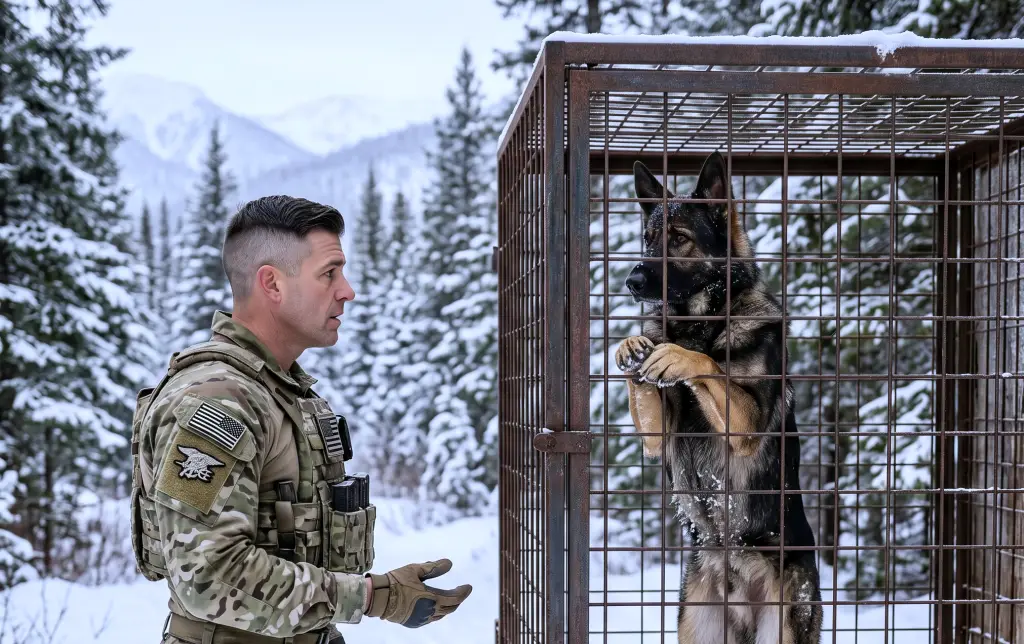
I was taking the forest service road slowly, letting the tires find their grip on the hard-packed ice. My hands rested lightly on the wheel of the truck, steady by habit. At forty, I had long since stopped trying to unlearn the physical habits of my past. My posture remained upright without any conscious effort, a byproduct of a life where discipline had settled deep into the marrow of my bones and decided to take up permanent residence. I wore a long-sleeved camouflage top that fit close to my broad shoulders, and the tactical belt secured at my waist felt as natural as a second skin. Even isolated out here, I kept my dark hair clipped in a neat undercut. My blue-gray eyes tracked the tree lines and the imposing snowbanks out of pure instinct, a scanning rhythm burned into me long before I ever retired to this quiet mountain road.
I wasn’t up here to take in the scenery. My phone had rung late the night before. It was Nolan Briggs, the local sheriff, his voice carrying the gravelly, exhausted weight of a man who had seen too much. Nolan, a stocky, practical man in his mid-fifties with thinning gray hair, possessed a streak of pragmatism that ran far deeper than the badge pinned to his chest. He had asked, with a quiet urgency, if I would mind taking a ride up to a remote stretch of the forest. The locals had been complaining about off-rhythm chainsaws echoing through the valleys—the erratic, hurried sounds that definitely didn’t belong to the permitted, legal logging crews.
Nolan trusted me with requests like this because I didn’t exaggerate, and I didn’t waste oxygen on unnecessary words. I had agreed immediately. After leaving the Navy SEALs, I had carved out a quiet, solitary existence in a small cabin near the town of Pineville. I kept strictly to myself and avoided the messy entanglements of civilian life, but the one thing I had never managed to unlearn was how to ignore a wrong sound in the woods.
As the truck climbed higher into the thin air, the dense pines gave way to jagged, exposed rock and wind-scoured drifts of snow. I eased my foot off the accelerator. Every instinct I possessed was suddenly humming, sensing that something was profoundly off a full minute before my eyes confirmed it.
And then, I saw it.
Sitting just beyond the edge of the tree line, right where the mountain plateaued into a narrow, desolate ridge, sat a structure that had absolutely no business existing in this landscape. It was a crude metal cage, elevated off the frozen earth on rough, splintering wooden supports. A thick crust of frost coated its heavy iron bars. Whoever had built it had bolted the pieces together with heavy, rusted wire and secured the main door with a corroded brass padlock.
A thin, pathetic metal pipe protruded from one corner of the enclosure, trailing a meager thread of gray smoke that drifted uselessly, helplessly, into the freezing expanse. The entire setup felt deliberate. It was careful, but in a deeply disturbing way. It looked exactly like the work of someone who had gone out of their way to ensure that suffering lasted as long as physically possible.
I shifted the truck into park and stepped out into the blinding white. My heavy boots crunched loudly against the compacted snow. The cold bit into my face immediately, stinging my cheeks, but my breathing remained perfectly even. I approached the structure with measured, silent steps, my right hand hovering instinctively near my tactical belt, even though the only visible threat was the howling wind.
Inside the rusted steel confines stood a dog. He was a German Shepherd, full-grown, with a massive, powerful frame that commanded respect even in his severely weakened, shivering state.
Clumps of snow and ice clung desperately to his thick black and tan coat, matting heavily along the dark, charcoal saddle of his broad back. His ears were pinned upright, trembling violently with the chill, but his amber eyes locked onto my movements with a razor-sharp, unwavering focus. The look in his eyes shattered me. It wasn’t the wild, frantic gaze of a panicked beast, nor was it the pleading look of a broken pet. It was hyper-alert, the deeply ingrained vigilance of a creature that had been forced to learn situational awareness as his only survival skill.
I noticed immediately that he favored one of his front legs, holding the paw slightly above the frozen floor grates. The subtle, painful limp whispered the story of an old, traumatic injury that someone had callously ignored.
He didn’t bark. He didn’t make a sound. And that absolute silence, more than the cage itself, told me everything. This was no accident.
I stepped up to the bars, my heart hammering a slow, angry rhythm against my ribs as I took in the horrific micro-details of the scene. An empty, dented metal water bowl was frozen solid to the floor. Around it, frantic, shallow scrape marks marred the icy metal where desperate claws had tried to dig for an escape. Around the shepherd’s thick neck, I saw a terrible, faint groove worn deep into his fur, a permanent indentation where a heavy collar or a short tether had pressed into him for months, maybe years.
This wasn’t the result of a panicked owner abandoning a dog on the side of a highway. This was methodical. This was a calculated execution.
Someone had locked this magnificent animal in here knowing exactly what the brutal mountain winter would do to him over the course of a few days. They hadn’t bothered to bring a gun. They clearly hadn’t wanted to leave blood in the pristine snow. They had simply assigned the silent, thorough winter to finish their dirty work.
I dropped slowly to one knee, bringing my face level with the dog’s, and met his piercing amber gaze. Up close, I could see his massive chest rising and falling in shallow, rapid hitches. His breath puffed in frantic white clouds. Every muscle in his body was pulled tight as a bowstring, as if he were holding his very life together by nothing but sheer, stubborn will.
His expression remained remarkably watchful. He was assessing me, weighing whether this stranger in camouflage was simply the next phase of the torture that had brought him here, or if I represented a break in the horrific pattern.
I reached my hand out toward the rusted bars, moving with agonizing slowness, keeping my palm open and flat.
“Easy,” I murmured. My voice was pitched low and steady—the exact tone I relied on when approaching volatile men who hadn’t yet decided if they were going to fight or surrender.