


I had been asleep for perhaps forty minutes—that suffocating, dreamless plunge you only manage to slip into after a relentlessly demanding week—when my cell phone illuminated the nightstand like a distress flare. I am sixty-three years old, and for thirty-one of those years, I made my living as a family law attorney. My body still betrays me at the sound of an unexpected ring in the dark, flinching the way combat veterans recoil at the sudden crack of a car exhaust. Absolutely nothing good ever travels through a telephone receiver at two o’clock in the morning. Not once in the history of the world.
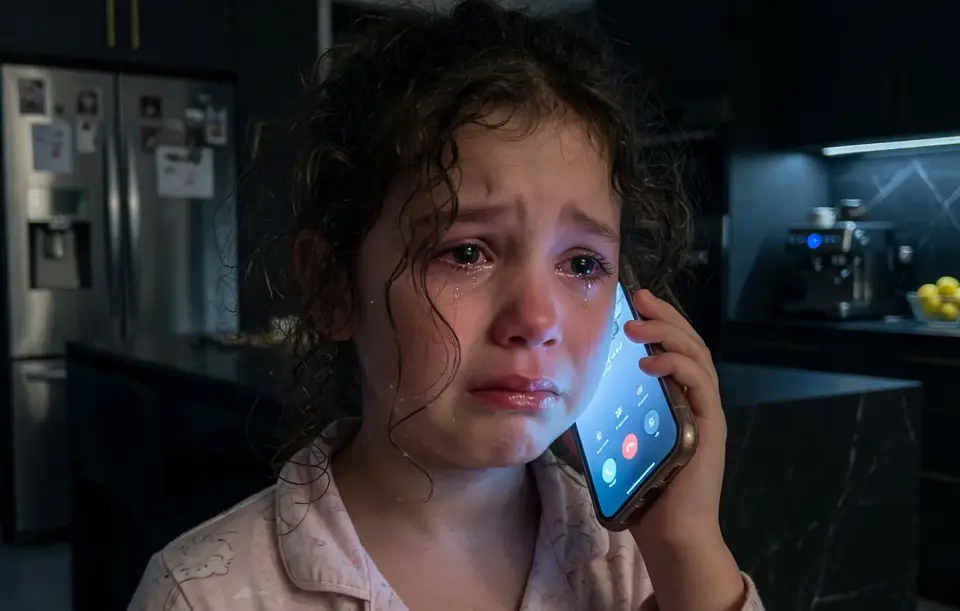
The name flashing across the digital screen stopped the blood in my chest for one terrifying beat.
Skyla.
It was my granddaughter. She was eight years old, calling me from what I could only pray was the safety of her own bed in Marietta, Georgia. It is one of those quiet, affluent Atlanta suburbs where the manicured lawns are aggressively perfect, the neighborly smiles are rigidly practiced, and every single house looks like a picture of domestic bliss until you get close enough to see the cracks in the foundation. I snatched the phone from the cradle before the second ring could finish sounding.
“Skyla, baby, what’s wrong?” I asked, my voice already rough with panic.
The sound she made in response wasn’t crying. Not exactly. It was that terrible, hollow gasping a child makes when they have been weeping for so many hours in solitude that their body has run completely dry of tears.
“Just breathe,” I murmured, throwing my legs over the side of the mattress.
I heard a shaking intake of air, sputtering and desperate like a flooded car engine that refuses to turn over. “Grandpa,” she whispered. She spoke my name as though it was the very last word remaining in her vocabulary.
I was already sitting fully upright, the fog of sleep entirely banished. My left hand was blindly reaching for my wire-rimmed glasses on the bedside table, while my brain was already running complex calculations. It is an old, deeply ingrained habit. Three decades of navigating the wreckage of broken families teaches you to do the grim math in your head before your feet even touch the floorboards. Distance: six hours by car, forty-five minutes by plane. Time: two in the morning. I was too old for this kind of adrenaline spike, but my body was doing it anyway.
“I’m here,” I told her, pressing the phone tighter against my ear. “I’m right here. Tell me what happened.”
“They left.”
Just two words. I forced her to repeat them, because my mind simply refused to process the syllables into a coherent reality.
“Who left, sweetheart?” I asked softly.
“Daddy and Mama and Alex.” Her voice shattered entirely on her brother’s name.
Alex was her older brother. Her biological brother. He was the eleven-year-old biological son of my son Anthony and his wife Natalie. He was the golden child who shared their sharp jawline, their easy laughter, and, apparently, their vacation itinerary.
“They went to Florida,” she choked out into the receiver. “To Disney World.”
I sat frozen on the edge of my bed in Decatur. I did not speak for a long, heavy moment.
“Say that again,” I finally managed to whisper.
“They went to Disney World,” she repeated, her tone dropping into a shameful hush, as if this abandonment was somehow a punishment she had earned. “Without me. They said I had school on Monday, and it didn’t make sense to take me. But Alex doesn’t have school either. And Grandpa…” She broke then. The fragile composure simply collapsed. “Why? Why didn’t they take me too?”
There is something you need to understand about the man I am. I am a man who once stood in a courtroom and cross-examined a sitting county judge without so much as blinking. I once delivered closing arguments in front of an appellate court while burning with a hundred-and-two-degree fever, simply because my client was terrified and needed me standing at that podium. Over the course of my career, I have delivered news to desperate parents that no human being should ever have to receive. I have explained that custody was lost. I have detailed how parental rights were permanently terminated. I have watched children be taken away. And I have done all of it with perfectly steady hands and a measured, clinical voice, because that is what the profession demanded of me.
But sitting alone in the dark, separated from my grieving granddaughter by hours of highway, I had to press my closed fist hard against my mouth to keep from screaming every single profanity burning in my throat.
“You didn’t do anything wrong,” I told her, injecting every ounce of iron and absolute certainty I possessed into my voice. “Do you hear me, Skyla? Not one single thing.”
“Then why?” she sobbed.
“I don’t know yet, baby. But I’m going to find out.”
I did not realize it in that dark bedroom, but I’m going to find out would become the single most defining promise I would make in the autumn of my life.
I disconnected the call and dialed my neighbor, Joseph Wright, at exactly 2:11 AM. Joseph is seventy-one years old, a retired mechanic for Delta Airlines, and perhaps the only man alive who treats a middle-of-the-night emergency call like a perfectly routine social engagement.
“Steven,” he answered on the very first ring, his voice gravelly but completely lucid. I have never understood how the man manages it.
“I need you to watch the dog,” I said, offering no preamble.
There was a brief stretch of silence on the line. Then he asked, “How long?”
“I don’t know. A few days. Maybe more.”
“That granddaughter of yours?” he pressed gently.
I swallowed hard, staring at the shadows moving across my bedroom wall. “Yeah.”
“I’ll be over in ten minutes to get the spare key.”
That is Joseph Wright. He did not ask a single probing question that I was unready to answer. I have known the man for twenty-two years, and he has never once minded his own business—except for the moments when minding his own business was the only thing that actually mattered. Those are the rare, quiet friendships that sustain you.
While still dressed in my cotton pajamas, I opened my phone and booked the earliest possible flight. It was a 6:15 AM departure out of Hartsfield-Jackson, scheduled to land in Atlanta at 7:02 AM. I know the flight is absurdly short; it is essentially a highly expensive bus ride where they hand you a small bag of pretzels. But I was not about to navigate six hours of dark interstate highway at two in the morning. I am sixty-three, not thirty. My lumbar spine made that executive decision for me years ago.
Before leaving for the airport, I walked down the hall to my home office. I moved to the heavy oak desk, slid open the bottom left drawer, and withdrew a small, black digital voice recorder. It was the exact model I used to carry into every hostile client meeting and deposition before the entire legal world migrated to smartphone apps and cloud storage. It was small, sleek, and utterly unobtrusive, no larger than a cigarette lighter. I told myself I was just grabbing it out of sheer muscle memory. It was just an old lawyer’s instinct kicking in. I would figure out much later whether I was actually lying to myself.
I landed back in Atlanta at 7:08 AM on that Thursday morning, touching down exactly three minutes behind schedule because the pilot claimed we had encountered unexpected headwinds—which is simply commercial airline speak for admitting they have no idea why we were delayed. I walked through the cavernous, glaringly bright terminal carrying nothing but a small canvas weekender bag, my leather briefcase, the digital recorder tucked discreetly into my breast pocket, and thirty-one years of family law experience sitting dead and heavy in my chest like a swallowed stone.
At the Hertz counter, I secured a rental car. They handed me the keys to a metallic blue Chevy Malibu that smelled so aggressively of synthetic pine air freshener it made my eyes water. It was the sort of chemical odor that immediately forces you to wonder what horrific scent the detailing crew is attempting to mask. I threw my bags into the passenger seat and drove the twenty-two minutes straight into the heart of Marietta.
The house on Whitmore Drive looked exactly as stifling as I remembered it. The exterior was wrapped in pristine beige siding. The wide, two-car garage was firmly shut. The decorative flower beds flanking the porch were violently colorful, maintained by Natalie with the frantic intensity of a woman whose entire sense of self-worth hinged precariously on the approval of the Homeowners Association. And, if I was being entirely fair to my daughter-in-law, it probably did.