


A horse could make Calvin Leberry look patient even when he wasn’t. It took time for a frightened animal to let a man lift its foot; hurry only taught it to pull harder. At forty-three, Calvin had learned to set his tools down, give the horse room to look at him, and begin again. Most of Tull County knew him by the rings of his hammer against an anvil.
At the Vandy place, a bay stallion had sent another farrier to the hospital. Calvin spent an afternoon on a feed bucket, reading a catalog aloud until the horse rested one hind leg. Then he went to work and had it shod within an hour. Delbert Hull, who had taught him, called that good timing. Calvin knew the long wait had given the stallion room to quiet itself.
His own house stood beyond a bend in Pell’s Crossing Road. Beside it were a lean-to shop, a paddock with two boarded horses, and a porch on which Louisa sometimes sat with music spread over her lap. She taught at the elementary school three days a week and gave piano lessons on the other two. Their seven-year-old, August, called Auggie by everyone who loved him, could recognize his mother’s students by the pieces they played badly through the open windows.
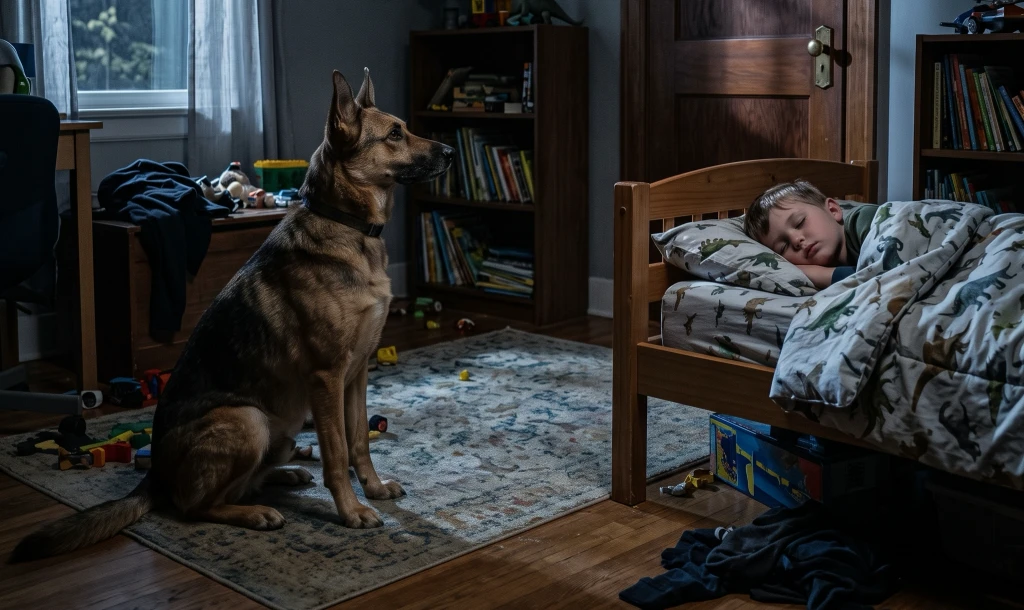
Auggie had chosen Baxter at the Cordell shelter the winter before. Or Baxter had chosen him. The shepherd mix had been found tied to a guardrail, thin enough for the ridges of his ribs to show through a brown-and-black coat. One ear stood upright; the other never quite managed it. For days he ate only if Calvin left a bowl on the kitchen floor and turned his back. Then he began sleeping at the foot of Auggie’s bed, walking him to the school bus, and waiting at the end of the drive for its return. When Auggie had a fever, Baxter remained so close that Calvin had to carry him outside.
He had weighed thirty-eight pounds when they brought him home. Auggie read his comics aloud to him, stumbling over the longer words. The dog had never troubled the lesson children, the horses, or the bus driver. Louisa knew that as well as Calvin did; she had bought the washable quilt for Auggie’s bed.
There was a hollow in the boy’s quilt where the dog’s weight settled every night. Louisa had grown used to stepping around it when she tucked Auggie in.
Her younger brother arrived on a Tuesday in September, carrying two duffel bags and smiling as if he were late to a party. Reuben Sageley needed a place for a few weeks. He had a gift for making the request sound small. At thirty-six, he had passed through jobs, borrowed trucks, an ambitious business that never opened, and promises to repay money that disappeared with the next change of address. He also remembered birthdays and could make Louisa laugh until she had to sit down.
Their mother had asked Louisa, near the end of her life, to look after him. Six years later Louisa still heard the request each time he called. She had offered the spare room before Calvin came in from a day at Ruth Ann Scoggins’s farm. He saw the extra truck at the drive, then his wife watching him from the porch, and carried Reuben’s heavier bag inside without making her defend the decision.
Louisa knew about the cousin’s truck Reuben had returned a month late and the girlfriend whose savings had vanished into an unopened business. She also remembered how he had sat with their mother through her worst nights. Calvin understood why she could not separate the brother she had cared for from the grown man asking for another bed.
Baxter stood in the kitchen doorway. As Reuben passed, the fur rose along his back. Auggie reached for the collar and said, “It’s Uncle Reuben.” The dog yielded to the boy’s hand, though his eyes stayed on the visitor until the spare-room door shut.
That evening Calvin found Baxter on the hall floor, his back against Auggie’s closed door. His nose pointed toward the spare room. Calvin touched the dog’s side and felt a quick, wakeful pulse.
“He’s appointed himself our sentry,” Louisa said the next morning, balancing a coffee cup as she stepped over him.
“Maybe he just doesn’t know Reuben yet.” Calvin wanted that to be true. A new person in a house could upset a dog, especially one with Baxter’s past. He waited for the habit to pass.
Reuben made waiting easy. He repaired the gate latch that had annoyed Calvin for months. Twice he cooked supper, washing the pans before Louisa could get to them. On bus mornings he walked with Auggie; the boy liked telling his uncle things an adult had apparently never heard before. Baxter followed at a distance, then hurried to reclaim his usual place when the bus came.
Reuben also began using a cheap black phone he had not carried on arrival. He took its calls outside. Calvin saw him pay for gasoline with a thick fold of twenties after claiming he was broke. None of that was a charge Calvin could make across a dinner table. Reuben had been unreliable for years; being short of money did not prove that he meant Auggie harm.
The hall told a narrower story. If Reuben went into the bathroom at its far end, Baxter rose and planted himself between the man and the child’s room. His legs shook. One afternoon Reuben bent to pat him; the dog snapped at the approaching hand without touching it.
Louisa put down the plate she was drying. Reuben backed away, palms visible. “All right. Message received.” Then, softly, to his sister: “That dog is big enough to do damage. I wouldn’t forgive myself if I kept quiet and somebody got hurt.”
Calvin studied where Baxter stood. “He warned you. He didn’t chase you.”
Reuben lowered his unmarked hands. “That’s the second warning, Cal. Suppose the third one is Auggie.” Louisa looked worn out, and fear of a preventable injury reached her before Calvin’s distinction about the dog’s position did.
“He almost got my hand,” Reuben said.
“I saw.”
Louisa’s gaze moved from the dog’s teeth to Auggie at the kitchen table. She said they would talk later, and Calvin knew whose safety each of them believed they were discussing. He went back to the shop without finding a way to describe what he had seen that she could hear.
At supper Auggie announced that he had beaten Reuben at a hiding game. He dug a channel through his mashed potatoes while he explained the rules. His uncle had tucked his flashlight away for two days, and Auggie had finally found it in the bin of building bricks beside his bed.
“Uncle Reuben says my room is the best place in the house to hide anything,” Auggie said. “He says nobody ever looks there.”
Reuben laughed, easy and loud. Louisa asked the boy to finish his vegetables. Calvin looked down the hall, where Baxter had left his water bowl and settled against Auggie’s door again. He thought of the little plastic bricks spilled across the bedroom rug, and of a grown man teaching a child which room the adults would overlook.
To read the rest of the story – CLICK the NEXT button 👇👇👇