


The answering machine on Aunt Mags’s kitchen counter held twenty-three messages. Jo Pruitt played every one of them with a pen in her hand, because sixteen years of dispatch had ruined her for listening any other way. Outside the window, something hummed in the dark: a low, rising note, like a man trying to remember a song. The first night she heard it, she went out with a flashlight expecting a bad transformer. She found Hollis, the oldest gelding in the herd, standing at the yard fence with his white face lifted toward the house. He hummed at the porch light until she switched it off. Then he stopped.
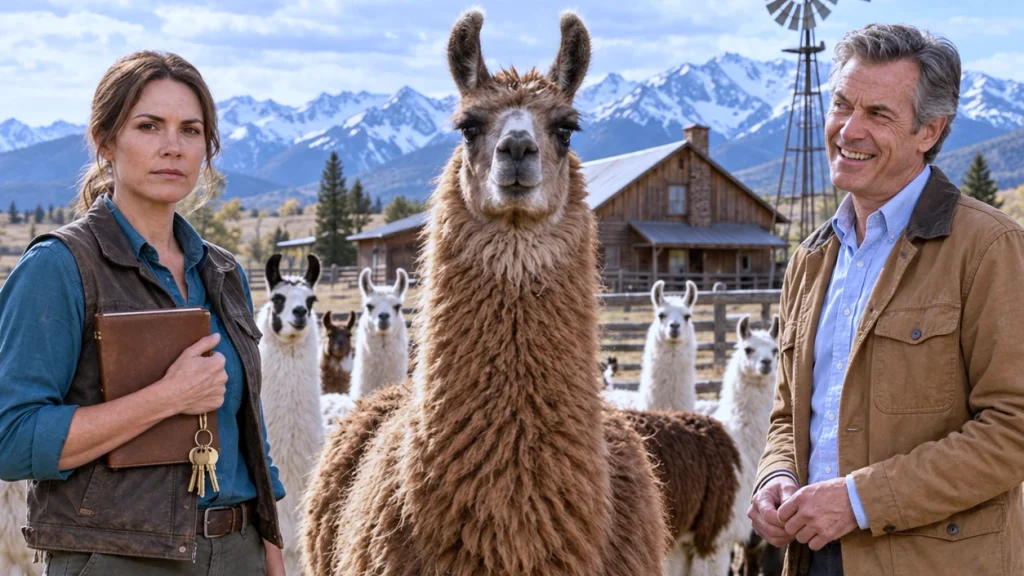
She wrote on the back of a co-op flyer, the same format she would have used on a call sheet: date, time, caller, request.
Aug 14, 9:12 a.m. Abe Lindqvist. Asks if Thursday is on. Will bring folding chair if bleacher is wet.
Aug 19, 4:40 p.m. Woman, no name. Asks if she can bring her sister “just once.” Apologizes twice.
Aug 27, 7:03 p.m. Teresa, from Montrose. Asks if Thursday is on. Says she heard something but hopes it isn’t true.
Mags had died on August 21 in the hospital in Durango, after telling a nurse she’d be home by the weekend to see about the water tank. Eleven of the messages had come in after that. Nine of them asked about Thursday.
Jo was forty-seven. Nineteen months earlier, her husband, Dean, had sat down in his truck in a hardware store parking lot in Aurora and never stood up again. Then in April, in the middle of a call about a man on a kitchen floor, she had taken off her headset and walked out of the Denver emergency communications center to her car. The center was holding her chair until January 15. Renee, her supervisor, had made that very clear, kindly, twice.
Mags had been her father’s older sister, the Pruitt nobody could predict. She never married, and she once spent a year teaching school in Alaska because somebody dared her to. Twenty-some years ago she bought 186 acres of rabbitbrush and piñon north of Tamarack, Colorado, on soil so thin the bones of the land showed through it. Eleven years ago she started bringing home llamas. When she died there were thirty-three of them, along with a stone-and-frame house, two sheds, a pole barn, a well that had to be babied in August, and a will that left all of it to Jo, because there was nobody else left to leave it to.
Jo had come down from Denver on September 12 to settle the estate. That was the lawyer’s phrase, and she had liked it, because it sounded like something a person could finish.
Warren Teague came on her second morning.
He knocked on the back door instead of the front, which told her he’d been in the house before. He was sixty-one, tall, with a lean face and a canvas coat worn pale at the cuffs. He took his hat off in the doorway and said he was sorry about Margaret. He was the only person in town who called her that.
“I owned the place north and east of you,” he said, accepting coffee. “Own it again, I should say. My dad sold it in ’89. Took me thirty years to buy it back a piece at a time.”
What he was building on it was called Kettle Butte Lodge. Jo had seen the sign from the highway: twelve cabins with glass ceilings, so guests could lie in bed and look at the Milky Way, plus a dining hall and a riding barn. People paid six hundred dollars a night, he told her without bragging, to see the kind of dark that used to be free.
Then he made his offer. Three hundred ninety thousand dollars, cash, closing in thirty days, no inspection. He’d take care of the llamas, too. He knew a woman in New Mexico who placed animals.
“I’ll be straight with you, Joanna, because Margaret would want me to be,” he said. “Your soil won’t grow hay worth cutting. The flat ground’s maybe twenty acres. The rest is rock with opinions. Those animals are old. Half of them couldn’t be given away at a sale barn.” He turned his cup on the oilcloth. “Margaret loved them like some folks love a boat. Right up until the bill comes.”
He explained the well. He explained winter feed, hoof trimming, the price of fencing by the rod, and the county’s assessment on land that wasn’t producing anything. He explained it patiently and in order, as if to someone who had never seen a fuse box. Jo let him finish. She wrote nothing down and kept her face still.
“You’ve had a hard couple of years,” he said. Small towns. Of course he knew about Dean. “Nobody would fault you for taking a fair price and going back where things make sense.”
“I’ll need to read everything before I decide anything,” she said.
She watched him file that away. Her steadiness had made people uneasy her whole working life. Callers wanted her to sound frightened, because then they knew she understood. Teague heard the same flat calm and decided she simply didn’t grasp the size of what she was holding. He left his card on the counter beside the answering machine.
That afternoon she walked the place for the first time without a lawyer’s list.
The llamas tracked her from a distance, thirty-three heads turning together like radio dishes. On the low rise in the middle of the west pasture she found a section of bleacher: two weathered planks on a galvanized frame, sunk in concrete. Someone had salvaged it from a gym. Under the gray she could make out the ghost of old paint, an orange tiger’s paw and part of a word, AMARAC.
The San Juans stood behind it, purple and enormous, with early snow on the high peaks. The bleacher faced the other way.
It looked down a gentle slope toward the open-sided shed in the southwest corner, where the oldest animals stood out of the wind in the afternoons. There was Hollis with his white face, a half-blind brown female the vet records called Pearl, a gelding with a crooked lower jaw, and three or four others she couldn’t tell apart yet. The bleacher sat about thirty feet from the shed’s edge. Jo stood beside it with the mountains at her back and decided her aunt must have installed it in a hurry, or drunk, or both.
She had meant to call everyone on the answering machine back and tell them, gently, that whatever Thursday had been, it was over. Every evening she picked up the receiver, and every evening she couldn’t settle on the words. A dispatcher always has words. That was the job. On Wednesday night she was still standing in the kitchen with the phone in her hand when she put it back down.
On Thursday at 1:40 in the afternoon, she was in the pole barn counting salt blocks when the old llamas began to walk.
Nobody had called them. Hollis led, stiff in the hips, and the others followed in a loose file down the worn trail toward the shed corner. They settled into the shade like a congregation finding its pews, and then they stood there facing the bleacher. Waiting.
At 1:52 a car came up the county road, then another, then a pickup with a camper shell, then a small hatchback with a dented door. Six vehicles in all. They pulled onto the wide gravel apron by the west gate, the one Jo had wondered about because it was far too big for a tractor, and they stopped. Nobody honked. Nobody got out.
Behind them, farther up the road, a white truck with KETTLE BUTTE on the door slowed and pulled onto the shoulder.
Jo walked to the gate. The chain was looped twice and padlocked, and the key was on the ring in her pocket. An old man climbed out of the first car with care, one hand on the door frame. He was tall and stooped, in a plaid wool shirt buttoned to the throat, with a canvas folding chair under one arm.
“You’d be the niece,” he said. “I’m Abe. I left her a message.”
“Several,” Jo said.
He smiled at that, briefly. Then he looked past her at the shed corner, where Hollis had lifted his head, and something in his face loosened. Jo had heard that same loosening in a thousand voices, in the second after a caller realized someone had picked up.
“We heard about Margaret,” he said. “We didn’t know if we were allowed.”
Up the road, the window of the white truck was coming down. Abe waited. The five cars behind him waited. In the shed corner, the old llamas waited, and the key was in Jo’s hand…
To read the rest of the story – CLICK the NEXT button 👇👇👇