


Deb Halloran had been handing an apple across the Quale mailbox to the same old dun mare for fourteen months. On the last Tuesday in June, the mare wasn’t at the fence to take it. A square of cardboard was wired to the post instead: HORSES 11 HEAD. SALE BARN SATURDAY. TAKE THEM BEFORE THEN, THEY’RE YOURS.
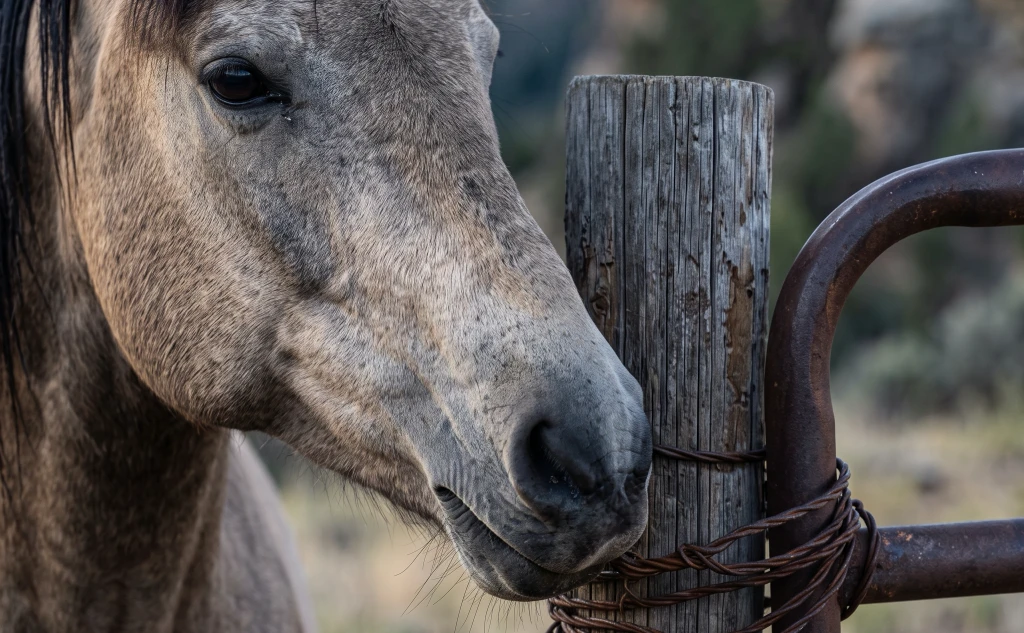
Route 2 ran ninety-one miles out of Piñon Flats and served a hundred and twenty-six boxes, and for more than a year box seventy-one had come with a horse. Around a quarter past one the mare would be standing at the wire beside the post. She was a dun with a black stripe down her spine and a notch out of her left ear. Deb would lean across the passenger seat and hold out the back half of her lunch apple, and the mare would take it with her lips curled back, slow and mannerly, as if someone had raised her to be polite about it.
Then she would stay while Deb fed Ardith Quale’s seed catalogs and pharmacy statements into the box, as though seeing the mail delivered was her half of the bargain.
Today the box was stuffed shut. Deb put the car in park. Up the lane, a man in white running shoes was trying to walk a recliner backward down Ardith’s porch steps by himself.
His name was Brent. He was Ardith’s nephew from Littleton, he had her power of attorney, and he had a rental truck due back in Denver on Monday. Ardith had been at Sage Hill Care Center for three weeks, ever since a sheriff’s deputy found her walking the county road at first light in her nightgown with a halter over her shoulder. Brent told that part fast, like a story he’d already given to too many offices on the phone.
“The sale barn guy was honest with me,” he said. “Most of them go to a buyer who ships them south. I don’t know what else to do with them. I’m an actuary.”
Deb walked around the house with him. All spring she’d been looking at Ardith’s horses over the fence and telling herself they were Ardith’s business. From the lane they had looked like any backyard band getting through a dry year. Up close they looked worse. Eleven head stood in a lot eaten down to dirt and pebbles. They had found the one strip of shade along the shed wall and packed themselves into it nose to tail, swishing flies off each other’s faces. A sorrel’s mane had matted into a single rope of burrs. A big brown gelding had long, cracked hooves that curled up at the toe like boots left out all winter.
The dun stood apart in the far corner, facing south, her head low. Brent had numbered the herd himself with an orange livestock marker, using the lot numbers the sale barn had given him over the phone, and the dun wore 314 on her hip. Deb could count her ribs from twenty feet. Gray had salted the black on her face. Her eyes were clear, though, and she watched Deb all the way across the lot.
“She’s the oldest,” Brent said. “Twenty-seven, according to the vet folder. The barn guy said she might not make it through the sale.”
Deb did the arithmetic standing there, because nobody else was going to. She was fifty-four. She carried mail six days a week and took home what a rural carrier takes home, which was steady and not much. She had sixty acres on Cutler Mesa with two shares in the Cutler Ditch, a pole barn holding nothing but Dennis’s tools and a stack of tires, and a well that had never been strong. She had a son, Jace, twenty-six, who’d been home since the Bowie mine laid off its whole maintenance crew in March. He spent his days fixing things she hadn’t known were broken. Dennis had been gone twenty-one months. The pasture was good this year because the ditch was running. That was the whole list, it wasn’t enough for eleven horses, and she knew it.
She called Jace from Ardith’s porch.
“Eleven,” he said. The line went quiet long enough that she thought the call had dropped. “Hank’s still got that gooseneck. I’ll call him.”
That was Jace since March. He would argue with her about where to set a fence post until supper went cold, and then something like this would come along and he would simply pick it up.
They loaded Thursday evening after her route. Hank Ochoa brought his stock trailer and his opinion, which was that she’d lost her mind and he’d make three trips if that was what it took. Brent stood around holding a clipboard he had no use for.
Curt Selden’s pickup came up the lane while they were loading the second bunch. Deb knew the truck before she knew the man, because she put mail in the box at the bottom of his drive every afternoon. Selden Ridge Lodge did cabins and weddings on the bench above her own place, where his family had run cattle until he turned it into something that photographed better. Curt was forty-six, tanned and pressed. At Christmas he left the carrier a gift card in an envelope with her name spelled right, which was more than most people managed.
“Brent,” he said, and shook hands. Then he turned to Deb as if Brent had been a formality. “I hear you’re taking the whole bunch.”
“I’m taking the whole bunch.”
“Let me make it easier on you.” He pointed down the lane at his own trailer, where a sorrel gelding stood tied, glossy as a new saddle. “Seven years old. Sound, broke, rides out alone. My sister’s girl wants something quiet she can’t get hurt on. I’ll trade you straight across for the dun.”
Hank stopped coiling his lead rope. A sound seven-year-old gelding for a twenty-seven-year-old mare who might not survive the ride home. Even Brent understood that much.
Deb looked at the sorrel, then at Curt, and it took her a moment to see what was off about him. He was talking about the dun, but he hadn’t looked at her once. He looked at Hank’s tires, at the hitch, at the sorrel in his own trailer, at a spot somewhere over Deb’s shoulder. When the old mare shifted her weight and the orange number caught the light, his eyes went the other way, toward the house.
“That’s a generous trade,” Deb said.
“I’m a generous guy. Ask anybody.” He smiled. “You’ve got eleven head to feed and a ditch that’ll be on a call by August. An old horse eats the same as a young one and gives you nothing back. One less mouth, and you get something you can ride.”
“She meets me at the mailbox,” Deb said. “I’m not trading her.”
He took it better than she expected. He said the offer stood, told her to give his best to Jace, and drove off with the sorrel’s tail blowing out through the trailer slats. Hank waited until the truck had crossed the cattle guard.
“Thirty years,” he said. “I never once saw a Selden give a horse away.”
They brought the dun home last, alone, so nothing could lean on her in the dark. She came down Hank’s ramp feeling for each board. When she reached the ground she stood smelling the air a long time, nostrils working, like someone pausing in the doorway of a house she used to visit. Then she found the trough and drank like an animal that had been thinking about water for days.
Deb’s alarm went off at 5:40 the next morning, as it did every morning, because Route 2 got cased at seven whether anybody had slept or not. She was filling her travel mug when Jace came in from the porch in his boxers and work boots.
“Your mailbox horse is up at Dad’s gate,” he said.
The upper gate stood at the very top of the pasture, where the ground broke and fell away into the draw. The draw held scrub oak, rock ledges, and somewhere in the middle of it the six old apple trees Dennis had bought this place for. Deb had never once climbed up there. The draw had been Dennis’s. He’d wired the gate shut himself the fall he gave up on the trees, with baling wire wound around the post six times.
The dun was standing with her chest pressed to the pipe rails. She didn’t turn when they walked up. Jace shook a coffee can of grain at her, and she ignored it, which no horse that thin should have been able to do. She was working her upper lip over the twist of baling wire, slowly, as if she were trying to remember how it came undone.
“She’s been here since it got light enough to see,” Jace said. He reached into his back pocket and came out with his fencing pliers. “You want me to cut it and see where she goes?”
To read the rest of the story – CLICK the NEXT button 👇👇👇