


The eleventh set on the marten line was empty again. The bait was gone and the trigger stick lay sprung in the snow. Hollis Brandt was crouched over it, trying to decide whether to blame a gray jay or his own tired hands, when a sound came up out of the ground.
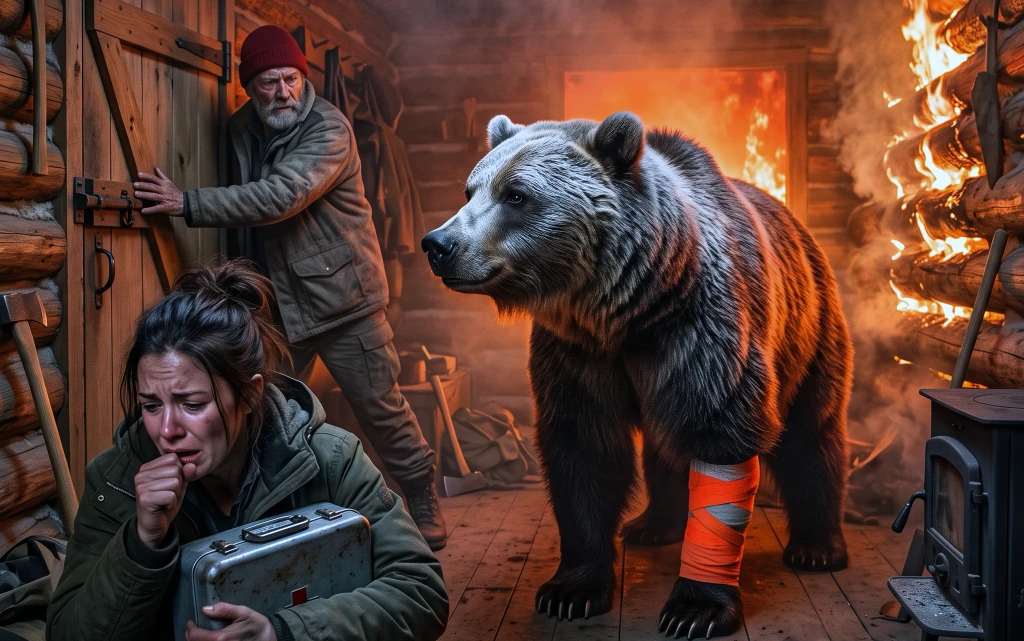
He went still the way he had learned to forty years ago, before he ever owned a trap. At twenty-six below, the woods along the upper Tamarack made only a few noises, and he knew all of them: lodgepoles popping as the sap froze, the creek grinding under its ice, a raven complaining over the ridge. This was none of those. It was long and wet and ragged, a breath dragged through a narrow place, and it came from the drift piled against a blown-down larch twenty yards upslope.
It came again, weaker. Hollis unslung the rifle and walked to the drift with the barrel low. Nothing showed on top. Snow had been coming in fits for three days and it lay smooth as poured plaster, except for one small hole near the root wad. Its rim was glazed, as if the snow there had melted from below and frozen again.
Something under there was breathing.
He pulled off a snowshoe and used the tail as a shovel. The drift had set up hard in the cold and came away in slabs. He worked slowly, because he was sixty-seven and his shoulder had been bad since summer, and because some part of him already knew. Ten minutes in, the snowshoe scraped over something that gave. He dropped to his knees and cleared the rest with his mittens, and a brown eye looked up at him out of the white.
It didn’t blink. It was small for the size of the head around it, set deep in fur gone silver at the tips. There was no fury in it, nothing he had braced for. There was only a flat, used-up patience, the look of something that had waited a long time and had stopped expecting the wait to end.
Hollis went backward so fast he sat down in the snow.
A grizzly. A sow, by the size of the skull, the hump of her shoulders just breaking the surface where he had dug. He had the rifle up before he’d decided anything, the stock cold against his cheek, the front bead resting between that eye and the ear.
Nineteen years ago, in October, his wife Ruth had walked ahead of him on the trail along this same creek. She wanted to see whether the eddy below the falls had skimmed over yet. The wind was loud in the treetops and he was a hundred yards back, fixing a binding, and he heard her once. Only once. By the time he reached the bend, the bear was moving off through the alders with two cubs behind her. The state found that sow and killed her two days later, and it made no difference to anything.
He had stayed in the cabin. People in town expected him to sell, and he stayed, and he ran his line on the ridge side so he would never have to walk the creek trail past the bend again. And he hated every bear in the valley, quietly and completely, the way a man might hate the weather if the weather had a face.
His finger settled on the trigger. One round. Nobody would come asking.
Then the sow moved her head a few inches. The snow fell away from her near shoulder and he saw the cable.
It was three-eighths steel, looped tight around her right foreleg above the paw. Below the loop the paw lay turned at an angle no leg should make. Above it the hair was gone and the hide had split, and the cable had sunk into the split until he could only see it by its shadow. The snow around her was packed and pink and churned down to dirt. She had stripped the bark off the larch as high as she could reach.
Not hours. Days. She had hit the snare before the snow came, fought it until the leg broke, then lain down in the storm and let it cover her. By now she should have been asleep in a den above the falls, fat on the last of the berries. Instead somebody’s cable had held her here while the winter came down on top of her.
He lowered the rifle an inch, then another.
He had no pity for bears and wasn’t going to start now. What came over him was the same sour heat he felt whenever he found another man’s trap in his country, set wrong and left. He had run a line for forty years. You checked your sets every day, because whatever you caught was yours to answer for. The one rule older than any state regulation was that you didn’t leave a thing to die by inches because you couldn’t be bothered to walk out and look.
Hollis stood over the animal he had wanted dead for nineteen years, and what kept his finger off the trigger was the clean snow under the larch, where nobody had come back to look.
He put the rifle across his back and went down the hill for the machine.
The snowmobile was where he had left it on the old skid road, the freight toboggan hitched behind. He brought both up as close as the timber allowed and spent the next hour doing things he would have called crazy in another man. He tied her jaws with a lash rope, slowly, talking low the whole time the way he’d talk to a spooked horse, and she let him. His hands shook worse after he’d finished the knot than while he tied it. He loosened the cable clamp from the larch instead of cutting it, because the loop on her leg had gone too deep to touch. Then he tipped the toboggan on edge against her back, ran a rope from her far side around a stump and back to the hitch, and let the machine roll her onto the boards a few inches at a time.
She weighed close to three hundred pounds. When she settled she let out one short sound, and then nothing.
It was two miles up the drainage to his cabin and it took him until dark. He got her inside by lifting the door off its hinges, laid her on two elk hides beside the stove, and leaned against the log wall, breathing as if he’d run the whole way.
By lamplight the leg looked worse. Bone showed white at the split, and the forearm had swollen tight and hot under his hand. He did what he knew to do for a dog or a mule. He cleaned the wound with the last of the whiskey, pulled the leg as straight as it would go while she shuddered under him, and bound it between two lengths of lath with strips torn from an old wool shirt. Then he loosened the rope on her jaws so she could pant, set a pan of snowmelt by her nose, and sat down on the stool with the rifle across his knees.
She breathed. That was all she did, in long rough pulls that rattled at the end. Once, near midnight, her good front paw opened and closed on the hide, claws scraping, and he watched the paw until it stopped.
Toward morning, because his hands needed something to do, he picked up the free end of the cable and turned it in the lamplight, looking for a maker’s tag. There was no tag. There was the crimped ferrule where the loop had been closed, and just above it, rubbed thin but still there, a two-inch band of orange paint.
He knew that orange. Every choker cable in Wade Kessler’s yard got a band of it so the cables wouldn’t walk off to some other outfit’s landing. Hollis had seen coils of it stacked behind the mill shop all his life.
He sat back with the cable in his hand and the paint flaking under his thumbnail. Somebody from Larch Creek would be walking up the Tamarack to check that snare. And the trail he had broken bringing her home ran from the empty larch straight to his door…
To read the rest of the story – CLICK the NEXT button 👇👇👇