


At four-thirty in the morning the barn was the only warm place on the Thibault farm. Owen knew before he reached the calving pen that something in it was dead. The heifer stood over her calf in the straw, licking it with long, slow strokes, the way she’d been built to. With each stroke the calf’s head rolled a little, then rolled back. Rudy got there first. The dog slipped under the bottom rail and put his nose to the calf’s wet neck, then pulled back as if he’d touched a hot stovepipe. He turned and trotted away down the feed alley, ears flat, and didn’t look back.
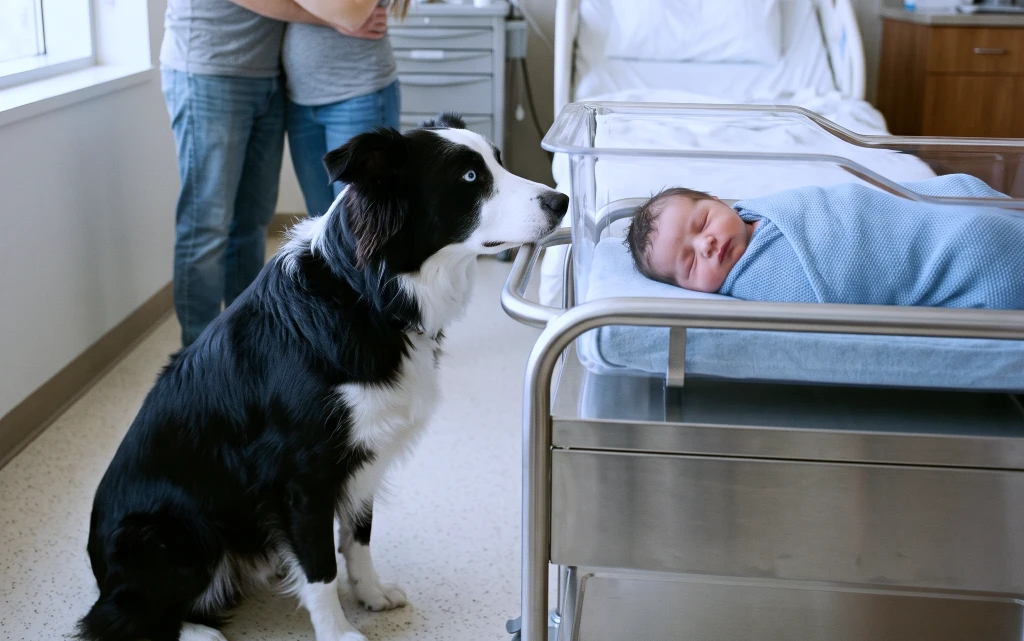
Owen had seen him do that a dozen times in nine years. Walt called Rudy the midwife. The night before a cow calved, the dog would lie down outside her pen with his chin on his front paws. He kept one blue eye and one brown fixed on her through the boards, and nothing short of a shout would move him until the calf was up and sucking.
He’d lie that way for a calf that came out struggling, too, flat against the gate while Owen worked. He had never once lain down for a dead one. He’d sniff and go.
Owen climbed in anyway. The heifer swung her head at him and he let her, then got a hand on the calf’s chest. It was a big bull calf, backward from the look of the hind legs, and cold through.
He’d brought back calves that came out limp as a feed sack. He’d clear the nose with two fingers and rub a fistful of straw hard along the ribs until his forearms burned, then pour a cupful of cold water in one ear to make them gasp. Some came back. This one had been gone since before midnight. He had walked through at eleven, seen her lying quiet, and gone to bed.
“Sorry, mama,” he said, and climbed out.
He needed Rudy for the first group. Every morning of his life, Rudy brought the cows up from the freestalls to the parlor, working low and silent along their heels, and the cows knew him better than they knew Owen. But the dog was at the big sliding door, scratching at the gap with one forepaw.
“Rudy. Cows.”
The dog looked back at him and barked once, high and sharp. Owen rolled the door open a foot to see what he wanted. Rudy went through it and across the yard in the dark, past the silage pile and the truck, straight up the porch steps to the mudroom door, and threw himself at it. Through the snow Owen could hear claws scraping on the storm door’s aluminum.
Jess was thirty-seven weeks along and had been sleeping badly. Owen stood a second in the doorway with cold air on his neck. He was irritated with the dog, with the dead calf, and with himself for the eleven o’clock check. Then he rolled the door shut and went to get the cows on his own.
He was eight cows into the first group, dipping teats, when the phone in his chest pocket buzzed. He’d have let it go to voicemail, but it was Jess.
“Owen.” Her voice was very calm, which was how he knew. “Come to the house. Right now.”
He did not remember crossing the yard. He remembered the mudroom door standing open, because she’d let the dog in. He remembered blood on the bathroom tile, more of it than he could make sense of, and Jess on the floor against the tub with her knees up and both hands under her belly. Rudy lay with his chin on her bare foot, not moving, watching her face.
“It doesn’t hurt,” she said. “It did and now it doesn’t. That’s bad, isn’t it?”
He called the ambulance from town. Then he called Walt across the road, said “Finish milking,” and hung up before his father could ask him anything.
After that the morning ran on the ambulance’s clock instead of his. There were flashlights in the kitchen. Jess said his name from the stretcher while he looked for her boots, as if she’d need boots. He drove twenty-five minutes down Route 5 behind the ambulance at a speed that would have gotten anyone else arrested.
The hospital in Caledon Falls had twenty-two beds and a helipad nobody used in February. The surgeon on call was already scrubbed by the time they wheeled Jess through. The placenta had torn away. They put her all the way under.
At seven-forty Dr. Dana Kittredge came out to the family room. She was the family doctor who had seen Jess through every appointment since spring. She didn’t sit. She took off her paper cap and held it in both hands.
“We got him out at six fifty-one. He had no heartbeat then, and he never got one. We did everything there is to do for twenty-eight minutes. At seven-nineteen I stopped.” She kept her eyes on his. “I’m so sorry, Owen.”
They had lost a daughter at twenty weeks the March before last and named her Wren. This time Jess had refused to pick a name until the thirty-sixth week. Then she’d chosen Samuel, after nobody, because she liked that it meant somebody had been listening.
A nurse brought Sam out to him wrapped in a striped receiving blanket. Owen knew the nurse. Gil Bouchard had grown up two roads over, on a farm that sold out in the bad milk years. He’d been an EMT for a decade before he went back to school, and he still plowed driveways all winter with a blade on his half-ton. He held the bundle out the way you’d hold out something you’d been trusted with.
“You want to hold him, Owen?”
“His mother should be first,” Owen said.
Gil looked at him a moment too long, then nodded.
Jess woke a little after eight. Gil brought Sam to her, and she put him inside her gown against her bare chest. She asked Gil to keep him warm, and Gil didn’t tell her there was no point. Every half hour he took a fresh blanket from the warming cabinet down the hall and traded it for the one going cool.
Owen sat by the window and watched snow fall slantwise into the parking lot. He counted the trucks, because Jess was talking to the baby in a voice too low to hear and he didn’t know where to put himself.
At half past eight he stood up.
“Dad’s alone with the whole herd. And that heifer needs looking at.”
Jess raised her head. Her face was gray under the freckles. “Your father has milked alone since before you were born.”
“I’ll be an hour.”
“Owen.” She didn’t raise her voice. She’d never needed to; on her mail route she could make a Rottweiler sit with one word through a car window. “Don’t. Sit down. Stay here with us.”
He kissed her forehead and went.
Walt had finished milking by seven, the way Owen had known he would. The cows were fed, the alleys scraped, the parlor washed down and steaming. There was nothing to do.
Owen went to the calving pen to take the dead calf out before it froze into the straw, and the heifer was still licking it. She put herself between him and the calf and lowered her head. He stood with his hand on the gate latch for a long time, then sat down on the top rail instead.
That’s where Walt found him, a little after nine-thirty.
His father was seventy-one, with knees that clicked like a ratchet and a face the weather had been working on since Eisenhower. He looked at Owen on the rail, then at the heifer and the calf, and kept whatever he thought to himself.
“Jess’s bag is in the hall. I’ll ride down with you. I’d like to meet my grandson.” He jerked his chin toward the house. “And take the dog. He’s been laying against the kitchen door since the ambulance, and he won’t come out for me.”
Rudy rode on the floor of the pickup between Walt’s boots with his chin on Walt’s knee. He didn’t look out the window once.
It was five past ten when Owen walked back into the room with the bag. Jess looked at the clock over the door, then at him.
“An hour and thirty-five minutes,” she said.
He set the bag down. She was looking past him now, at the dog hair on his jeans.
“Is Rudy here?”
“In the truck with Dad.”
“I want him to see Sam.” She said it to the baby’s head. “I want him to have had a dog. Even for a minute.”
“They won’t let a dog in a hospital, Jess.”
Gil had come in behind him with another warm blanket over his arm. He stood there a moment, folding and unfolding the edge of it.
“The family room at the end of the hall has a door onto the courtyard,” he said. “Nobody’s used it since they banned smoking. Give me ten minutes. If Donna catches me, you never heard me say it.”
He moved them himself. He checked Jess’s blood pressure twice and made her sit on the edge of the bed for a full minute before he’d let her into the wheelchair. Then he settled Sam against her under the blankets and hooked the IV pole to the chair, and Owen walked beside them with a hand on its back.
The family room had a couch, a box of tissues, and a painting of a covered bridge. Gil unlocked the glass door and cold came in. Walt crossed the courtyard through the snow with Rudy on a baling-twine leash.
Rudy stopped on the threshold with snow melting on his back. He came across the carpet slowly, nose low, the way he moved through the barn at night when the cows were lying down. He put his nose to the dark, damp hair on top of Sam’s head where it showed above the blanket and breathed in for a long time.
Then he lay down at Jess’s feet.
He put his chin on his front paws and fixed his mismatched eyes on the baby. A sound came out of him so low Owen felt it more than heard it. Walt tugged the twine. Rudy stayed where he was.
Owen knew that posture. He had seen it outside a hundred pens on a hundred nights. He had never seen it beside anything dead.
“Jess,” he said. “Hold still.” He went down on his knees by the wheelchair and looked where the dog was looking. Under the damp dark hair, in the soft place at the top of his son’s head, the skin lifted. Owen watched it sink. He counted the way he counted a cow’s contractions, and at three it lifted again…
To read the rest of the story – CLICK the NEXT button 👇👇👇