


The bus driver had to lower the lift twice before it met the curb properly. Natalie Mercer waited with one hand on her wheel rim and the other covering the sketchbook on her lap. Water drummed on the roof above her.
“Take your time,” the driver said.
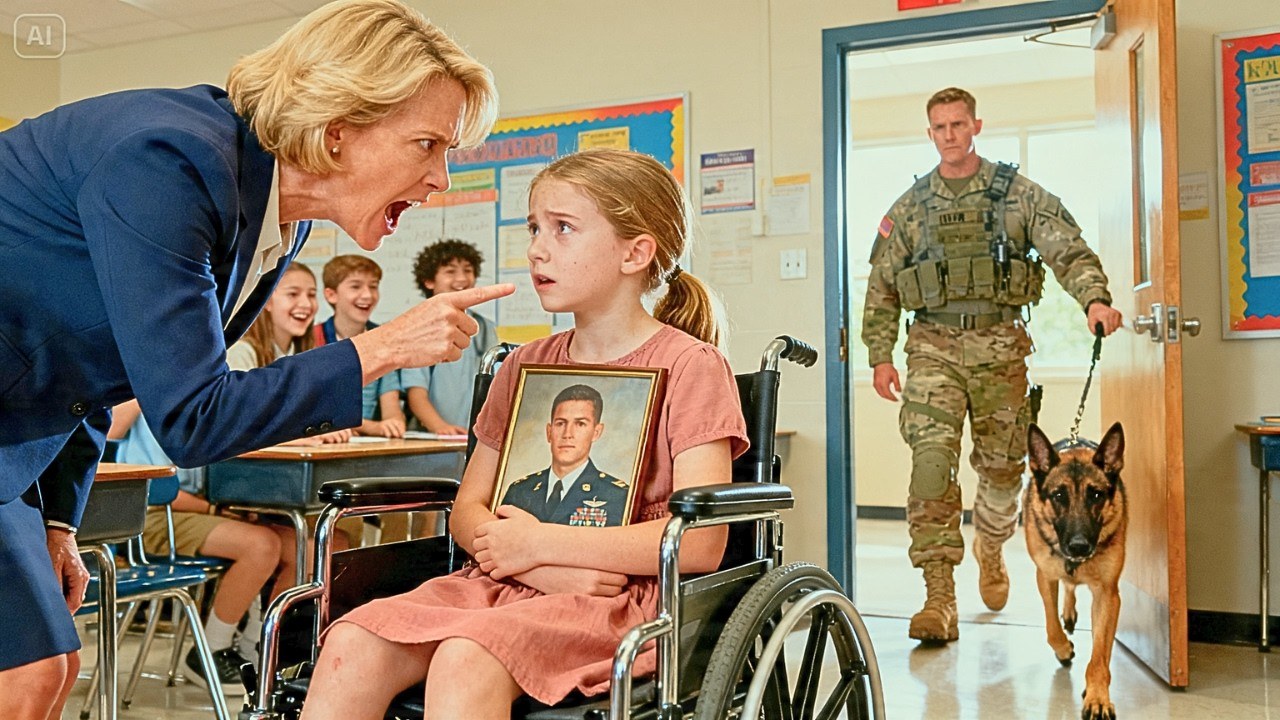
She wasn’t the one making the lift hurry.
At the bottom, a gust pushed rain beneath the awning. Natalie tucked the book under her jacket and rolled toward the doors, steering around a puddle deep enough to hide the painted edge of the sidewalk. Her hood had slipped over one eye. She shoved it back. Getting wet was less trouble than not seeing.
She was nine, and she had been using a wheelchair since she was four. By now, she knew which doors needed a shoulder against them, which sidewalks tilted toward the street, and which adults would grab the handles without asking. Her dad said a poorly designed entrance wasn’t evidence that she needed to try harder. Sometimes an entrance was simply poorly designed.
The school stood on the edge of Ellery, an Oregon town where the houses thinned into wet pastures and fir-covered hills. Inside, somebody had laid newspaper beneath a row of dripping boots. Natalie passed a custodian pushing water toward a floor drain and headed for her classroom.
She had spent four days on the picture. Thursday’s attempt had gone badly enough that she had started over. On Sunday evening, she had finally left it alone.
Her dad’s chin was a little broad. Ranger’s ears belonged on a larger dog. But she had gotten the important parts: the way her father looked straight at whoever was talking, and the dog leaning toward him without seeming to lean at all.
For two weeks, the class had been preparing presentations about a person they admired. Their teacher, Mrs. Denise Whitcomb, had insisted on a real person and accurate information. Natalie had never considered choosing anybody else.
The desks made an open square around a patch of carpet. Her place was near the windows, where there was enough room to turn without knocking someone’s pencil box onto the floor. She slid the sketchbook onto her desk, picture down.
Across from her, Caleb Frost adjusted a photograph of his grandfather in uniform. There were medals beneath the photograph. Ava Mensah had brought a folding display about her mother’s hospital work, complete with little cardboard doors. Tyler Voss, who generally remembered homework when someone else mentioned it, had a neatly bound report.
Natalie rubbed a gray smudge from the side of her thumb.
Mrs. Whitcomb closed the classroom door and tapped two fingers against the metal edge of the whiteboard. Conversations stopped.
“We’ll give each speaker our attention,” she said. “You’ve all had plenty of time to prepare.”
Caleb volunteered first. He spoke without looking at his notes, except when he named one of the ships his grandfather had served aboard. Mrs. Whitcomb led the applause.
Ava described her mother taking a call from the emergency department while trying to rescue an overcooked holiday dinner. The cardboard doors on her display kept swinging open. She finally held them shut with her elbow, and everybody laughed with her.
Tyler’s report was about a professional baseball player. That explained the binding. He cared about baseball enough to remember deadlines.
Natalie watched all three. Her father called that getting your bearings. She liked knowing whether a room wanted a loud voice or a quiet one before she started talking.
Then Mrs. Whitcomb looked toward the windows.
“Your turn, Natalie.”
Natalie backed out from her desk and crossed the carpet. She had practiced holding the picture high enough for people in the rear to see, and now she lifted it with both hands.
“This is my father, Owen Mercer. He’s a military dog handler. His partner’s name is Ranger.”
She turned the page slightly toward the other side of the room.
“Ranger is a Belgian Malinois. They’ve been together for six years. They help find people, and they do other work I’m not allowed to put in a school project.”
A few children leaned forward.
“He can follow an old scent trail. Sometimes more than three days old, if the conditions are right. Dad showed me a timed training search where Ranger checked a small building in less than four minutes. They’ve helped bring home children who were missing for days.”
Mrs. Whitcomb made a faint sound through her nose.
Natalie lowered the sketchbook an inch.
“An exciting account,” the teacher said. “But excitement isn’t the same as accuracy.”
“It’s accurate.”
The teacher’s smile stayed in place.
“You’re describing things from adventure movies.”
“No. Dad showed me the training time.”
“And where are the sources for these claims?”
Natalie glanced at the drawing, as though a source might have appeared in the margin.
“I can ask him to—”
“We discussed checking information before presenting it. Your classmates deserve facts.”
Mrs. Whitcomb crossed to the supply tray and uncapped a broad red marker. Natalie heard the plastic cap click into place on the other end.
“My dad does this for work.”
The teacher took the sketchbook from her before she could decide whether to hold on. She bent the cover back, wrote across it, and turned it so Natalie could see.
FALSE INFORMATION.
Someone laughed near the coat hooks. It stopped quickly, but not quickly enough.
“You need to apologize to the class for presenting an invented account,” Mrs. Whitcomb said.
Natalie kept both hands in her lap. The place where the sketchbook had rested felt cold.
“I didn’t invent it.”
Mrs. Whitcomb dropped the book into the paper-recycling container beside the board.
“We’ll continue. Caleb, tell us a little more about your grandfather’s service.”
For several seconds, Natalie remained in the open space at the front. Caleb looked down at the medals on his display. Then he began talking.
She turned her chair and went back to her desk.
From there she could see one corner of the sketchbook sticking above a stack of discarded worksheets. The cover had folded under itself. She tried to remember whether the picture inside had been facing up or down.
Two evenings earlier, her father had called from somewhere with a poor connection. She had heard wind and a burst of static before his voice came through.
“Got your speech ready?”
“Yes.”
“You want to run it past me?”
“I already know it.”
He had laughed. She could still hear that part clearly.
Natalie pressed her palms against her knees until the urge to cry passed.
The class went on to fractions. After fractions came reading. At lunch, an empty seat remained beside her even after the rest of the table filled.
“Did you really make him up?” a boy asked.
“My father?”
“The army stuff.”
“No.”
“But Mrs. Whitcomb said—”
“I was there.”
She unwrapped her sandwich and watched rainwater travel down the cafeteria window. Across the parking lot, the buses sat in a row with their wipers lifted.
She had left the sketchbook where it was. Getting it meant going back to the front while everyone watched. She had already done enough of that.
By dismissal, children from other grades knew a version of the story. Natalie heard a girl say somebody had been caught inventing a famous father. Near the office, two older boys were arguing about whether she had received detention.
Her emergency phone held a message from Dad. Work had delayed him. Aunt Beth would pick her up.
Natalie sat beneath the entrance canopy, with her chair clear of the stream of children. Her father’s schedule changed often. That part of the day, at least, was familiar.
Beth arrived with the passenger seat pushed back and the heater running. Natalie transferred into the car while her aunt steadied the chair, then waited as Beth folded it into the back.
Once they were moving, Beth glanced over.
“Do I need to know something?”
“No.”
“Convincing.”
Natalie watched a windshield wiper carry a wet leaf halfway across the glass.
“Your presentation was today.”
“Yes.”
“How’d it go?”
“Fine.”
Beth let two intersections pass.
“He’ll answer if you call him.”
“I know.”
“Even at work.”
“I know, Aunt Beth.”
Her aunt eased the car around a delivery truck. She didn’t ask again.
At home, Natalie put her backpack on the counter and checked that nothing looked different. Homework folder, library book, lunch container. She would tell him about the spelling test. She would ask how Ranger’s hip was doing. There was no reason to make his evening worse.
He came through the garage shortly before eight, carrying his boots by their laces so he wouldn’t track mud across the kitchen. His hair was damp. Ranger stayed at the unit that evening for a scheduled check with the veterinary staff.
Owen kissed the crown of her head, washed his hands, and put the kettle on.
For a while, her plan worked. They talked about a library book and an old naval campaign he had been listening to a program about. He made her tea weaker than his and stirred in honey. He reheated supper.
Then he went to the counter for a spoon.
“Where’s your drawing?”
“At school.”
He turned back.
“You were bringing it home.”
“I left it.”
Owen sat down, leaving his plate untouched.
Natalie studied the pale ring her cup had made on the table. He waited. He had a way of doing that which left her nowhere to put a lie.
“She said it wasn’t true.”
“Who?”
“Mrs. Whitcomb.”
She gave him the events in order. The questions. The marker. The request for an apology. She left out the laugh until he asked whether anybody else had spoken.
At the end, he moved his mug away from the edge of the table with both hands.
“She discarded your book?”
“In the recycling.”
“During class.”
“Yes.”
Her voice broke on that word. She wiped her face with the heel of her hand, angry now because she had managed the whole day and was failing in her own kitchen.
Owen reached for a clean dish towel and passed it to her. He didn’t tell her to calm down.
When she could breathe properly again, he said, “I’m taking you tomorrow.”
“Dad, don’t make it a thing.”
“It already is one.”
She looked up.
“We’ll go in together,” he said…
To read the rest of the story – CLICK the NEXT button 👇👇👇