


Natalie Voss could still hear the turn signal clicking after the car stopped moving.
For a long time afterward, she remembered that useless sound more clearly than the impact. A small, orderly noise inside a car that no longer had an orderly shape. Somewhere beyond the broken windshield, a man was telling her not to turn her head.
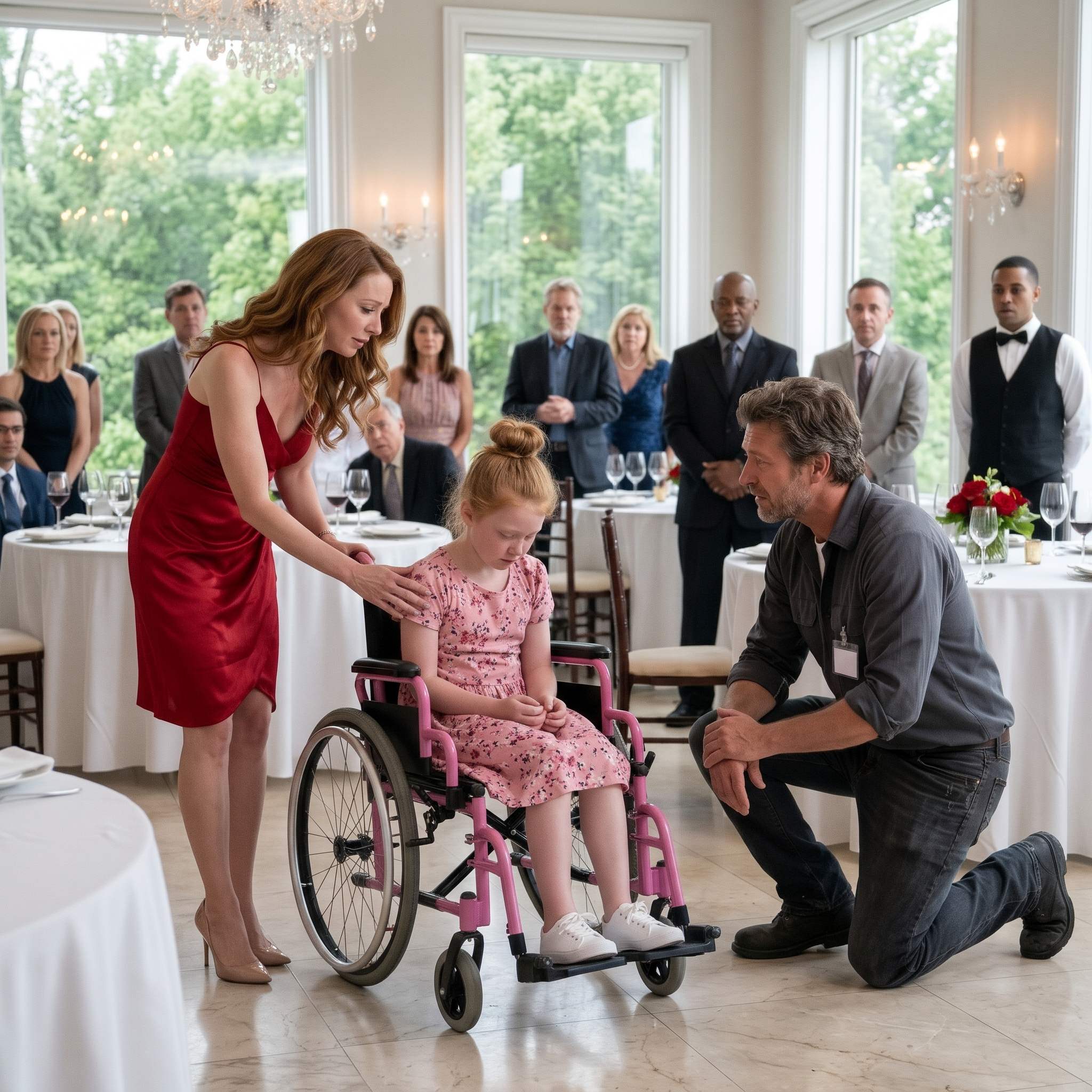
It had been a Wednesday. She remembered that, too.
Wednesdays belonged to Lucy. Natalie left the office before the late meetings started, drove to school herself, and let the drive home take as long as her daughter needed. At six, Lucy could spend ten minutes explaining why her classroom needed a pet and another ten rejecting every animal Natalie suggested.
That afternoon, Thomas had come along. He’d finished work early and called while Natalie was getting into the car. She could still remember teasing him about stealing half her time with their daughter.
The limousine entered the intersection against the light. According to the collision report, it was traveling close to sixty miles an hour.
Natalie never remembered seeing it.
Her attorneys eventually filled a cabinet with documents about the driver, the company that owned the limousine, and the company’s sudden dissolution. Nobody ever gave her a satisfactory answer about who had been behind the wheel. By then, she had stopped asking the questions herself.
Thomas was dead. Lucy was in surgery. A nurse had cut Natalie’s blouse away from her fractured collarbone, and blood from a wound above her eyebrow had dried against her temple.
She spent most of that night sitting upright because lying down hurt too much. Each time the waiting-room doors opened, she counted the faces coming through them.
Lucy survived.
The first doctor who explained the spinal injury drew a little diagram on a sheet of paper. Incomplete, he said. Some pathways might remain intact. There could be recovery, although nobody could promise how much.
Natalie kept that drawing long after she could have reproduced it from memory.
After six months of inpatient rehabilitation, Lucy’s legs still did not move when she asked them to. After a year, the language in the consultations changed. Doctors began discussing adaptation more often than recovery. At eighteen months, a surgeon rested both hands on the desk and advised Natalie to consider a future that did not include walking.
“Then we need a different method,” she told him.
He looked down at the file.
At thirty, Natalie was accustomed to people looking down at files when they couldn’t answer her. She had started Iverra, a logistics software business, at twenty-two. Before her twenty-fifth birthday, three larger firms had tried to buy it. She had refused, borrowed more than her advisers liked, and built the company into a holding group worth over a billion dollars.
Her foundation had begun partly because she believed in the work and partly because a public-relations consultant said she needed one. The consultant had seemed pleased with herself when Natalie discovered she cared more about the grant applications than the publicity they generated.
Natalie could make a roomful of investors reconsider a decision. She could not make her daughter answer a question.
Lucy had come out of the accident without her voice.
There was no damage that explained it physically. The clinicians called it trauma-related mutism. They talked about safety, time, and the ways a child might protect herself after catastrophic loss. Natalie listened, took notes, and asked what she should do next.
Four psychologists. Eleven specialists across the two problems. A consultant flown in from overseas. Three versions of Lucy’s bedroom, each arranged according to somebody’s recommendations about calm and comfort.
Lucy nodded. She shook her head. Eventually she began writing in a little wire-bound notebook she kept on her lap. At school, an aide helped her manage the day, and a text-to-speech tablet gave her a way into classroom discussions.
Her teachers said she understood everything.
At night, Natalie sometimes stood outside her daughter’s room after another unsuccessful hospital appointment, her forehead touching the narrow glass panel beside the door. She waited until the nurse had gone before whispering.
“Talk to me, sweetheart. I’m still here.”
Inside, Lucy lay on her side with the notebook tucked beneath her hand.
By the time they arrived in Dunwick, Maine, Lucy was nine. Thirty-eight months had passed since the collision. Natalie’s collarbone no longer ached, and the mark above her eyebrow showed only when the light caught it.
Dr. Evelyn Sloane had invited them to the rehabilitation center after reading a published case discussion. Her program emphasized frequent, manageable stimulation rather than the exhausting blocks of work Lucy had endured elsewhere. There were broad windows, a sheltered garden, and a room where the equipment was bright enough to look less forbidding.
Natalie rented a hotel suite by the month. She forwarded her calls, moved her meetings, and stopped unpacking only the things they would need immediately.
They had been there six weeks when Lucy looked through a half-open doorway and found something more interesting than the pattern she was drawing.
Rain rattled against the corridor window. Natalie had stepped around the corner to take a call from Ben Ortiz, her chief financial officer, holding up five fingers in a promise she was already breaking.
Across the hall, a boy stood on a low padded platform with his arms stretched out. A man in a charcoal work shirt crouched beside him. A cart of replacement parts stood outside the room, one wheel caught against the doorstop.
“Your left foot, Eli,” the man said. “A little farther.”
“I’ll fall.”
“Possibly. I’m close.”
The boy stared at the edge of the platform.
“You don’t have to solve the whole thing. Move that foot.”
Eli shifted forward, wobbled, and clamped a hand around the man’s wrist. The man let him hold on without hauling him upright.
“That’s the movement,” he said. “Keep it.”
“It didn’t feel right.”
“It doesn’t have to yet.”
Lucy stopped drawing.
She knew the people who worked with patients. This man wasn’t one of them. She had seen him tighten a loose handle on a door and wheel a broken exercise bike toward the equipment room. Once, he had nodded to her while carrying a toolbox, with no bright voice and no unnecessary questions.
Now he waited while Eli steadied himself. His sleeves were pushed above his forearms. He wasn’t counting loudly or praising every breath the boy took. He simply remained where Eli could reach him.
Lucy watched until the room emptied.
Natalie returned twelve minutes after she’d left, still carrying the phone. Her apology was halfway out before she noticed Lucy’s pencil lying untouched across the notebook.
“What caught your eye?”
Lucy pointed across the corridor.
“The room?”
The pencil moved. Natalie bent to read.
Who was helping the boy?
“I missed him. What did he look like?”
The work shirt. The man who fixes things.
Natalie glanced toward the unattended cart. “I’ll find out.”
Lucy shut the notebook before Natalie could ask anything else.
The following morning, the receptionist turned her monitor a little, checked the staff list, and supplied a name.
“Grant Mercer. He supervises maintenance. He’s been here about eight months.”
“Does that include working with patients?”
The receptionist’s hand paused on the mouse.
“He helps move equipment. Sometimes the therapists need another pair of hands. The children like him.” She lowered her voice. “Was something wrong?”
“No. My daughter noticed him.”
Natalie carried the name through a board call without taking in much of what anyone said. At lunch, she asked Dr. Sloane whether maintenance supervisors usually conducted balance exercises.
Evelyn Sloane was small, brisk, and old enough to have stopped protecting adults from useful discomfort. She closed the office door before answering.
“Usually? No.”
“Yet this one does.”
“Occasionally. Under circumstances I should have examined more closely.” Evelyn pulled out a chair. “Three parents have mentioned him. Two say their children participate more when he’s nearby. Another child asks for him.”
“What qualifications does he have?”
“No clinical license.”
Natalie waited.
“But I’ve watched him setting up equipment. He sees small changes in posture before other people do. He adjusts things by half an inch and gets a different response.” Evelyn folded her glasses. “That isn’t something he learned fixing our plumbing.”
“Have you asked?”
“Not enough.”
“Then let me.”
Grant arrived at the little staff room before Natalie did. He stood beside the table rather than choosing a chair, his hands loose at his sides. Up close, she could see gray at his temples and a healed nick across one knuckle.
“I’m Natalie Voss.”
“I’ve seen you with Lucy.”
“She saw you with Eli yesterday. She asked who you were.” Natalie set her phone facedown. “That doesn’t happen often.”
He drew out a chair for her, then sat across the corner of the table.
“His therapist was delayed,” he said. “I stayed with him.”
“And decided to work on his balance?”
A brief pause. “Yes.”
“Because you know how.”
“I’ve done conditioning and rehabilitation work.”
“Where?”
“In the military.”
The refrigerator motor started behind him. Natalie watched him wait without filling the silence.
“My daughter has spent three years being examined,” she said. “She hasn’t spoken since she was six. Yesterday she wanted to know about you. I’m not asking for a diagnosis. I want you to spend a little time with her, with the center’s permission, and tell me what you notice.”
Grant looked at the pale ring his cup had left on the table.
“I won’t offer you an outcome.”
“I’ve bought plenty of those. They haven’t been useful.”
One corner of his mouth moved.
“Four o’clock,” he said. “The therapy room at the end of the east hall. Twenty minutes, if she wants them…”
To read the rest of the story – CLICK the NEXT button 👇👇👇