


Claire Danner had folded the auction bill until only the equipment listings showed. If she kept the horse pages out of sight, she might get home with what she needed and enough money to put fuel in the pickup.
There were six used panels she could afford if nobody got ambitious, a stock tank that might hold water, and a saddle listed without a photograph. She’d driven forty minutes to Belsa for those things. At Avren, the little ranch her aunt had left her, a purchase had to answer for itself before it ever left town.
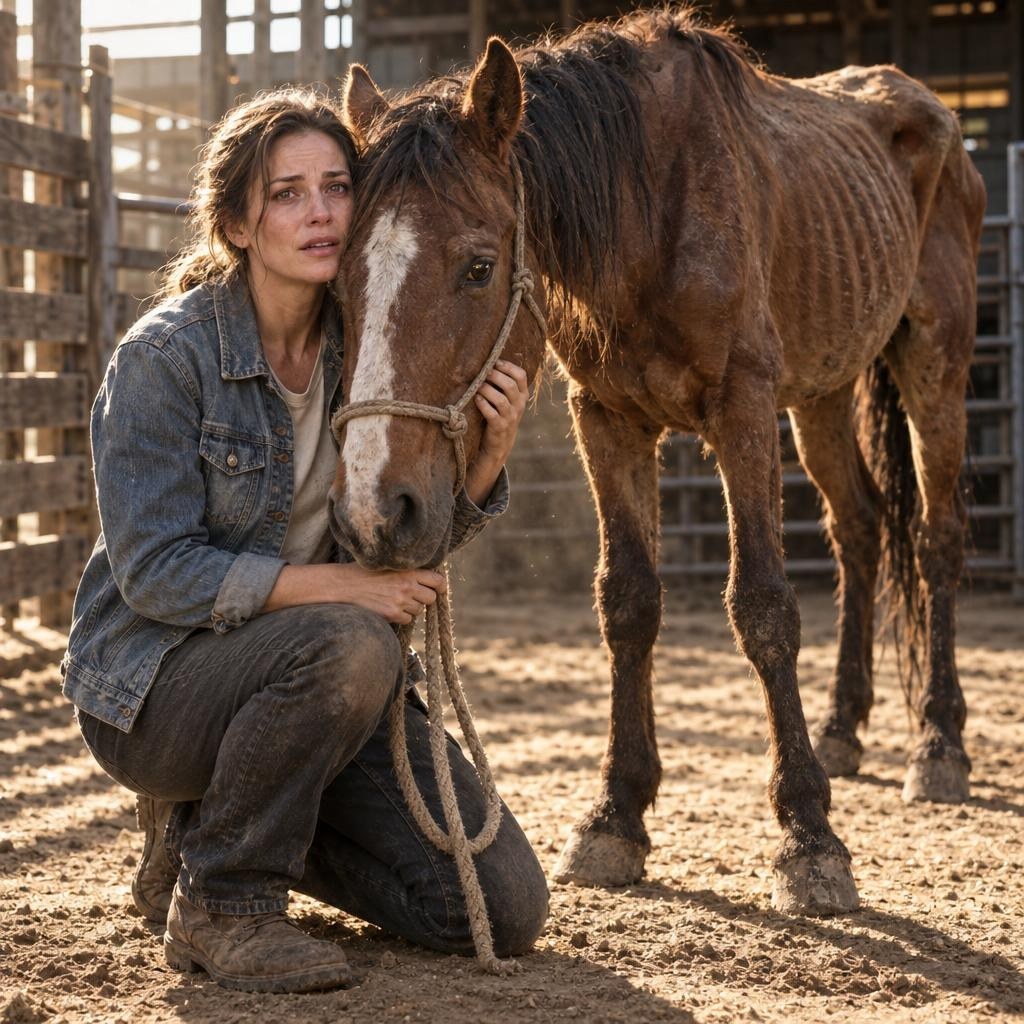
Her aunt had never made Claire answer for much. Not the jobs that hadn’t lasted, not the long stretches when she’d worked for other people and still come up short. The place was hers now, along with its weak well pump, patched fences, and equipment payment due on the fifteenth.
She parked where rabbitbrush grew through the gravel. Across the lot, men backed polished trailers into spaces wide enough to turn a truck around. Claire checked the latch on her secondhand trailer, tucked the bill into her coat, and went inside.
The sale barn’s wall fans pushed warm air over empty paper cups and a damp patch beneath the drinking fountain. A child dragged a boot along the bleachers. Down front, men who’d occupied the same seats for years talked through the bidding without missing a price.
Grant Pell sat among them, one arm laid along the rail. His horse operation sold young stock for sums Claire sometimes had trouble imagining as money a person actually possessed. Russell Keene, whose cattle outfit leased ground across half the county, sat beside him examining the sale sheet as though anything without a pedigree or a profit margin had been printed by mistake.
Claire got the panels. The tank went too high, and the saddle brought almost twice her limit. She could have left then.
Instead, she stayed where she was while the benches emptied around her. The last animals through a sale often arrived with an explanation nobody wanted to give. She’d learned to wait until the talking stopped and look for herself.
A man opened the rear gate and tugged on a lead rope. For a moment, nothing came through. Then a horse edged into the ring, following the rope with the slow concentration of an animal for whom walking had become work.
Under the dirt, he was probably a buckskin. His mane had tightened into ropes, and bare hollows showed behind his shoulders. The toes of his hooves curled forward enough to interfere with his stride. On the left hind, each step landed short.
Someone whistled through his teeth.
The auctioneer checked his sheet. A grade gelding, he said. No registration. No reliable age. No examination beyond what the consignor had reported.
He tried five hundred dollars. Then three hundred.
Claire leaned forward, resting her forearms on her knees.
She’d begun watching horses at ten, hanging around a neighbor’s arena until somebody let her help. Later, she’d earned forty-five dollars a week putting rides on colts whose owners didn’t have time for them. She knew what a neglected horse looked like. Nothing about this one’s condition escaped her.
But his ears moved toward individual sounds rather than flattening against the racket. His neck stayed loose. He wasn’t searching for a way out.
The handler gave the rope an irritated snap. Before the pull could drag the gelding off balance, he brought his feet beneath him and yielded, smoothly enough that Claire glanced at the man to see whether he’d noticed.
He hadn’t.
“One-fifty,” the auctioneer said. “Who’ll start him there?”
Grant looked along his row. “A shovel’s cheaper than the hay bill on that one.”
The men around him laughed. Claire kept watching the horse.
Behind the ring, a loose sorting gate struck its upright. The gelding’s forefeet came around in a clean half turn, his hindquarters folding beneath him. He faced the noise, stood square, and released a breath.
Claire’s fingers closed around her bidding card.
There hadn’t been enough horse there to make that movement look easy. Yet he’d done it without flinging his head or scrambling to recover. She’d ridden sound, well-fed animals that couldn’t organize themselves half so well.
She raised the card.
“Sixty,” she said.
The auctioneer looked up at her, then searched the remaining seats. Nobody moved.
Russell turned far enough to find her near the back. “Well, there’s the bargain horse of New Mexico.”
A few men chuckled. Grant was already talking about something else when the hammer fell.
At the office window, Claire counted out three twenties from the envelope she kept for fuel. The transfer slip offered almost nothing in exchange: no breeder, no birth date, no registered name. In the description box, someone had written buckskin gelding and then added gray.
She found him tied in the alley, standing against the rail as though it helped hold him upright. When she approached his shoulder, one ear turned. His eye followed her, then settled.
“All right,” she said, placing her palm against his neck.
Beneath the rough hair, he trembled.
The ramp took nearly twenty minutes. He would set a hoof on it, listen to the hollow sound, and withdraw. Claire moved aside, leaving the rope slack enough for him to lower his nose and investigate. She had nowhere else she needed to be.
When he finally stepped into the trailer, he stood without eating the hay she’d hung for him.
A man came across the loading yard carrying a battered saddle. He said it belonged with the horse. Claire thanked him and put it in the pickup bed between the panels and her toolbox.
As she fastened the trailer door, she heard Grant behind her.
“Two weeks. That’d be my guess.”
She checked the latch a second time and climbed into the truck.
At Avren, the gelding remained inside the trailer long after she opened it. He sniffed toward the little paddock, stretched his neck, and drew it back. Claire waited beside the wheel well while late sunlight reached beneath the shelter roof.
“Flint,” she said at last.
The name came from the pale, chipped-looking gray along his face. He gave no indication that he cared what she called him, but when she said it again, his ear found her.
She set out water and a modest flake of grass hay. After he walked down the ramp, she pulled an old bucket beyond his reach and sat. He ate a few stems, paused, looked around, and ate a few more. She stayed until she could no longer distinguish the fence wire against the darkening ground.
Dr. Lydia Shaw arrived Monday with a medical bag, a clipboard, and no interest in making the situation sound better than it was.
“Two,” she said after looking him over.
Claire glanced at her.
“Body condition. Out of nine.”
Lydia worked down his legs, listened beneath his ribs, and checked his mouth. Claire held the rope while the veterinarian studied the old thickened skin beside his withers, where an ill-fitting saddle had rubbed for a long time.
“He’s dry. Worm burden needs addressing carefully. Feet are months overdue, and he’s lost most of the muscle that ought to support his back.”
She flexed the hind legs and watched him walk away. Coming back, Flint placed each foot as deliberately as he had on the trailer ramp.
Lydia laid her stethoscope in the bag.
“There’s useful news, too. Heart sounds good. Lungs are clear. I’m not finding heat or trouble in those joints. Under the condition he’s in, he’s put together right.”
Claire rubbed a thumb over the frayed edge of the lead rope.
“So we can bring him back.”
“We’ve got a long job. I’m not seeing a reason to quit before we start.” Lydia looked toward the feed shed, then back at her. “But listen carefully. Feed him like a healthy horse and you can kill him…”
To read the rest of the story – CLICK the NEXT button 👇👇👇