


The man who knocked into me never broke stride. I caught myself on my left crutch, heard its tip skid across the terminal floor, and waited for the pain to finish traveling up my back before I tried to breathe.
His coat disappeared into the boarding crowd. On the departure board above us, the line for my train to Philadelphia began flashing.
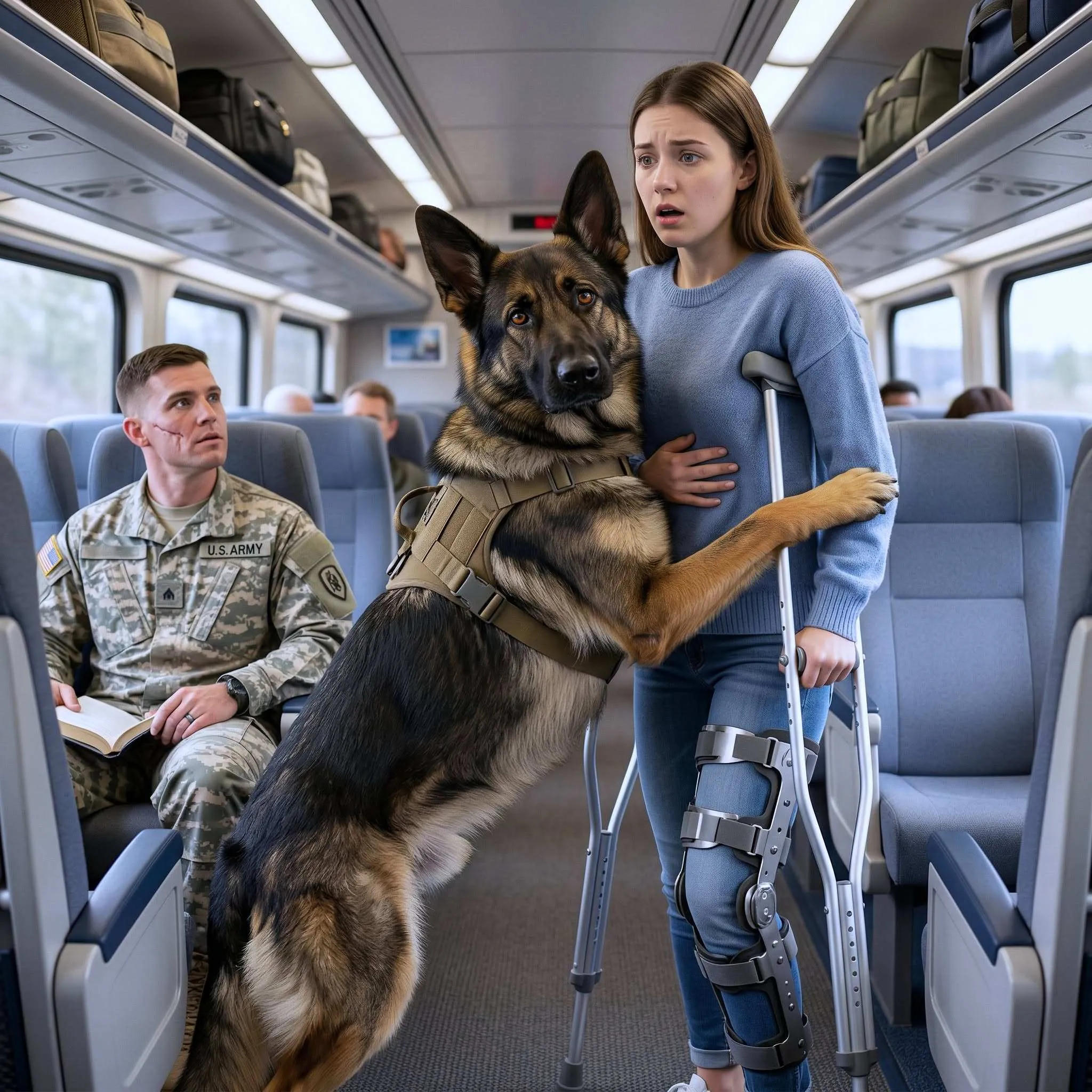
I was twenty-four, and I had spent enough of those years in medical offices to recognize the difference between pain I could work around and pain that meant I needed to stop. This was the second kind. Unfortunately, the train wasn’t going to wait while I found somewhere to sit.
My name is Erin Maddox. I was born with a tethered spinal cord, and several surgeries had left me with scars, unreliable sensation in my feet, and a pair of legs that required considerable assistance. The braces provided structure. My forearm crutches supplied balance. I supplied the effort, which varied from manageable to more than I could reasonably afford.
That Friday, I had used up my reserve before I reached the station.
The appointment in Pittsburgh had run long. Then the elevator at the terminal had filled twice before anyone left enough room for me. By the time the boarding announcement came, my sweater was damp beneath my coat and the muscles along my spine had begun pulling in tight, persistent knots.
I kept my eyes on the floor. There were shoe heels to avoid, rolling bags that changed direction without warning, wet patches where a crutch tip might slip. Looking up took attention I needed elsewhere.
At the platform, I stopped long enough to judge the gap. A passenger behind me sighed. I planted both crutches, shifted my weight, and hauled my right foot across.
Inside, the car smelled of warm upholstery, takeout food, and coats that had spent the afternoon in spring rain. People had arranged themselves comfortably beneath the luggage racks. Their bags enjoyed seats of their own.
I passed a briefcase, a folded raincoat, a canvas tote large enough to hold groceries for a week. The people beside them found important things to study on their phones.
Usually, I could ask. Usually, I could stand there and wait while someone performed the small inconvenience of moving an object. My arms were trembling now, though, and I didn’t trust my voice to remain steady through even a polite refusal.
At the far end of the car, an aisle seat stood empty.
Then I saw the dog.
He lay beneath the row with his head between his paws, a large sable German shepherd whose shoulders nearly filled the space available to him. Dark fur ran along his back; warmer brown showed at his neck and legs. The harness fitted over him had reinforced handles and a patch warning passengers that he was working and should be left alone.
Beside the window sat a man in a worn brown field jacket. His cap shaded most of his face, but not the pale scar that descended from beneath his ear into his collar. He had closed his eyes without letting his body relax. His boots were planted squarely, his hands still.
I understood why nobody had put a bag on that particular seat.
A tremor started above my right knee. I knew what came next: the leg would stiffen, then fail to hold me at precisely the wrong moment.
“Could I sit there?”
The man’s eyes opened. He looked first at my face, then at my hands inside the crutch cuffs. His gaze settled briefly on the braces.
I braced for the questions people sometimes asked before deciding whether to help. What happened? Had I been in an accident? Was it permanent?
He asked none of them.
Instead, he tipped two fingers toward his boot. The shepherd lifted his head and moved backward, gathering himself against the man’s legs until my side of the floor was clear.
The man indicated the seat.
I lowered myself badly, with most of the last few inches beyond my control. Pain caught behind my ribs. I arranged my crutches along the partition and waited for my hands to stop shaking enough to unfasten my coat.
“Thanks,” I managed.
He gave a small nod and looked toward the front of the car.
The train began to move before I had found a comfortable place for my right foot. The jolt tugged at my lower back, and I gripped the armrest until the first pull of acceleration settled into a steady vibration.
For several minutes, being seated was enough. I watched the seams in the upholstery ahead of me and measured my breathing against the movement beneath the floor. Every now and then, I felt the dog’s attention on me.
Other dogs had sometimes startled at the noise my crutches made. This one had watched me come down the aisle without so much as drawing back a paw.
I would eventually learn that his name was Rook, and that the man beside me was Caleb Voss. At the time, all I knew was that neither of them seemed interested in making me explain myself.
Caleb had recently retired after fourteen years in Naval Special Warfare, including service with the development group most people knew as SEAL Team Six. His working life had taken him through remote mountain country, coastal hostage operations, and overseas assignments that would never appear in an ordinary employment history.
For six of those years, Rook had gone with him.
He was a multipurpose military canine, trained to search for explosives, follow a human trail, and stop a threat when released to do so. He had traveled in aircraft strapped to Caleb, worked through gunfire, and found dangers a person couldn’t see. Caleb credited him with keeping him alive on more occasions than he liked to count.
Rook had also been taught that the ordinary business of other people was none of his concern. Crying passengers, dropped food, sudden noises, unfamiliar dogs: he was expected to leave them alone. On that train, his place was beneath Caleb’s knees until Caleb told him otherwise.
Outside, the close-set buildings thinned. The last of the afternoon light showed in brief strips between warehouses and retaining walls. I tried moving my right heel half an inch to relieve the pressure beneath my thigh.
The spasm came before I finished.
My leg jerked straight. Metal struck the seat frame ahead with a hard report, and I bit my lip rather than make the sound that rose in my throat.
Rook’s ears came forward.
I stared at the little dent my brace had left in the upholstery piping. I wanted, with an intensity that embarrassed me, to become unnoticeable again.
Beside me, Caleb’s hand shifted.
The dog stood.
There wasn’t room for an animal that size to rise without my noticing, yet he did it so quietly that I first became aware of his head beside my hand. Caleb went still in a different way. His jacket moved beneath his palm, and his eyes checked the aisle before returning to Rook.
The shepherd was looking at me.
I held my hands away from him. His muzzle was level with my lap, close enough that I could see a few silver hairs among the dark ones near his nose.
Caleb drew a breath to speak.
Before he could, Rook lowered his chin onto my right knee.
I flinched at the unexpected warmth. The dog exhaled, a slow breath that stirred the hem of my coat, and waited while the tremor in my leg ran beneath his jaw.
“He’s all right?” I asked.
Caleb didn’t answer immediately. He was watching Rook as if the dog had just performed a task he hadn’t known was possible.
“He’s all right,” he said at last. His voice was low and rough. “This is new.”
“Am I doing something wrong?”
“No.”
Rook turned in the narrow space. He settled between my legs and the aisle, with his chest facing the length of the car and his chin returning to my brace. A person coming toward our row would have to get past him first.
I lowered a hand a little, then stopped at the warning patch.
Caleb noticed. “You can touch him.”
My fingers found the fur behind one ear. Rook leaned just enough to meet them, without looking away from the aisle.
“I thought working dogs weren’t supposed to—”
“They’re not.” Caleb rubbed once along his own jaw. “He searches. Tracks. Works with a team. Comforting strangers isn’t in his job description.”
“Maybe he feels sorry for me.”
Caleb’s eyes moved from the dog to the passengers ahead.
“I wouldn’t assume that.”
Rook’s body had become very still beneath my hand. Caleb followed the direction of his attention, passing over a sleeping couple, a student with headphones, and a mother trying to keep a small child occupied with a tablet.
Several rows ahead, a man in a charcoal suit held a magazine open above a leather case.
Caleb watched him without turning his head. The magazine stayed on the same page. Across the aisle, the darkened window held a faint reflection of our row.
The man was watching us in the glass…
To read the rest of the story – CLICK the NEXT button 👇👇👇