


The woman behind the shelter desk put a towel on the floor where Calvin Rourke had left a trail of wet footprints.
“Don’t worry about it,” she said when he looked down. “We get worse in here.”
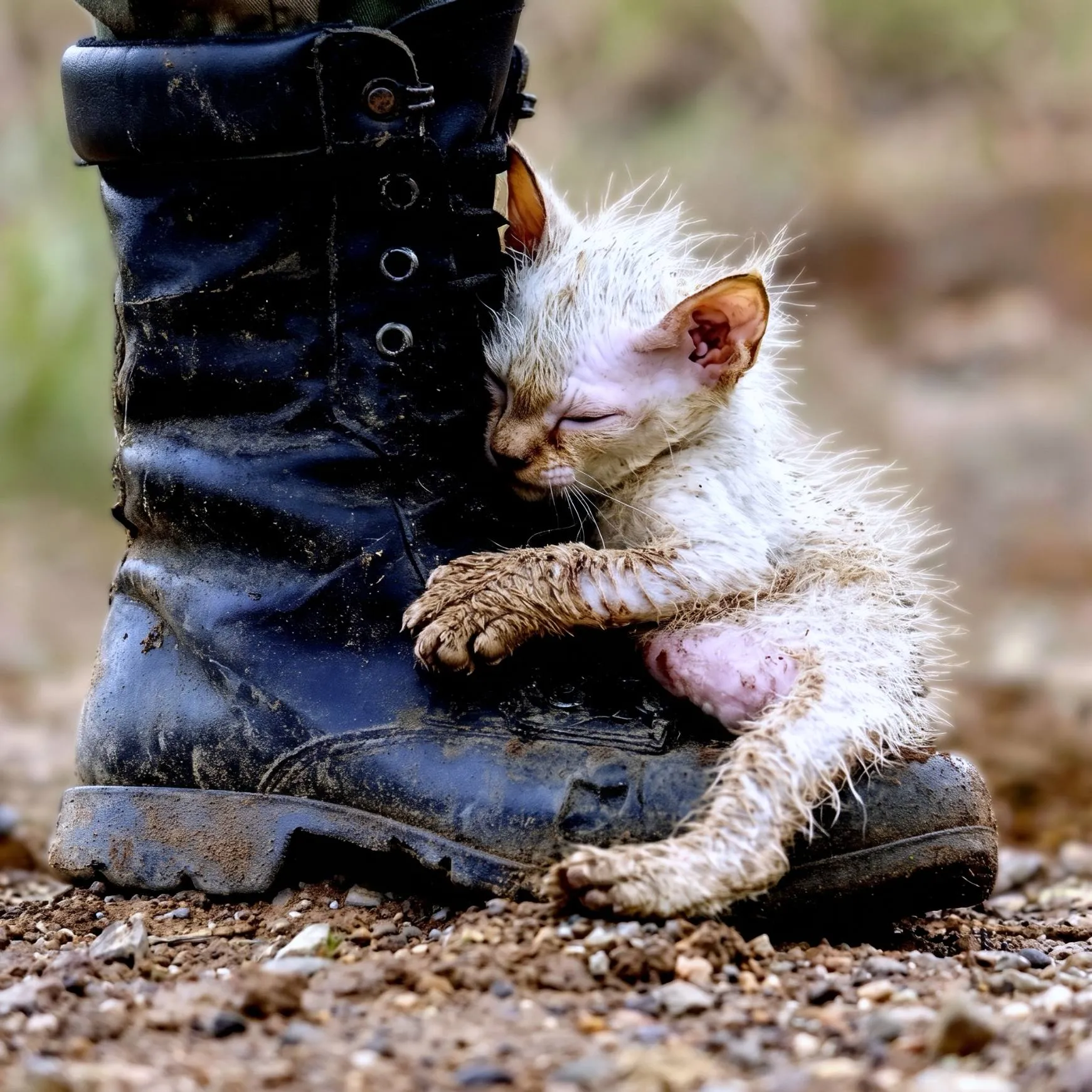
He took off his cap anyway. Rainwater dripped from its brim onto his boot.
She asked whether he wanted to see the dogs. Calvin shook his head, and she pointed him toward a door with a wire-glass window. He hadn’t decided he wanted a cat, either. Until he’d turned into the shelter lot, he hadn’t decided anything beyond not wanting to go home yet.
At home there would be one plate, one fork, and the television talking to an empty chair.
The cat room smelled of clean litter and laundry soap. A white cat slept with a paw hanging off a shelf. Another rolled onto its back when Calvin passed. He stopped long enough to look at them, hands buried in his jacket pockets, then started toward the door again.
A dog barked on the other side of the room. Metal shuddered, followed by a noise Calvin would have expected from something much larger than a cat.
Beside an indoor dog run stood a temporary holding pen. A big dog had pushed its muzzle against the dividing mesh. Facing it was a gray tomcat with a torn ear, old scars across his nose, and all four feet planted as though somebody had bolted them down.
A small orange cat crouched behind him.
The gray one struck through the mesh. The dog jumped back, shook its head, and came forward again.
“Rook, enough.” The woman from the desk hurried past Calvin with a spray bottle. “Leave Gus alone.”
Rook ignored her. He struck once more, fast enough that Calvin barely saw the paw move. This time the dog retreated to the far end of the run.
Only then did the tomcat sit down.
The orange cat crept out and tucked its head against his shoulder. Rook tolerated that while keeping his eyes on the dog.
Calvin stepped closer.
“He wasn’t the one who started it,” he said.
The woman lowered the bottle. “No. He rarely is. Finishing it is where he gets carried away.”
Her badge said Beth. She studied Calvin for a moment, then looked back at the cat.
“He’s been adopted and brought back five times. I need to tell you that before you get interested.”
“What for?”
“Scratching. Biting. Curtains, furniture, anything he can get his claws into. He won’t let most people handle him, and he doesn’t get along with the other animals.” She glanced at the orange cat. “Except Pip. Apparently Pip meets his standards.”
Rook had begun washing his paw. Between strokes of his tongue, he checked the adjoining run.
Calvin knew that kind of watching. He’d done plenty of it at hospital bedsides, in dark kitchens, through windows when a car slowed outside and then kept going.
“I’ll sign for him.”
Beth didn’t move. “Mr. Rourke, an easy companion might be better. This cat needs room and somebody who won’t take his behavior personally.”
“There’s room.”
“And if he tears things up?”
“Not much left to impress anybody.”
She searched his face, perhaps waiting for a smile. Calvin gave her none. At last she put the bottle on a shelf and asked him to come to the desk.
She went through the adoption instructions carefully. He listened more closely when she explained how to leave the cat alone during the first days, how to clean any marking, and why cornering him would make everything worse. Calvin signed the forms in a square, deliberate hand.
The shelter loaned him an old hard-sided carrier. Getting Rook into it took two volunteers, several towels, and considerably longer than the paperwork. Calvin held the carrier steady while Beth fastened the door. A fresh red scratch ran across her wrist.
“Still time to reconsider,” she said.
Calvin picked up the handle.
Rook growled all the way to the truck. Once the carrier was buckled into the passenger seat, he sat rigidly behind its little wire door. Calvin turned on the defroster and pulled out into the rain without attempting conversation.
His place stood on a side street in Lydell, Ohio: the garage at street level, a small apartment above it, and a strip of yard behind the building that had long since gotten away from him. He carried Rook upstairs, set the carrier in the living room, and opened it.
The cat disappeared beneath the small repair bench Calvin kept against the wall.
“All right, then.”
Calvin hung up his jacket. He filled two bowls, put a litter box where Beth had suggested, and left everything within reach of the bench. Rook’s eyes followed him from behind a box of engine parts.
Supper came out of a cardboard tray. Calvin worked half a crossword, checked the next day’s repair list, and heard the cat moving whenever he looked away. By bedtime, Rook had inspected the hallway, the kitchen, and the space behind the couch without allowing Calvin a proper look at him.
The first crash came after Calvin had taken off his boots.
He went back down the hall and found the living-room curtain on the floor, rod and all. Rook stood on the sill beside it, his tail beating against the wall.
Calvin fetched a screwdriver. He had just secured the bracket when something struck the hallway floor behind him.
Evelyn’s picture lay faceup among pieces of glass.
For a moment he stood with the screwdriver still in his hand. The photograph had been taken on a day when she’d refused to let him change out of his work shirt. She had her chin tipped up, laughing at whoever held the camera.
He put the screwdriver down and knelt.
The photograph itself was unharmed. He lifted it free, set it on the little hall table, and began collecting glass. From the corner came the unmistakable smell of a cat claiming unfamiliar ground.
Rook watched from the passage to the kitchen, body low, shoulders tight.
Calvin swept, wiped, and fetched the cleaner Beth had told him to buy. He placed the damaged frame on a shelf to repair later. By the time he finished, he was hungry again.
He made a sandwich and ate it at the kitchen table. Rook remained at the edge of the light.
Calvin looked at him over the last bite.
“You’re still not my worst tenant.”
The cat’s ears turned toward him. Calvin put his plate in the sink.
His alarm sounded at half past four. Rook was back beneath the repair bench when Calvin came out, though an empty place in the food bowl proved he hadn’t spent the entire night there.
Calvin refreshed the water, added a little food, and started the coffee. The cat hissed when he reached past the bench for a tin of small parts.
“Wasn’t asking you to help.”
He took his coffee to the table in a chipped mechanic’s mug someone had given him years ago. A mower carburetor waited on a folded cloth. Mrs. Albright needed it back before the grass started growing in earnest, and Calvin had promised to have it ready.
He eased out a tiny screw, laid it beside the others, and worked until it was time to open downstairs.
The garage door rose reluctantly, one roller complaining near the top. Cold air spread over the concrete. Calvin had just switched on the bench lights when Tessa Bell appeared at the entrance, carrying a backpack nearly as wide as she was.
School was on break that week. She’d been coming whenever her schedule allowed for several weeks now, always arriving in coveralls with the cuffs rolled up and always stopping at the threshold.
Calvin pointed toward the hook for her bag.
“Morning,” she said, stepping inside.
He gave her the carburetor and a clean tray.
“Don’t lose anything.”
Tessa pulled up her usual stool. Within minutes her notebook was open beside her.
She wanted to know why dirt got past a filter, why the little chamber needed a float, why a part so small could keep a whole engine from running. Calvin answered while he worked, sometimes with a word, sometimes by putting a piece in her palm and showing her what moved.
“Fuel stays at the right height,” he said, tapping the float assembly.
“So it’s measuring?”
“Regulating.”
She wrote that down.
A sound from the stairs interrupted her next question. Rook sat on the landing, looking over the garage.
Tessa’s pencil stopped.
“You didn’t tell me you had a cat.”
“Didn’t yesterday.”
She slid off the stool and held a hand low. Rook flattened his ears. His hiss brought her hand straight back to her side.
“Okay,” she said. “I heard you.”
“He’s not much for company.”
Tessa returned to the stool. “Mom says rushing somebody usually takes longer.”
Calvin went back to the carburetor.
They finished that job and moved to an oil change on Mr. Daugherty’s sedan. Tessa learned where the drain pan belonged and why she should keep her face away when loosening a plug. Rook stayed on the stairs until lunch.
Then, while Tessa unwrapped her sandwich and Calvin came down with his own, the cat descended along the wall.
He chose a sheltered place beside the lift, near a warm patch of concrete. From there he could see the open bay, the side entrance, and the stairs. Calvin noticed the choice without looking directly at him.
In the afternoon Tessa passed within a few feet of Rook to fetch a wrench. His head turned. He didn’t hiss.
By closing, she was moving around him as naturally as she moved around the tool cart. She swept while Calvin checked the work orders, then helped put everything away.
“Deep sockets?” he asked.
“Top drawer. Behind the short ones.”
She had them there before he could point.
After she left, Calvin made his last round of the garage. Rook’s warm spot beside the lift was empty. He found him in a box of retired cotton shop cloths beneath a shelf, one scarred cheek pressed into the folds.
Calvin stood beside the box long enough to hear the cat’s sleeping breath. Then he shut off the lights.
Several days later, he was sorting invoices in the cramped office when tires crunched outside. The vehicle that stopped beyond the bay was newer than anything scheduled that afternoon.
A man stepped out, checked his phone, and tucked it away before approaching the garage. Good coat. Polished shoes. Shoulders held a fraction too high.
Calvin’s hand stopped over the invoices.
Nearly ten years had passed since he’d seen his son in person. Nathan stood at the open bay…
To read the rest of the story – CLICK the NEXT button 👇👇👇