


The orange ear tag had landed number side down in the mud. Caleb Arrieta worked it loose with the end of his sheep hook, wiped it on his jeans, and read 672.
He knew the lamb without checking his book. A wether, one of twins, out of a ewe that had never needed help raising her young. In three weeks, that lamb should have been on a truck.
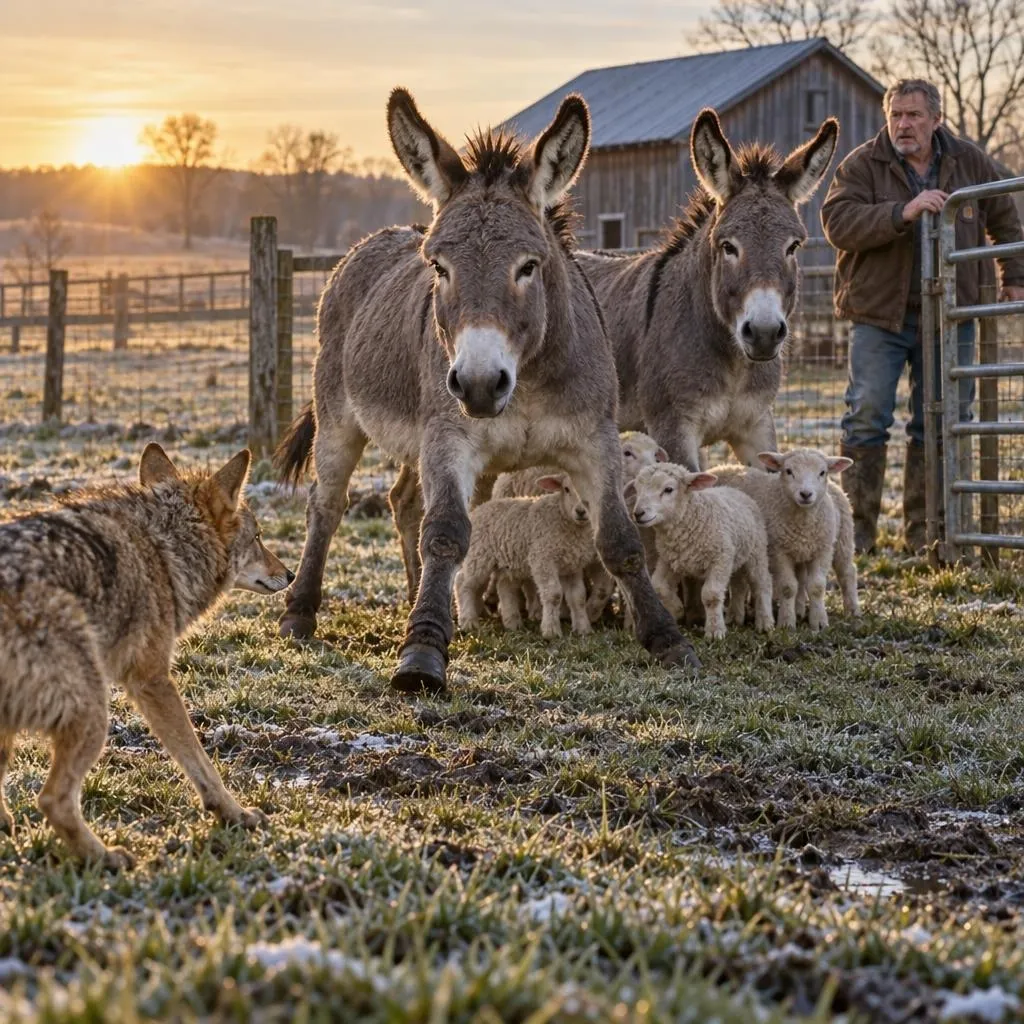
A little wool caught in the brush was all Caleb could find of him. Down by the creek, where the ground still held water, a coyote had left a clear print with a notch in the left front pad. Caleb had been following that foot through his pastures since early summer.
Twenty-three lambs now.
He put the tag in his pocket beside the others he hadn’t yet brought himself to throw away. With lambs selling near three hundred dollars, those little scraps of plastic represented most of his fall bank payment.
The sun was well above the eastern slope. Other sheepmen had made their first rounds hours earlier, but Caleb had waited until after nine, as he always did. He climbed toward the road, setting his grandfather’s hook ahead of each step.
It was a hickory staff with a steel crook, polished where Basilio Arrieta’s fingers had held it. In that part of Idaho, a man could carry a sheep hook everywhere and never have to explain himself.
Basilio had arrived from overseas in 1960, a young man who spoke Basque and had signed on for three years of mountain herding. His first home here had been a canvas-topped wagon. He had kept two dogs, tended other men’s sheep, and put away nearly everything he earned. By 1973, he had enough to buy the creek place.
Caleb was eleven when his father died in a highway wreck during a ground blizzard. Afterward, it was Basilio who attended school conferences, taught him to splice fence wire, and waited outside when Caleb wanted to handle something himself.
The old man had been gone four winters. Caleb still caught himself turning toward the shop to ask him a question.
A pickup slowed along the fence. Its pale paint flashed between the posts, and Caleb recognized the spotlight above the cab before the driver lowered his window.
Russell Danner leaned across the seat. “You find another?”
Caleb stopped beside a brace post. “Twenty-three.”
Russell took off his cap and put it back on. He ran more than two thousand ewes on the adjoining place and had known Basilio for over forty years.
“Your granddad would’ve put an end to this.”
“I’m working on it.”
“I’ve got a trapper ready. Let him put cyanide devices along your side, too. I’ll cover it.”
“No poison.”
“You can’t afford principles at three hundred dollars a lamb.”
Basilio had never used poison. Once, when Caleb was a boy, he had asked why they didn’t do what some of the neighbors did.
“Poison’s what you use instead of showing up,” his grandfather had told him. “You don’t leave a ewe alone with the night.”
Caleb shifted his grip on the hook.
Russell looked toward the creek. “Then take a rifle down there. Your granddad sat through lambing with a lantern and a lever gun. I could see him from our kitchen.”
“I know where he sat.”
“Do you? Because nobody sees much of you anymore. Not at supper on Thursdays. Not down here before the morning’s half gone.”
Caleb said nothing.
Russell’s mouth tightened, then relaxed. “Look, that old man got my lambs delivered the spring we buried my father. I haven’t forgotten. I’d like to help you keep this place going.”
“You’ve offered.”
“And I’m still offering nine hundred an acre for the creek ground. That’d give you room with the bank.”
“The creek stays.”
Russell rested a forearm on the window. “Basilio stayed out here when things got bad. You seem to keep finding reasons to go inside.”
He drove away before Caleb answered.
On Saturday, Caleb hauled eleven cull sheep to the sale in Mardell. Once they were sold, he should have collected his check and left. Home was twenty-eight miles away, twelve of them gravel, and he had only so much daylight.
Instead, he followed the alley behind the auction ring.
At the far end, beyond the ordinary holding pens, stood the animals headed for the kill buyer. A few thin horses shifted against the rails. Two jennies occupied the back corner.
The brown one watched Caleb approach. The gray stayed pressed to her, resting her nose against the brown jenny’s ribs. When the brown moved a step, the gray moved with her.
A card on the gate said they had to go together.
Caleb remembered an extension bulletin he had read the winter before. Some donkeys would confront coyotes and other doglike intruders. A suitable jenny, properly settled with sheep, could make a useful guard.
He looked toward the high windows. Still light.
The kill-pen stock would sell last.
He stayed.
By the time the pair entered the ring, men were standing up to leave. The brown jenny circled once, drawing the gray along beside her. A heavy man near the front offered two hundred sixty dollars without lifting his elbow off the rail.
Caleb joined at two-eighty.
The buyer turned to see who had bid against him. He smiled, then raised one finger. Three hundred.
Caleb put his hand in his shirt pocket. The envelope there held three hundred ten dollars, saved for an eye appointment in November.
“Three-ten,” he said.
The buyer let his hand fall. “You can have the old one. She’d cost more to haul than she’s worth.”
The auctioneer pointed at Caleb and brought the bidding to an end.
Somebody above the ring called, “Arrieta, you planning to shear those things?”
Laughter spread across the benches. Russell was in the highest row, laughing so hard he had to lean forward.
Caleb went to get his trailer.
The donkeys loaded slowly. By the time he reached the gravel turnoff, the last color had drained from the hills.
He knew the road well enough to picture each bend. What he could no longer do was see where the road ended. The fence disappeared first. Then the ditch. His headlights lit a patch ahead, but beyond that patch there was no depth, no shoulder, no warning of anything coming toward him.
He brought the pickup down to fifteen miles an hour.
Then ten.
At thirty-six, Caleb had already lived six years with the name a specialist had given him: retinitis pigmentosa. The trouble had begun in his twenties, with dark barns and nighttime driving. By the spring he turned thirty, the doctor could measure the loss along the edges of his vision.
It would keep closing in. There might be little useful sight left by his fifties. At night, much of it was already gone.
Basilio had driven him to that appointment. Nobody else in the county knew. The white cane the clinic had issued was still wrapped in plastic behind the pickup seat. Caleb carried the old sheep hook instead.
Something moved in the trailer, a hoof scraping the floor.
He eased onto the shoulder while he could still distinguish its pale strip of gravel and turned the key off. Ten miles remained between him and home.
The sun wouldn’t be back for eleven hours…
To read the rest of the story – CLICK the NEXT button 👇👇👇