


Nora Bellamy had caught a fold of Grant’s sleeve between her fingers, and now she couldn’t make herself release it. The fabric scratched her palm. Beyond his shoulder, a conductor was moving down the platform, checking his watch.
“Look at me,” Grant said.
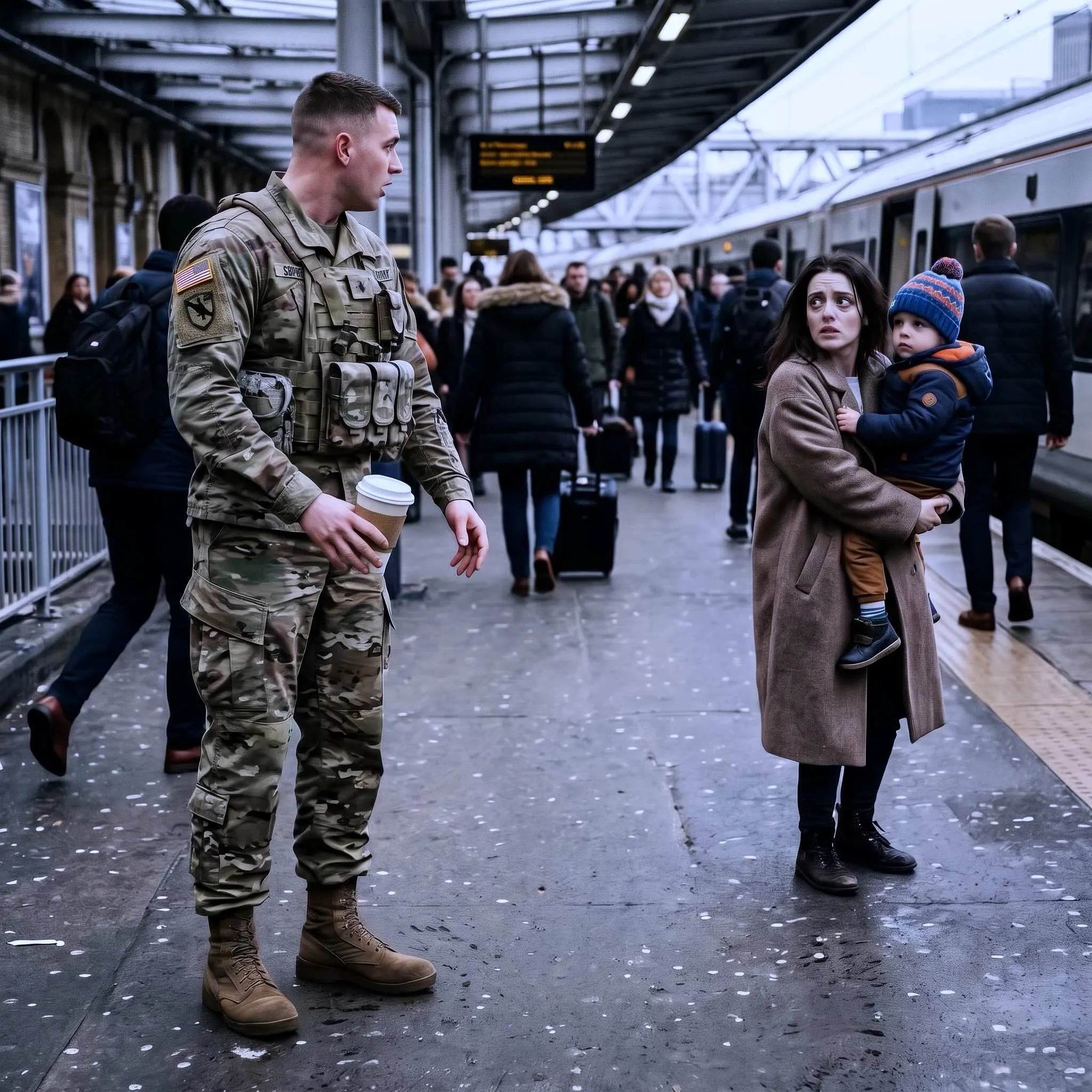
She tried. Looking at him meant seeing the close haircut, the unfamiliar uniform, the bag waiting beside his boot. Nineteen years of knowing where to find him had come down to a few minutes before a train carried him out of Darrow, West Virginia.
“You’re doing that thing with your mouth,” she said.
“What thing?”
“Smiling when you want to throw up.”
He laughed, then rested his cheek against her hair. “Don’t tell anybody.”
His friends were making enough noise to spare everyone the embarrassment of a quiet goodbye. One called him Airborne, though he hadn’t earned that yet. Another offered advice no one had requested. Grant’s father, Arthur Mercer, stood near the luggage cart with his hands buried in his pockets, studying a departure board he had already checked twice.
Vivian Mercer dabbed beneath her lashes with a tissue. She had dressed for the station as though someone might photograph the family: tailored coat, neat gloves, hair untouched by the damp morning air.
Nora knew the smile Vivian wore when Grant was watching. She knew the other face, too.
Grant only saw his mother crying.
The boarding announcement broke apart in the station’s echo. Nora felt him take a deeper breath, and she tightened her grip before she could stop herself.
He had been leaving in small ways for months. First the appointment with the recruiter. Then the tests, the paperwork, the nights spent reading about training. Still, some foolish part of her had expected their street to keep him, as it always had.
They had grown up within walking distance of each other in a neighborhood tucked beneath Darrow’s steep streets. Their mothers knew which houses had spare sugar and which landlords wouldn’t fix a furnace until somebody threatened to call the city. Grant had once carried six library books under his football jacket because Nora’s schoolbag had split along the bottom. When older boys laughed at a patch on her winter coat, he had stepped in front of her without making a speech about it.
Later, she had learned how to help him without making him feel helped. Chemistry notes appeared in his locker with the useful pages marked. An extra sandwich happened to be in her lunch bag when practice ran late. He would lift an eyebrow, she would insist she wasn’t hungry, and they would both let the lie stand.
By their final year of school, people made room for two whenever either of them arrived.
Her mother, Helen, welcomed him into the little room where she did alterations. He never came through without checking the high shelves for something heavy she needed moved. Arthur liked Nora as well. Sometimes he asked about her classes when Vivian had gone into another room.
Vivian’s interest was less friendly.
As deputy director of the city’s property and development office, she spent her days with builders, attorneys, and men who called her before they called anyone else. She had plans for her son that involved a degree, useful acquaintances, and a wife whose family could improve an introduction.
A seamstress’s daughter did not meet those requirements.
Tessa Langford did. Her father was a developer, and Vivian had found reasons to invite her to cookouts and birthday dinners. Grant treated Tessa pleasantly, then left early to meet Nora. His mother continued inviting her.
The Army contract had upset more than those arrangements.
Nora remembered the dinner when Grant told his parents. Vivian had laid down her fork with such care that the tiny click against the plate was the loudest sound in the room.
“You have college offers,” she said. “You’re not short of choices.”
“I’m choosing this.”
Arthur asked what kind of service he was considering. Grant answered him, explaining the contract, the training, his hope of qualifying for Airborne.
Vivian interrupted before he finished. “You’re talking about jumping out of airplanes as if it were a sensible career plan.”
“It scares me,” he said. “That’s part of why I want to try.”
Nora had watched him turn his water glass between his hands. He wanted to serve. He wanted work that would require something he couldn’t buy or talk his way around. He was awkward explaining it, but he never sounded uncertain.
“You’re barely grown,” Vivian said.
Grant glanced toward Nora. Then he faced his mother again. “Old enough to sign.”
Vivian spent the following weeks trying to find somebody who could change that. Her calls brought no result she liked. The contract held. Grant kept his departure date.
Now Arthur stepped forward and pulled his son into a hard, brief embrace.
“Use your head,” he told him. “Especially when everybody else forgets to.”
Grant nodded against his shoulder.
“And let us hear from you.”
“You will, Dad.”
Vivian waited until Arthur moved aside. She held Grant longer, her gloves pressing into the back of his uniform.
“There’s still a home here,” she murmured. “You haven’t lost your chance to stay.”
Grant’s arms tightened around her, but his answer was quiet and firm. “I’m taking the train, Mom.”
She drew away. For an instant, before she smoothed her expression, Nora saw how much Vivian disliked being unable to stop him.
Then Grant was back in front of her, reaching into his pocket.
He placed a small keychain in her hand. They had bought it at an overlook the previous summer, after watching Fourth of July fireworks rise above the river. The little metal outline of the city had already lost some of its finish.
Nora stared at it. “You kept this?”
“Figured you should have custody while I’m gone.”
“I’d rather keep you.”
His smile went uneven. “I’ll be a terrible letter writer. You know that, right? But I’ll write. And whenever they give me a phone, you’re getting bothered.”
“Don’t make promises just because I’m crying.”
“I made them before you started.”
She leaned into him. Beneath the new fabric, he was still familiar: the place her forehead fit under his chin, the hand that settled at the back of her neck, the faint catch in his breathing when he was trying not to show too much.
The conductor called again.
Grant kissed her, and she forgot the people passing around them. When he finally lifted his head, he stayed close enough for her to feel the words against her cheek.
“Keep answering me.”
“Always.”
He picked up his bag. His friends found one last joke. Arthur rubbed a hand across his face. Vivian raised her tissue.
Nora stood behind the painted edge of the platform while Grant climbed aboard. He turned at the door and lifted his hand. She lifted hers with the keychain still caught between her fingers.
The first movement of the train was almost too small to see. Then the windows began passing her, and Grant was behind one of them, walking a few steps inside the car to keep her in sight.
She followed until the platform markings stopped her.
After the train had gone, she could hear a porter dragging an empty cart across the concrete. One wheel clicked with every turn. Nobody in their group seemed ready to be the first to leave.
Vivian opened her purse.
Nora watched her take out a small mirror, inspect her face, and remove the dark smudge beneath one eye with the corner of her tissue. She checked the other eye, closed the compact, and turned.
“Enough of that,” she said, low enough that the friends wouldn’t hear. “He’s gone. You’re finished here…”
To read the rest of the story – CLICK the NEXT button 👇👇👇