


The pen kept rolling toward Ada’s wrist. Marcus had set the divorce papers on the sloping arm of her wheelchair instead of bringing her to the table.
“Lydia’s moving in this weekend. I need that signed.”
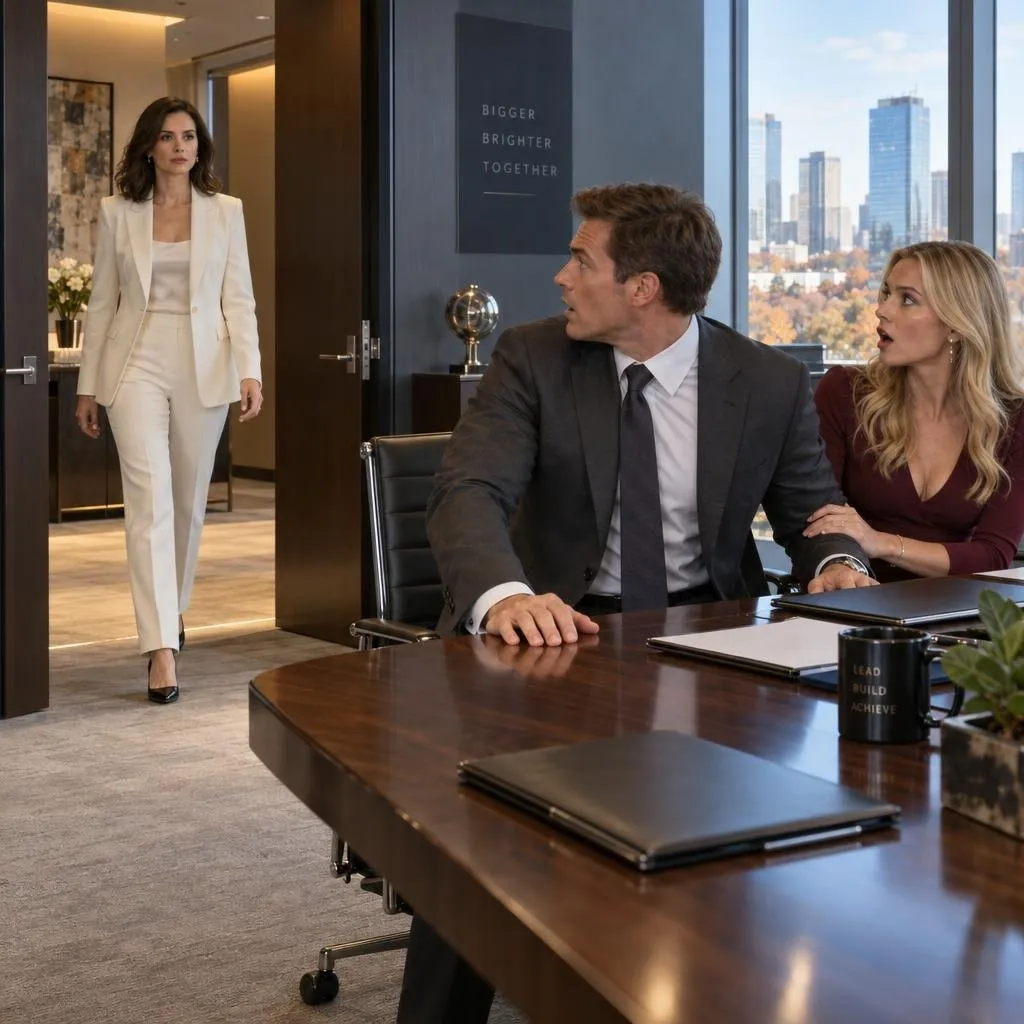
Across the room, her oldest friend studied the pale patch where a wedding photograph had hung. Ada remembered Lydia sleeping in a hospital chair, still wearing her earrings, refusing to go home.
“You sat with me every night,” Ada said.
Lydia turned. “You weren’t the only one who needed somebody.”
Marcus’s mother straightened the papers. “And now there’s a baby coming. My grandson needs a proper home.”
For six years, Ada had worked at their dining table while Marcus built his construction firm. She had drawn until her fingers cramped, then watched him collect the compliments.
“Those buildings came out of my hands,” she said.
“You helped with drawings,” Marcus answered.
His mother glanced at the wheelchair. “No boardroom has room for that chair.”
Ada pressed her palms against the wheels. “The truck came across us. I didn’t cause the crash.”
“Nobody caused it,” Marcus said quickly. “We’ve been through this.”
She caught the pen before it rolled again. Beneath her signature, the paper puckered where her hand had rested too long.
“Keep the house,” she said. “I won’t keep your name.”
Marcus called for the gatekeeper.
Uncle Samuel stopped just inside the doorway. Beyond him, rain struck the courtyard hard enough to bounce off the paving.
“Sir, perhaps we should wait until—”
“Take her out.”
Ada asked for the sketchbook in the study. Marcus’s mother answered before he could.
“Nothing leaves this house without my son’s permission.”
Samuel’s hands tightened around the wheelchair grips. “Ma’am, you paid my girl’s college tuition. I can’t put you outside like a parcel.”
“Please,” Ada whispered. “Just take me through the gate.”
He wheeled her beneath the narrow overhang, then opened his umbrella over her knees. When Marcus shouted for him to come back and lock up, Samuel stayed beside her.
“Call your family,” he said.
From the doorway, Lydia laughed. “If she has one.”
Ada found a number she hadn’t dialed in six years.
In an office across Sarasota, an assistant brought a ringing phone to Benedict Ezeani. “Your private line, sir.”
He looked at the screen and stood so abruptly his chair struck the cabinet.
“Daddy,” Ada said. “May I come home?”
“Tell me where you are.”
“Outside Marcus’s gate.” She swallowed rainwater. “It’s raining.”
Benedict covered the mouthpiece. “Get the cars. Now.”
Headlights soon spread across the wet gate. Marcus came onto the steps as men in dark suits opened umbrellas around a silver-haired stranger.
Benedict crouched beside Ada, heedless of the water soaking his trousers.
“I should’ve brought you home six years ago.”
“I should’ve called.”
As they lifted her into the car, Lydia leaned against Marcus. “So that’s who’s been paying for her.”
He watched the convoy leave. “I knew she was hiding something.”
Inside the car, Benedict asked his assistant to find out everything about Iskera, Marcus’s company. Then he took his daughter’s cold hands between his own.
At his house, Ada’s mother still watched over the entrance hall from a painted portrait. Ada asked to stop beneath it before anyone took her upstairs.
“Every morning,” Benedict said quietly, “I tell her I’m sorry.”
Ada looked at the familiar mouth, almost smiling. “I wanted somebody to choose me without your money.”
“Did he?”
“For a while, I believed he did.”
Over dry clothes and a bowl of soup she barely touched, the evening came out: the papers, Lydia, the promised grandson. Then Benedict asked about the tower Iskera hoped to build beside the inlet.
Ada put down her spoon. “That’s mine.”
“The design?”
“All of it. The hospital proposal, too. Everything people praise him for.”
Benedict reached for the telephone again.
The woman who arrived the following morning rolled herself into the sunroom in a sports wheelchair. Her shoulders were broad, her hair cropped close.
“Denise Grant,” Benedict said. “The finest rehabilitation coach I could find.”
“Second finest,” Denise corrected. “My old coach still holds first place.”
She read Ada’s medical notes before touching her legs.
“An incomplete injury. Some messages are getting through.”
“The doctors said I might never walk.”
“Then we’ll work on the might.”
Ada glanced at Denise’s chair. Denise caught her looking.
“I won gold sitting down. Standing isn’t the admission price for a life.” She placed a resistance band in Ada’s hands. “But you want to try. Let’s make you strong enough to try.”
At Iskera, Peter Nwosu stood in Marcus’s office holding the rejected hospital proposal.
“Lydia’s taking over the design work,” Marcus said.
Peter waited. “Ada finished those packages. Lydia chooses fabrics. This hospital needed an architect.”
Marcus shoved the letter aside. “We’ve never lost a hospital bid. Find Ada’s old files.”
At the house, Lydia found the missing sketchbook beneath a stack of property magazines. Marcus’s mother ordered Samuel to carry it out with the rubbish.
He slipped it under his work shirt instead.
Weeks passed in repetitions Ada sometimes hated: transfers, stretches, the scrape of a chair across rubber flooring. One morning, with Denise bracing her knees, she held herself upright between the bars.
“Five seconds,” Denise said.
“I can’t.”
“You’ve already done two.”
Benedict stood near the doorway with both hands over his mouth.
“Daddy, don’t start,” Ada said through clenched teeth. “You’ll embarrass me.”
“Let them stare,” he answered, reaching for a towel. “Keep going.”
Across town, Lydia wanted a wedding large enough to fill a hotel ballroom. Marcus wanted the bank to stop calling.
“Win the tower,” his mother told him.
“With what?” he demanded. “We don’t have Ada’s drawings.”
Lydia lifted an old laptop. “You do now. I copied everything before she left. The presentation has my name on it.”
That afternoon, Samuel arrived at Benedict’s gate carrying a grocery bag. He had spent days asking at guarded houses about the convoy.
Inside the bag, Ada found her sketchbook wrapped in a clean undershirt.
Her thumb stopped on the first elevation. “You kept it.”
“They told me to throw it out.”
Benedict opened the cover and saw the dated studies, the corrections, the small calculations crowded into the margins.
“Are you still working there?” he asked.
“They dismissed me yesterday, sir.”
“Report here tomorrow. We need somebody at our gate.”
Back at Iskera, Peter refused to approve the revised presentation.
“These belong to Ada.”
Marcus pushed the document toward him. “The designer is Lydia. Read it again.”
Peter looked at the mortgage payment notice beside his own phone, then lowered his eyes to the page.
Marcus needed an investor large enough to rescue the proposal. His application reached Kadara, Benedict’s holding company, requesting thirty-six million dollars.
Benedict brought it to Ada. Lydia’s name appeared beneath the tower rendering.
“I’ll have it declined,” he said.
“Don’t.”
He studied her over the folder.
“Let them think you’re considering it. Arrange the final meeting at his office.”
“You want to sit across from him?”
“I want to enter that room on my feet.”
The tender closed on June 10, ten months away.
Denise examined the calendar when Ada told her. “Some recoveries take years.”
Ada turned the page back to June.
“Then start today…”
To read the rest of the story – CLICK the NEXT button 👇👇👇