


Naomi Bellamy had wrapped the extra sandwich before she remembered she wouldn’t have a chance to eat it. After the hospital cafeteria, there was the grocery store, and after the grocery store there would be a walk home with her keys already between her fingers. Food left in her locker would still be there the next morning.
She put it in her coat pocket anyway.
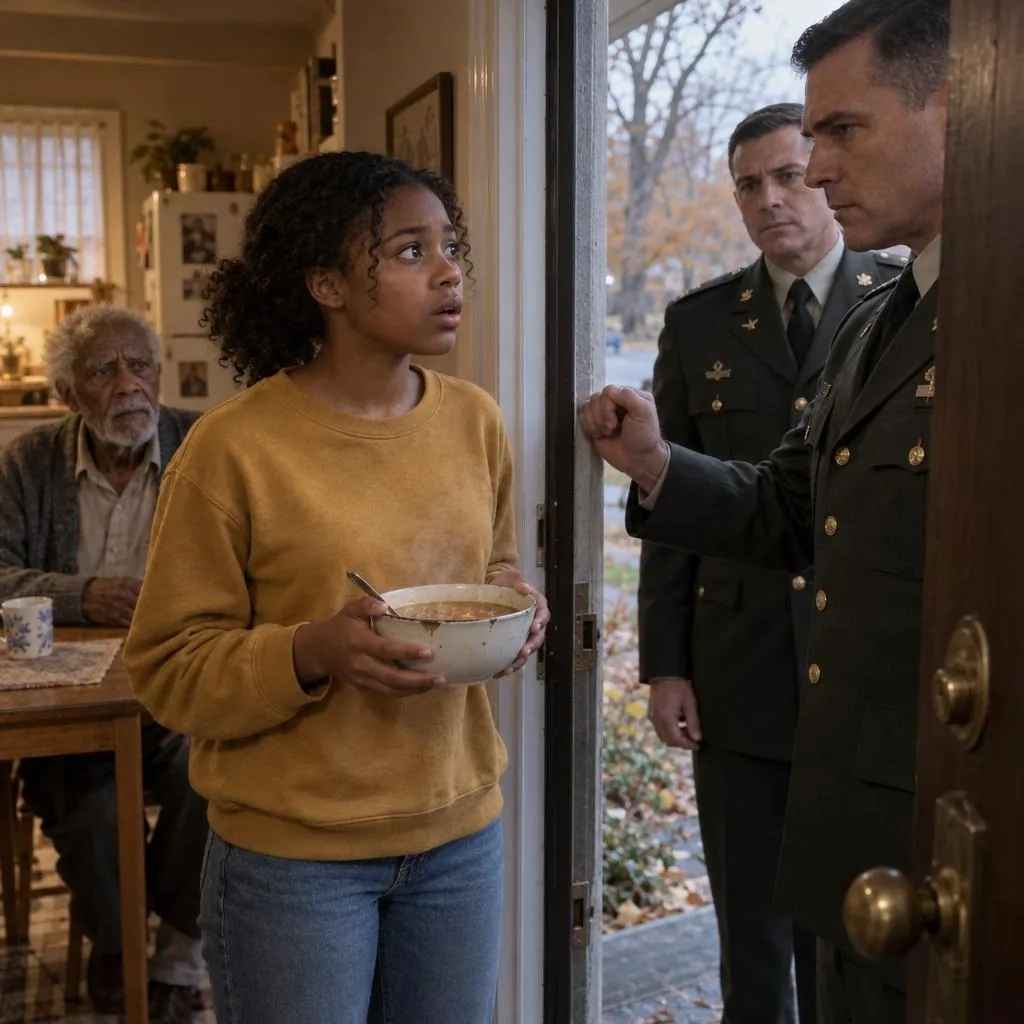
Outside the abandoned laundry, a man was folding the edge of a wool blanket away from a puddle. Naomi had been passing him for two weeks. She knew the shape of his sleeping place better than she knew his face: cardboard tucked against brick, a black plastic sack, shoes kept close enough to reach without sitting up.
Naomi was twenty-two, Black, and practiced at keeping her eyes on the approaching bus. That morning in late February, she stopped beside him instead.
“Breakfast?” She held out the sandwich. “I’ve got an extra.”
He examined her hospital work shirt, then the paper around the bread. His face was pale beneath a gray beard, but his eyes were attentive.
“Looks like you’ve got a long day ahead.”
“Long enough to regret carrying two lunches.”
He didn’t take it immediately. Naomi waited with her hand out until he accepted it carefully, keeping the wrapping closed.
“Walter Rusk,” he said. “And I appreciate it.”
“Naomi.”
“Thank you, Miss Naomi.”
Her bus was still two blocks away. She could see its headlights beyond the intersection.
“You drink coffee?”
A crease appeared between his eyebrows, as though he suspected a trick. “Sure do.”
“How do you want it?”
“Nothing in it.”
The next morning she brought a filled thermos and a banana. After that came another sandwich, then an apple she had bought loose because a bag cost more than she could spare. By the following week, she was leaving home early enough to sit beside him before the number 26 arrived.
Walter was sixty-eight, white, and particular about little things. He straightened his cardboard before accepting food. He returned the thermos wiped clean. If Naomi arrived rubbing her eyes, he asked whether she’d slept before he asked what she’d brought.
“Got class tonight?” he would say.
“Unless they’ve decided to hand out nursing credentials without making us study.”
“Wouldn’t trust a school that did.”
She took courses at the community college two evenings a week when she could manage tuition. Those were the nights she couldn’t stock shelves. On the others, she worked until midnight, counting cases of canned vegetables while trying to remember what she had read about infection control.
Walter remembered her tests. He also told her things that made her wonder whether hunger and age had loosened his hold on the years.
He had flown helicopters, he said. Sometimes the passengers were elected officials. Sometimes their destination wasn’t one a pilot could discuss over breakfast.
“Worked with an agency whose name fit on a very small sign,” he told her once. “Those people could remember your face after thirty years.”
Naomi peeled her banana and listened. She never asked him to prove anything. There was no gentle way to tell a man that his memories sounded invented, and no reason she could see to take them away.
Other people found it easier to be cruel.
In April, she was waiting to cross the street when a man in a dark business suit came along the sidewalk. He glanced down, caught Walter’s blanket with his shoe, and shoved it into the gutter without breaking stride.
“Pick that up,” Naomi called.
The man looked back at her. “He ought to keep the walkway clear.”
“He’s your grandfather’s age.”
He turned away. His shoes clicked past the shuttered laundry and around the corner.
Walter had already retrieved the blanket. Water ran from one corner onto his trousers. Naomi crouched beside him and took the other end, twisting the wet wool while he held it steady. His fingers trembled against the fabric.
“You’ll miss your bus fooling with this,” he said.
“There’s another bus.”
He watched her squeeze out the last of the gutter water. Then he gave a small, tired smile.
“You don’t back down.”
“Not from that.”
“Keep that about you.”
She laid the blanket across a dry section of cardboard and handed him the coffee. Across the street, the bus opened its doors without her.
By May, her mornings had settled around his. Alarm at five. Bread on the counter. Two sandwiches wrapped beside each other. Coffee poured while she searched for a clean pair of work socks.
Her studio was on the fourth floor of a building in Dunmere, Ohio, where the stairwell lights worked more reliably than the heat. A hot plate occupied most of the kitchen counter. The shower sometimes required a kick to the exposed pipe before water would come through.
For that, she owed $675 every month.
An eviction notice had gone up in March. She had persuaded the landlord to let her pay the arrears at forty dollars a week, but every payment left another bill waiting. The electric company’s envelopes lay beneath a collection notice from an emergency room visit two years earlier. Her student loan had been deferred again. Her phone account had another month before suspension.
One Tuesday night, she moved the bills aside to make room for the bread.
The hospital had deposited $286. The grocery store had paid $174. After three hundred toward rent, forty on the old balance, and thirty set aside for bus rides, she had ninety dollars left.
She opened the refrigerator and stood in its light. Three eggs. A little milk. Lettuce with brown water collecting in the bag.
On the counter, the peanut butter jar was still more than half full. She could make Walter’s breakfast for another week without buying more. Longer, if she spread it carefully.
Naomi closed the refrigerator. For a moment she rested her cheek against its cool side.
She could tell him she couldn’t do it anymore. He had already noticed when her lunches got smaller. He would say she should keep the food; he might even refuse to take it.
She brought the loaf closer and counted the slices.
At work the next day, Mrs. Liang intercepted her with a cleaning rag in one hand and an untouched lunch tray in the other.
“What have you eaten?”
“Breakfast.” Naomi reached for the rag. “I’ll get those tables.”
Mrs. Liang kept hold of it. At sixty-four, after thirty years supervising the hospital kitchen, she had developed a way of waiting that made excuses difficult to finish.
“This is about that man at the bus stop, isn’t it?”
“Walter.”
“I know. You’ve told me about Walter. I’m asking about you.”
“I’m managing.”
Mrs. Liang went through the swinging kitchen door. When she returned, she had a container of pasta and a roll, still warm enough to soften its paper bag.
“Sit down.”
“There are people waiting—”
“They have chairs. So do you.” She put the food into Naomi’s hands. “You’re looking after him. Who’s feeding you?”
Naomi looked down before Mrs. Liang could see her eyes fill.
“Thank you.”
“Fork’s inside.”
That night, Naomi lay on the mattress she had put directly on the floor after selling the bed frame in March. Above her, a narrow crack ran from the light fixture toward the window.
She could miss Thursday’s class and take an extra grocery shift. That would bring in another forty dollars. Walking instead of riding three days would save twelve. Maybe the landlord would allow her another week on part of the balance.
Her phone lit up beside the pillow.
The electric company wanted $136 within seven days.
She read the message until the screen dimmed, then tapped it awake again.
One more week, she decided. She would take breakfast for one more week and then explain. She practiced the first sentence silently, but couldn’t get past his name.
On Friday, she made both sandwiches.
Walter was sitting with his blanket folded across his knees when she arrived. He took the coffee, asked whether she had class, and listened while she told him about a quiz she thought she had failed.
Then he unwrapped the sandwich and broke it in two.
“Here.” He held one half toward her.
“You don’t have to share it.”
“Then neither do you.”
He kept his hand extended. Naomi accepted the bread and turned toward the street, pretending to check for the bus while she wiped beneath one eye with her thumb.
When she came back on Monday, Walter’s corner was bare. The cardboard, the sack, and the folded blanket were gone…
To read the rest of the story – CLICK the NEXT button 👇👇👇